
Invest 30 seconds...
...for what may lead to a life altering association!
Help Line
- +91.8800.2828.00 (IND)
- 1030-1830 Hrs IST, Mon-Sat
- support@expertsglobal.com
33% off ends soon:GMAT/GRE prep + applications bundle. Profile building, longer mentoring, better results. Inquire

The Data Insights section of the GMAT plays an essential role in your overall score, contributing one-third to your total. Beyond this direct contribution, the skills gained from preparing for Data Insights also enhance your abilities in both the quantitative and verbal sections. This makes a thorough and complete understanding of all Data Insights concepts vital in any effective GMAT preparation course. In the DI section, you will face five question types: data sufficiency (DS), table analysis (TA), two-part analysis (TPA), graphics interpretation (GI), and multi-source reasoning (MSR). Each question presents information in different forms, including tables, graphics, passages, or statements, followed by response options. Your task is to analyze the given information, connect the relevant details, and select the correct response based on the question’s requirements. In data sufficiency, there is one correct answer, while in other types, most questions require multiple responses, with no partial credit awarded unless every answer is correct.
Data Sufficiency, or DS, is one of the most intriguing and unique aspects of the GMAT. Its structure is different from what students typically encounter in their academic studies, which is why it can feel unfamiliar at first. Rather than asking you to solve a problem directly, a DS question tests whether the provided information is enough to solve it. What the GMAT truly evaluates here is not your speed in calculation, but your ability to assess sufficiency with clarity and calmness. Once you understand the pattern, DS will seem less like a puzzle and more like a logical exercise. Of the 20 questions in the Data Insights section of the GMAT, 5 to 7 are DS questions, making comprehensive preparation for Data Sufficiency essential in any reliable GMAT prep course.
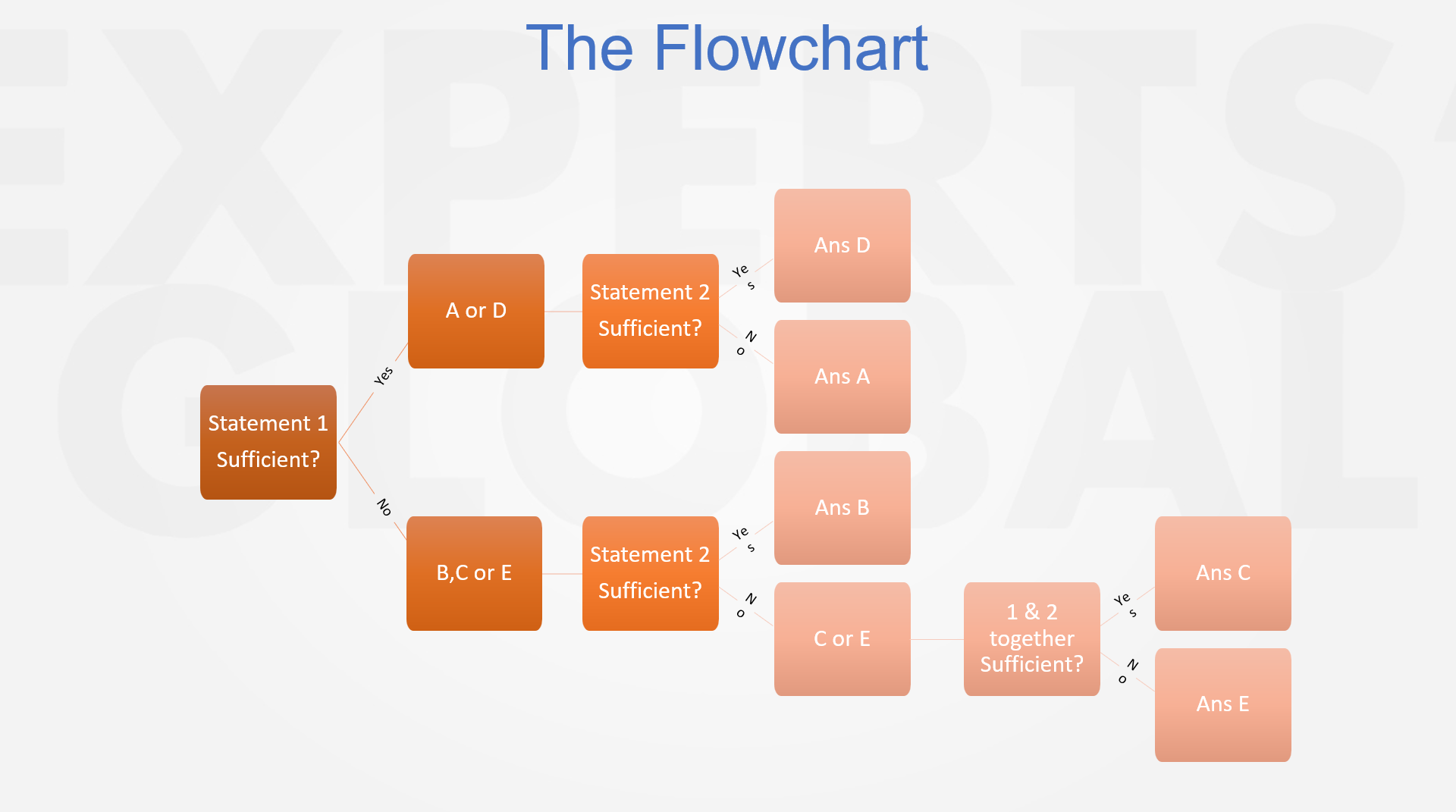
Start by evaluating statement 1 on its own, then do the same with statement 2. Based on that, choose between A, B, or D. Only if both statements are insufficient, should you combine them. If together they are sufficient, select C; if not, go with E. Remember, combining should be your final step when both statements fail individually. The following video explains this approach, demonstrates how it works, and prepares you to apply it effectively in GMAT drills, sectional tests, and GMAT full-length mock tests.

Wish to know your current GMAT level? Take a free full-length GMAT diagnostic test
A GMAT Data Sufficiency statement is considered sufficient only if it gives you a clear, consistent answer—whether that’s a single value, yes, or no. If the statement leads to multiple possible values or allows both yes and no answers, creating uncertainty, then the statement is insufficient. The video below explains this concept in more detail, offering intuitive, real-world examples to help you naturally apply this definition of sufficiency when solving GMAT Data Sufficiency questions.
In GMAT Data Sufficiency, a statement is sufficient only if it leads to one clear, consistent result: a specific value, a definite yes, or a definite no. Consistency eliminates confusion, stops contradictions, and ensures the information resolves the question. If the outcomes differ, the statement is insufficient. The following video illustrates this trap with simple examples and provides guidance on how to avoid it during the GMAT.
In GMAT Data Sufficiency, answer choice C says that both statements together are enough, but neither on its own is. So, in DS, you only combine the statements after testing each one individually and finding that neither provides a unique, consistent answer. First, check statement 1. Then, check statement 2. Only combine them if both fall short. The following video explores this trap in detail through examples and offers guidance on how to handle it in GMAT Data Sufficiency questions.
In GMAT Data Sufficiency, a statement is sufficient if it leads to a clear, definite conclusion. A firm “no” works just as well. For example: Question: Is x = 7? Statement: x is even. Since 7 isn’t even, the answer is a definite no, making the statement sufficient. The following video breaks down this trap with clear, practical examples and demonstrates how to approach it in GMAT Data Sufficiency questions.
In GMAT Data Sufficiency, hidden exceptions can turn a sufficiency answer upside down. Recognizing these exceptions helps you avoid traps and keeps your answers on track. Never assume that absolute values or claims are always positive. Test with zero, negatives, fractions, and boundary values. Always evaluate each statement for a clear, consistent result before combining them. The following video delves into this trap with worked examples and provides guidance on how to avoid it in GMAT Data Sufficiency questions.
In GMAT Data Sufficiency, if a question seems too obvious, take a moment. You might be overlooking something. Reevaluate your assumptions, test each statement individually, and aim for a unique, consistent conclusion. Look out for exceptions, edge cases, and limits. Pay attention to the details in wording and definitions before concluding sufficiency. The following video explains this trap using simple, clear examples.
Having learned the approach to solving GMAT Data Sufficiency questions, understood the common traps, and explored strategies to avoid them, it is now time to practice with real GMAT-style questions. The following video features three seemingly simple Data Sufficiency problems that give you the opportunity to apply the strategies you’ve just reviewed and tackle the traps we discussed earlier. While the underlying concept is basic – focusing on even and odd integers – these problems add layers of complexity beneath their apparent simplicity. If you find yourself quickly arriving at answers, you may be overlooking a key detail. Pause the video, attempt each problem on your own, and then watch the trainer solve them in a clear, efficient, and intuitive way, reflecting the approach you should use when facing similar questions on the actual GMAT. Happy solving!
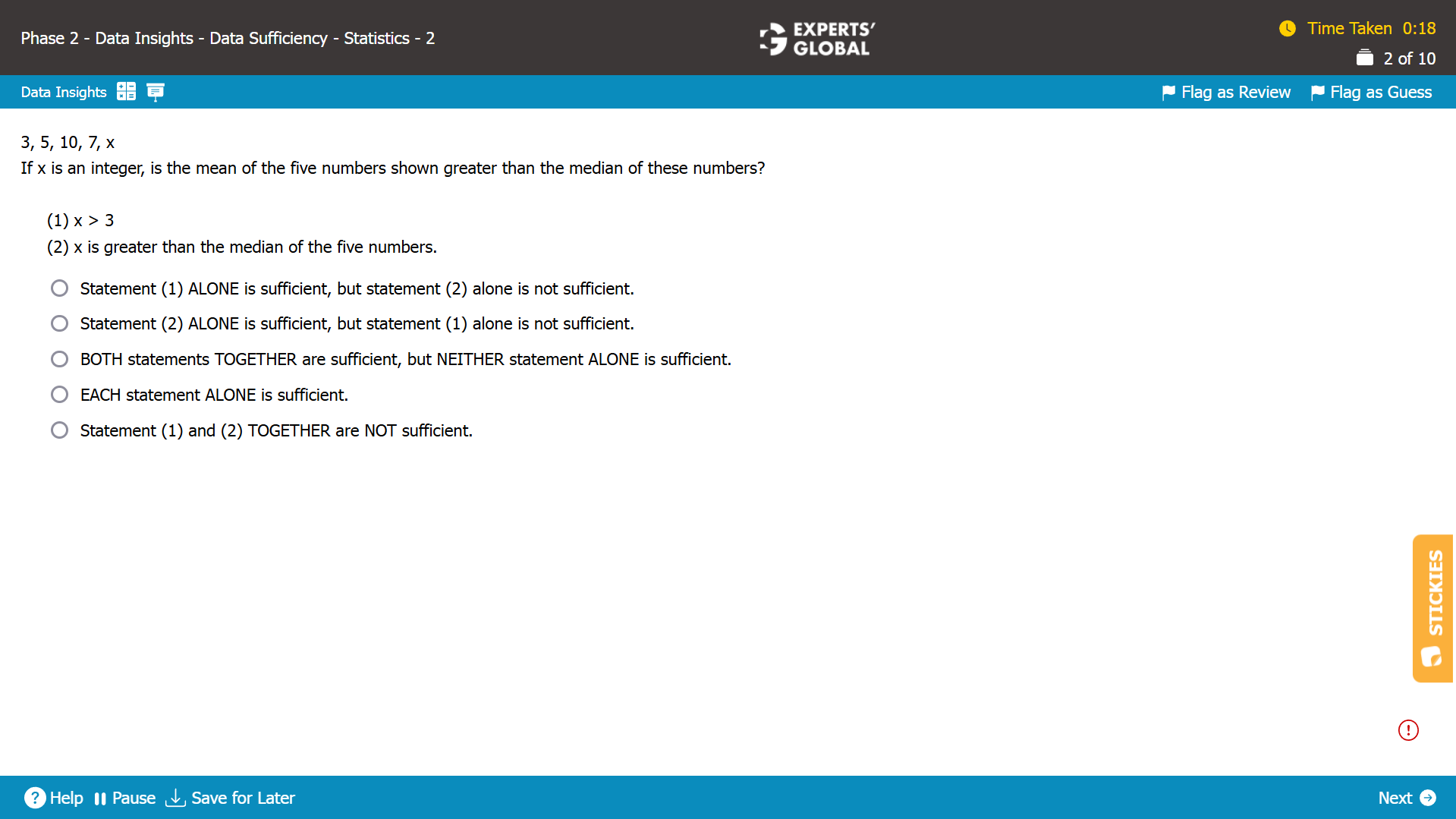
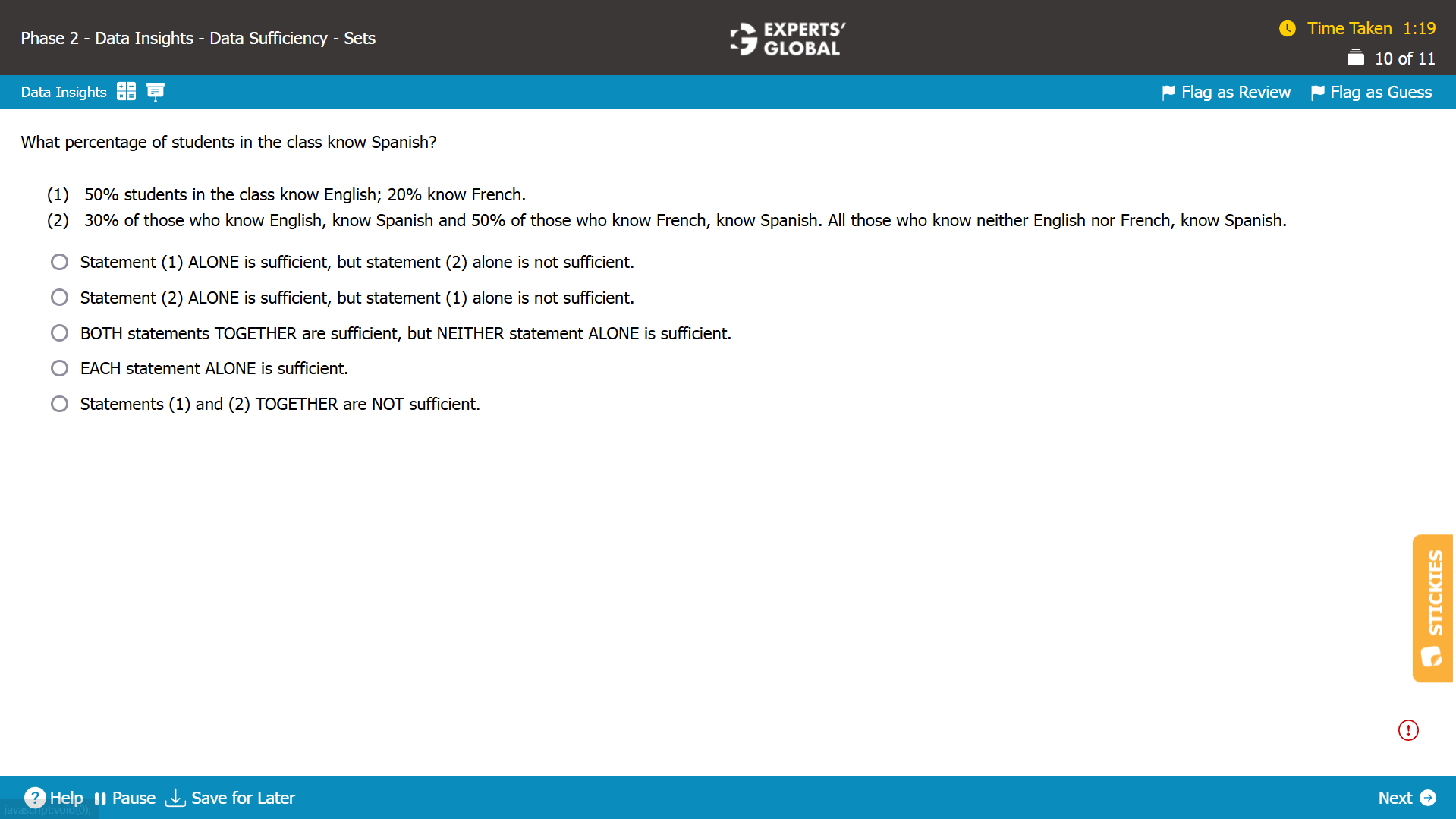
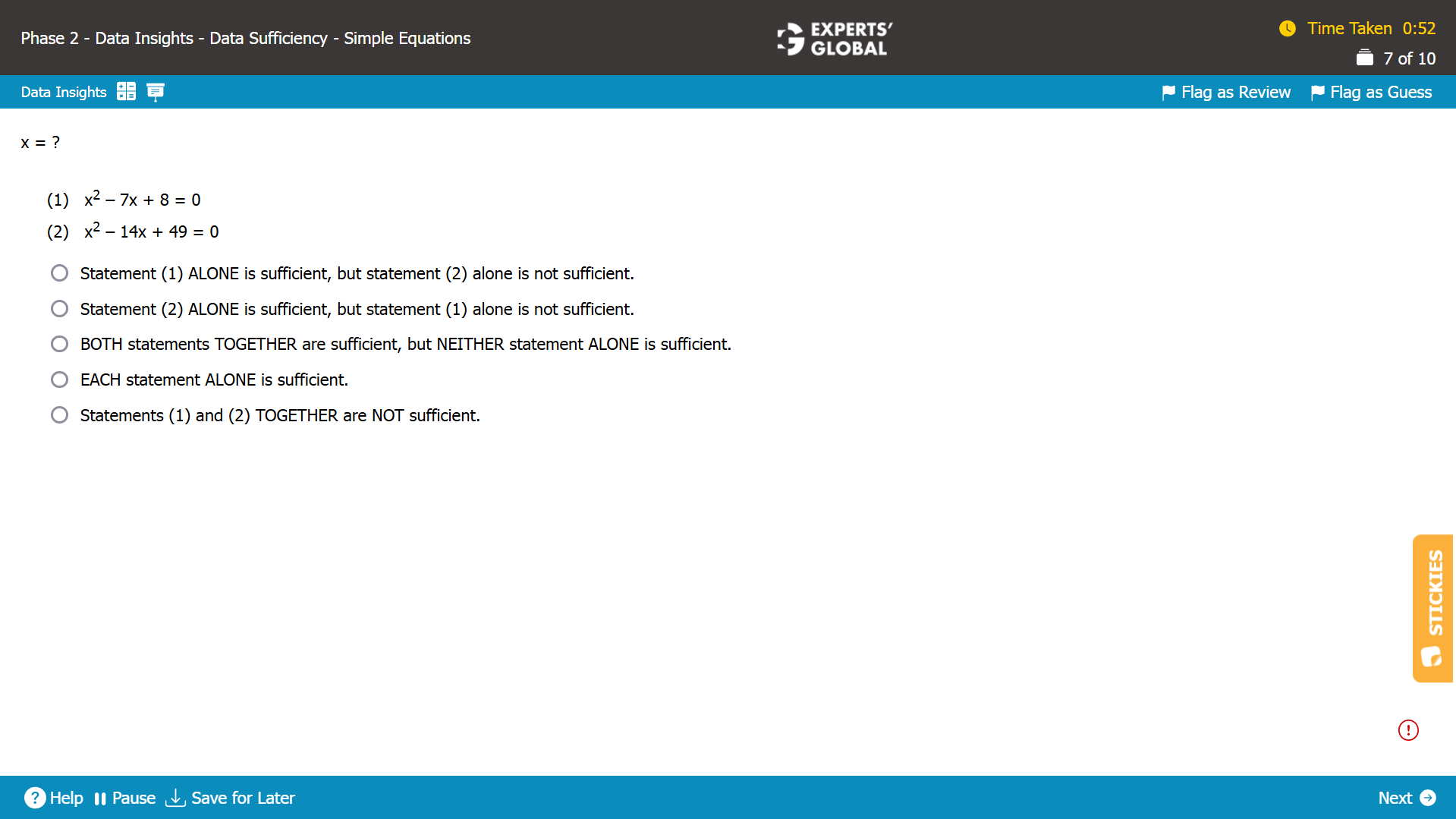
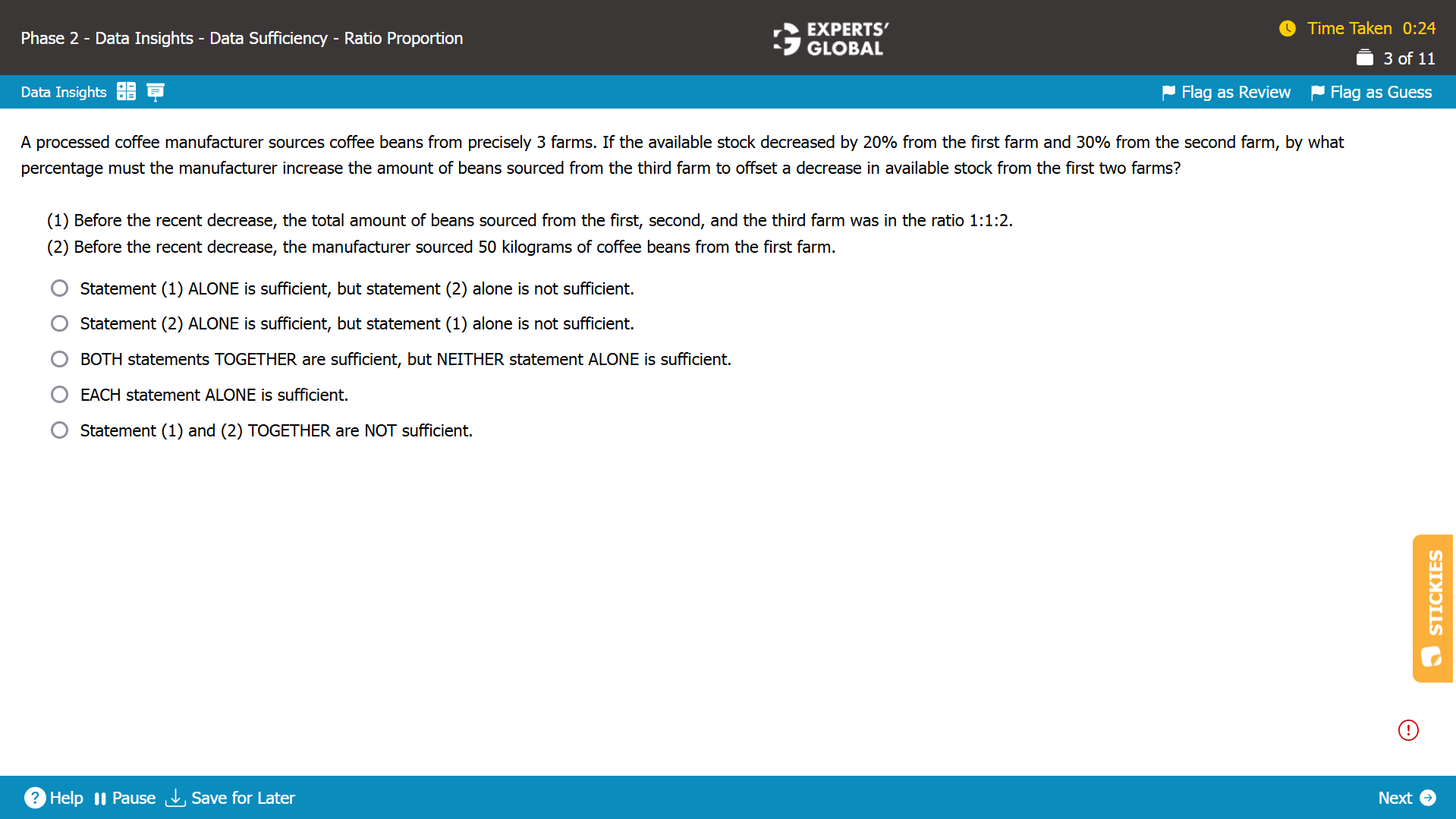
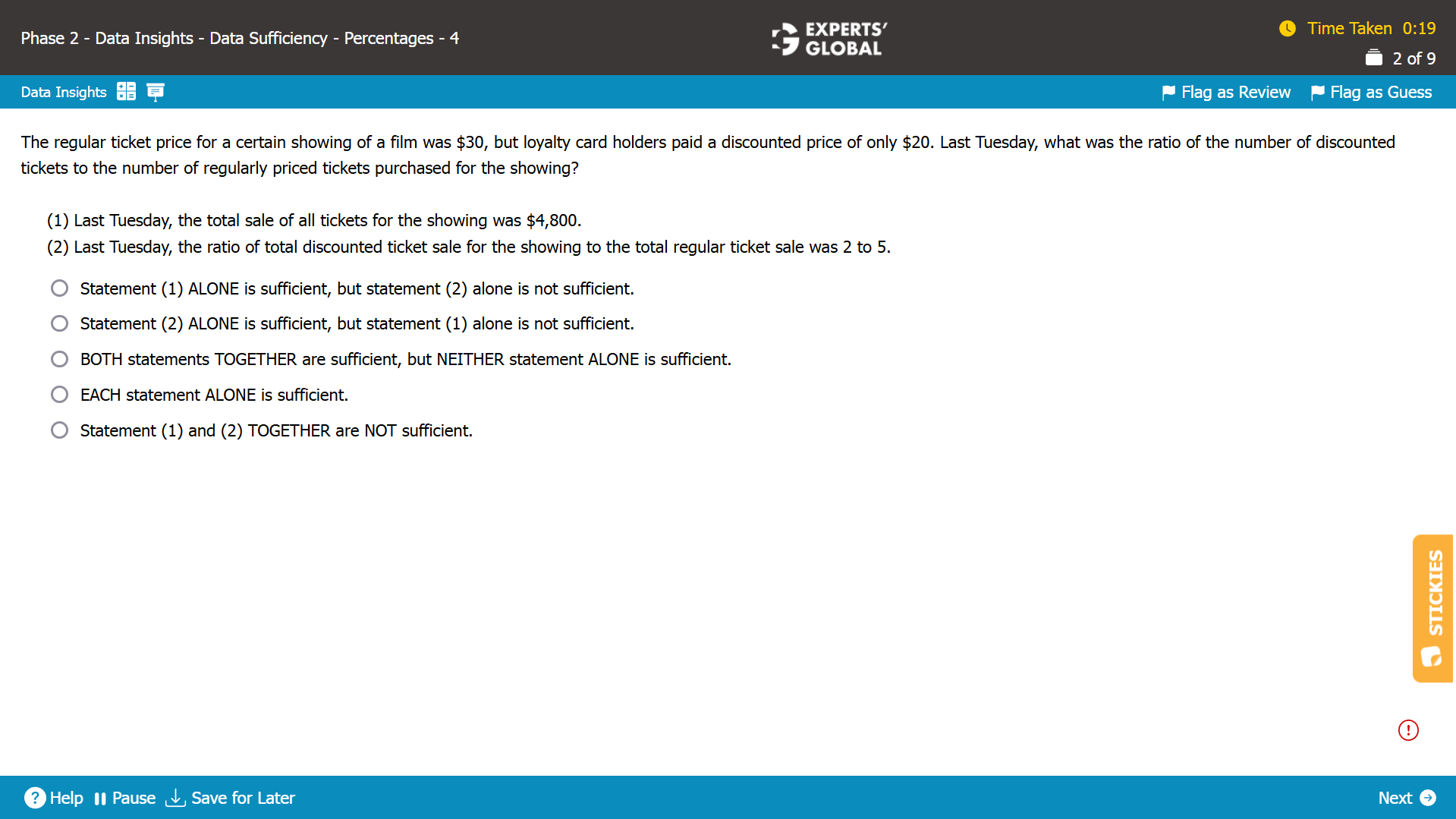
For practicing a few GMAT-style Data Sufficiency (DS) questions, please visit: GMAT Data Sufficiency Sample Questions
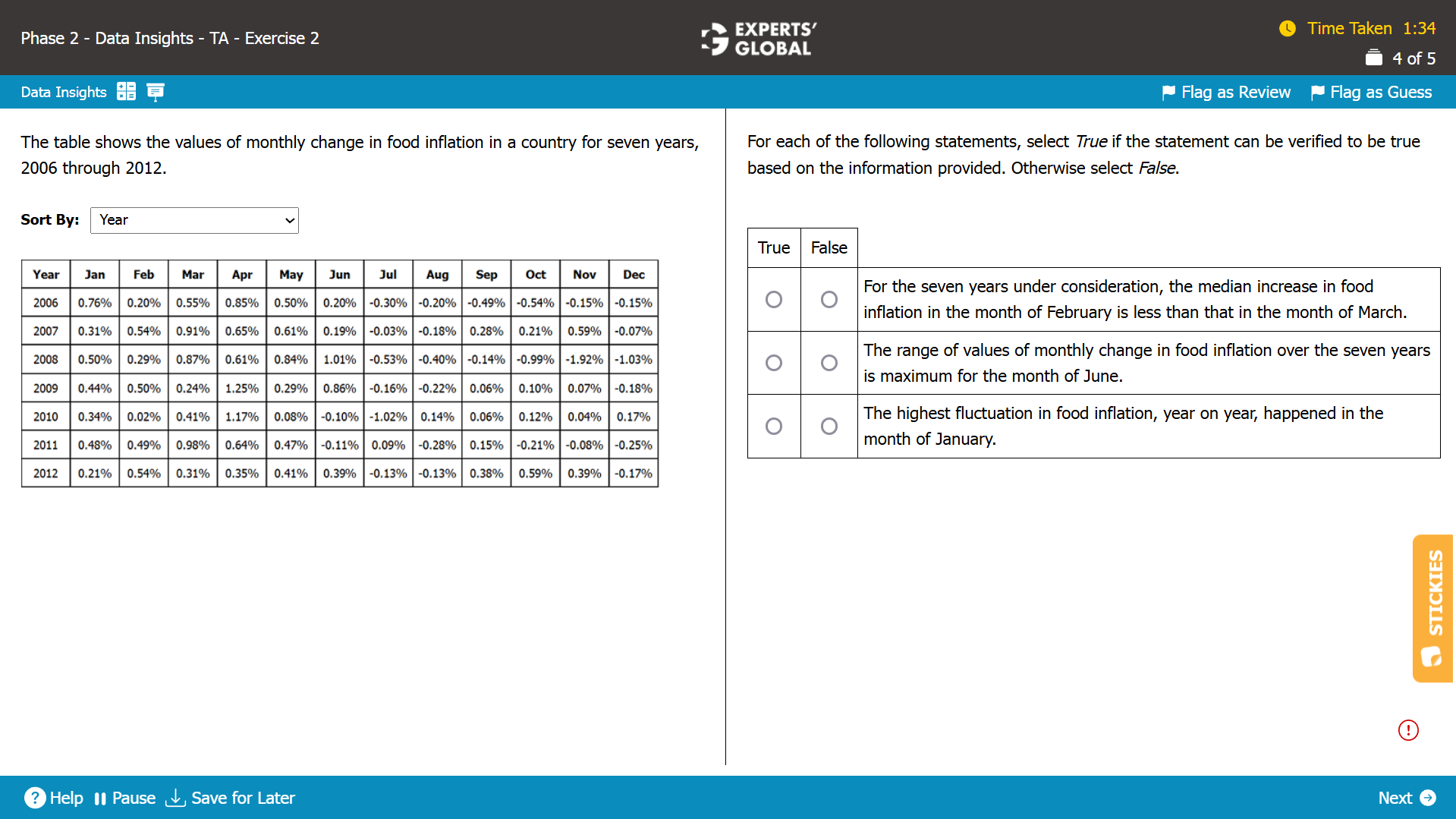
Table Analysis questions on the GMAT involve interpreting data from sortable tables that resemble basic spreadsheets. In each question, you will analyze three statements, each offering two possible choices. These questions test your ability to compare values, understand relationships, and draw conclusions based on the data provided, all within a structured and time-sensitive setting. Typically, 2 to 3 of the 20 Data Insights questions are Table Analysis, which often require multiple responses. You will only receive credit if all responses are correct – no partial credit is awarded. This page offers concepts and worked examples to help you prepare effectively.
First, get a clear understanding of the table, then carefully read the question stem. Focus only on the specific data each statement requires, and if needed, organize the table for clarity. Afterward, double-check your reasoning before finalizing your answer. This brief video outlines the approach, demonstrates how each step connects, and helps you apply the method effectively in GMAT drills, sectional tests, and full-length GMAT mock tests.

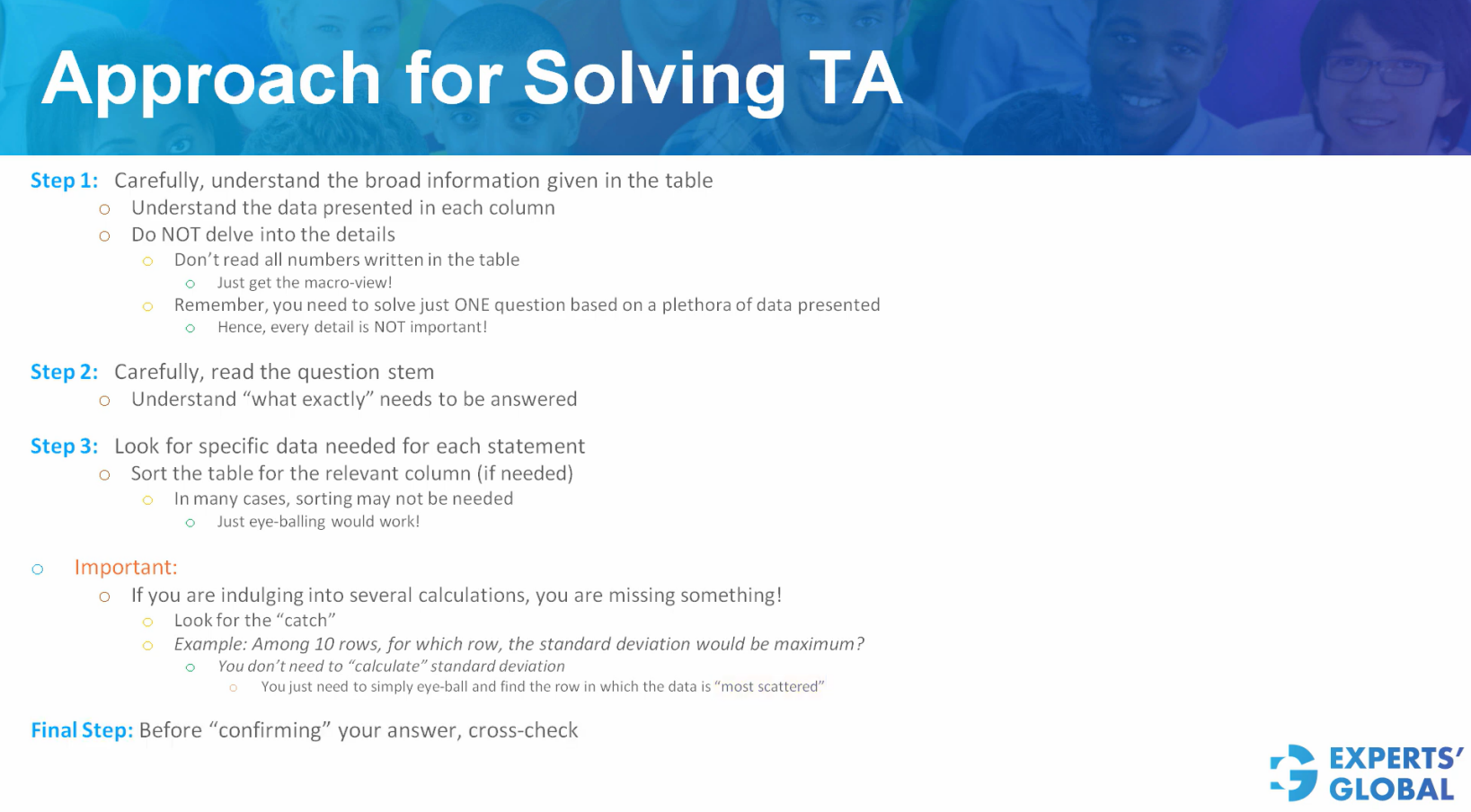
For practicing a few GMAT-style Table Analysis (TA) questions, please visit: GMAT Table Analysis Sample Questions
Graphics Interpretation (GI) questions require you to interpret data presented in visual formats such as bar charts, line graphs, pie charts, or scatter plots, and then apply that information to answer reasoning-based questions. GI questions help you practice recognizing patterns, comparing values, and drawing accurate conclusions from visual data. On the GMAT, you will typically find 3 or 4 Graphics Interpretation questions within the 20 questions of the Data Insights section. These questions usually involve multiple responses, and you will receive credit only if all your answers are correct, as partial credit is not awarded. This page offers conceptual GI prep along with worked examples, to guide you in preparing for this concept.
Start by grasping the big picture of the graph before getting into the details. Then, read the question statement carefully. After that, find only the relevant data needed for each statement. Finally, double-check your logic before settling on your answer. The following short video guides you through the step-by-step approach to solving Graphics Interpretation questions on the GMAT; it demonstrates how to apply each step methodically, even when working under the time constraints and pressure of the actual exam.
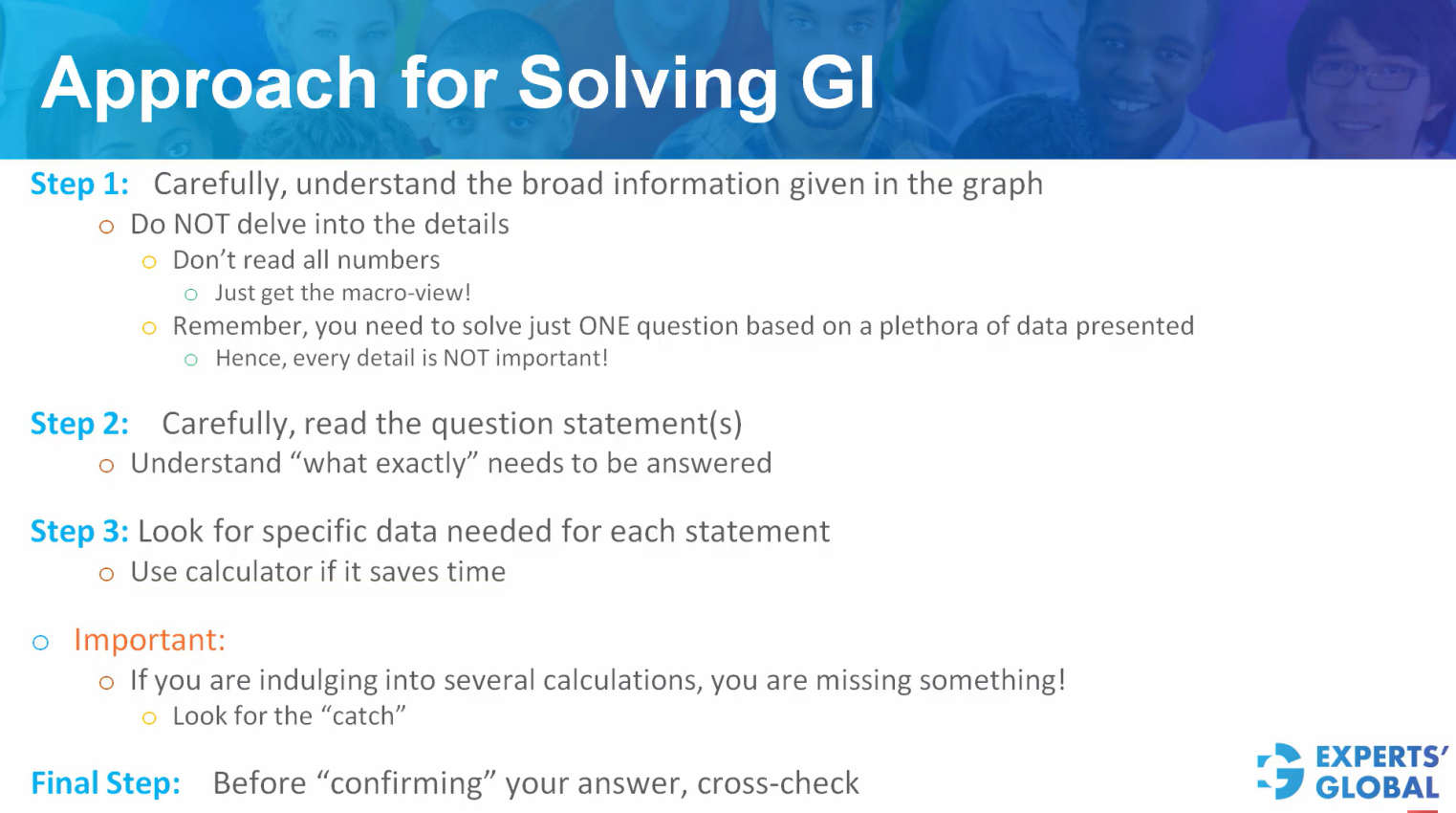
For practicing a few GMAT-style Graphics Interpretation (GI) questions, please visit: GMAT Graphics Interpretation Sample Questions
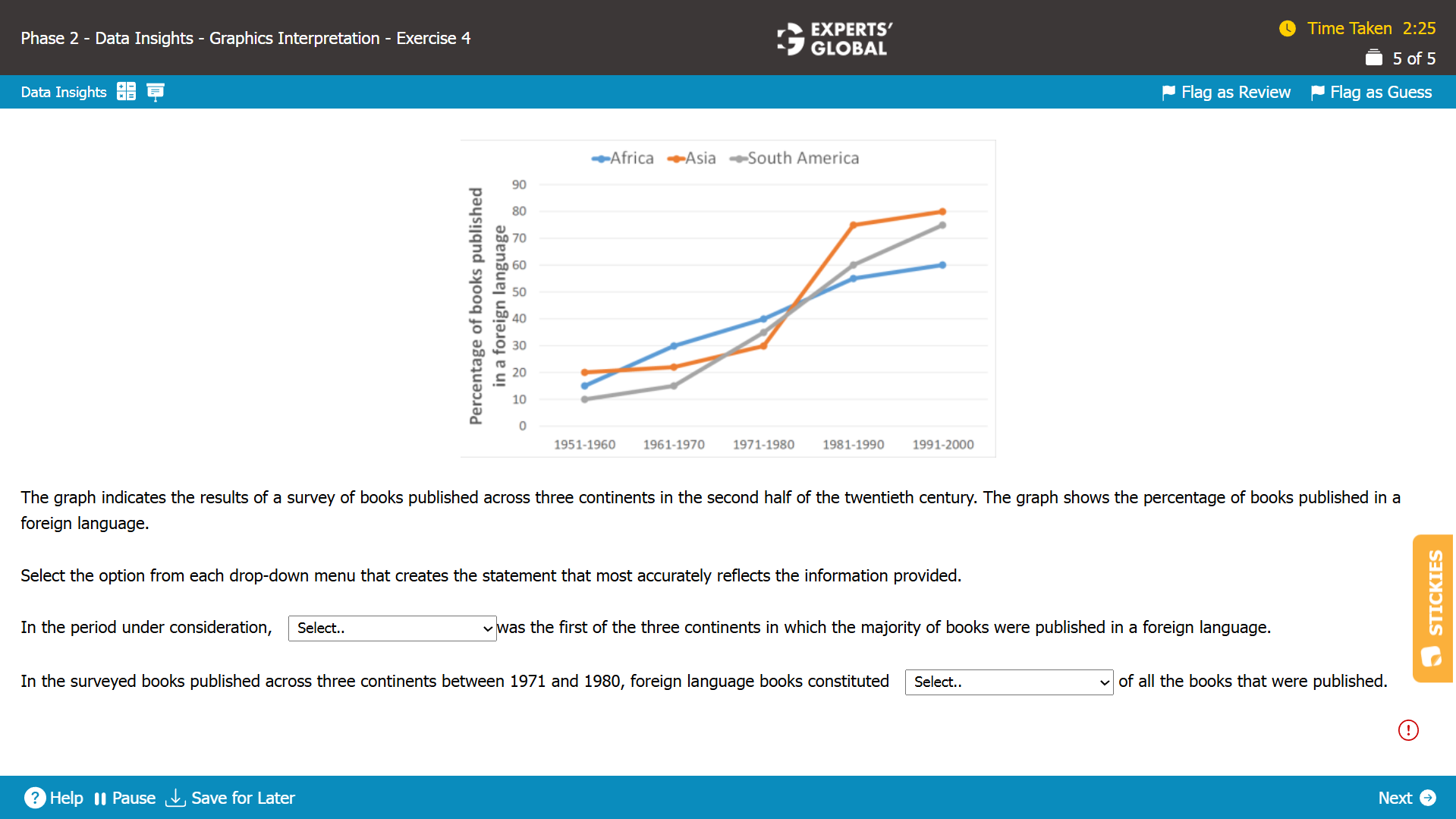
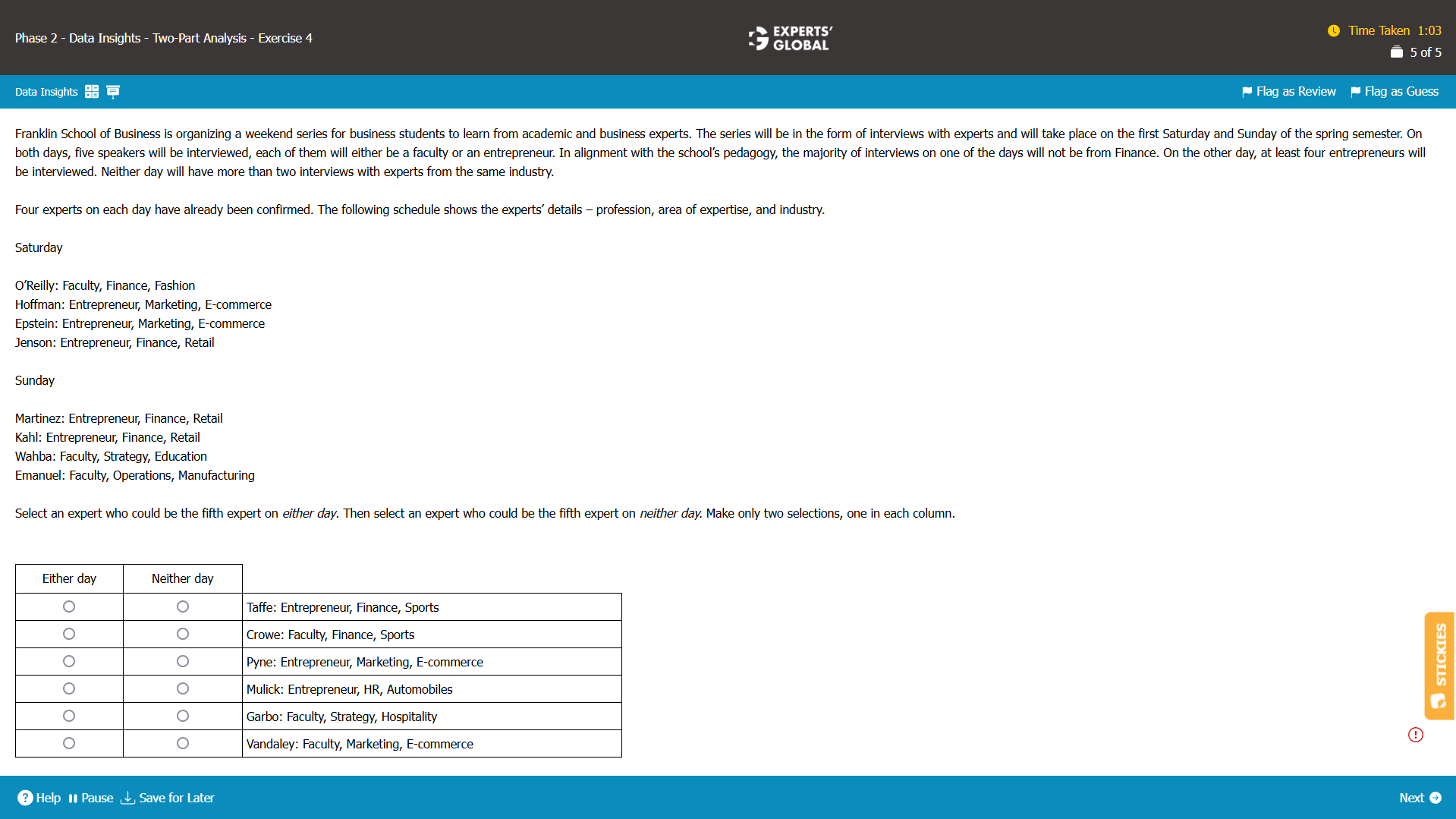
Two-Part Analysis (TPA) questions present a brief scenario, relationship, or set of conditions, and require you to answer two connected questions using the same set of answer choices. TPA questions help you practice managing multiple conditions, testing different combinations, and identifying pairs of answers that align with the given logic. On the GMAT, you will encounter four or five TPA questions as part of the 20 questions in the Data Insights section. These questions ask you to select two responses, and you will only receive credit if both responses are correct, as partial credit is not awarded. This page offers conceptual matter and worked examples, to support effective preparation for TPA questions on GMAT’s DI section.
Start by reading the passage thoroughly, then analyze the stem before imagining what the correct pair should look like. Focus on the connection between the columns, test only the most likely pairs, prioritize simple math over complex calculations, and always check the units and conditions. This following video walks you through this clear and organized approach for solving Two-Part Analysis questions on the GMAT.
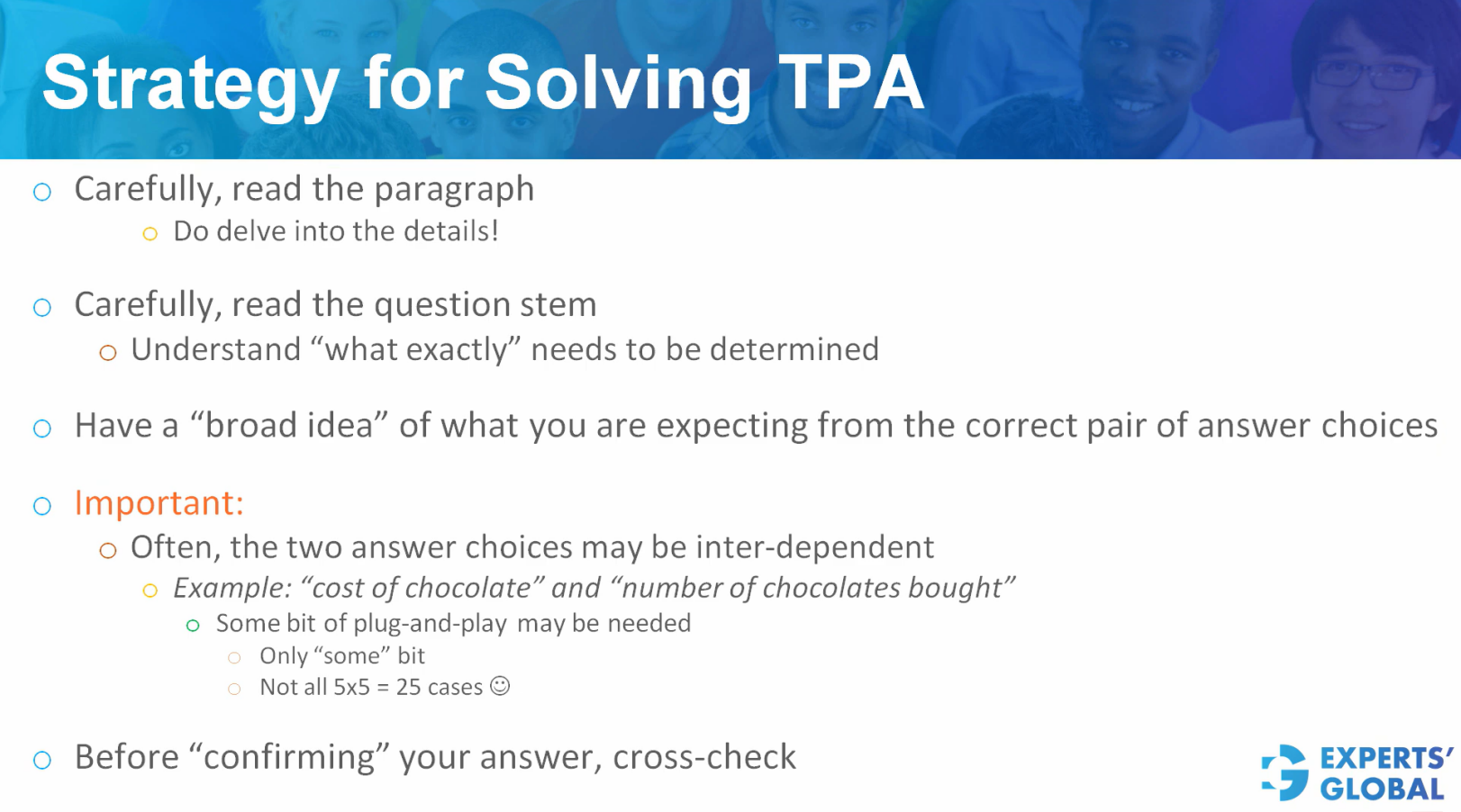
For practicing a few GMAT-style Two-Part Analysis (TPA) questions, please visit: GMAT Two-Part Analysis Sample Questions
Multi-Source Reasoning questions require you to analyze information from multiple sources, such as short passages, charts, tables, or statements, and combine these details to answer carefully crafted questions. These questions help you practice navigating between sources, comparing information, and drawing valid conclusions from integrated data. On the GMAT, you may encounter one or two Multi-Source Reasoning sets, each containing three questions. This means that three or six of the twenty questions in the GMAT Data Insights section will be Multi-Source Reasoning. Most of these questions require multiple responses, and your answers will only be considered correct if all selected responses are accurate – there is no partial credit. This page provides a structured playlist by subtopic, along with several worked examples, to support efficient preparation for this concept.
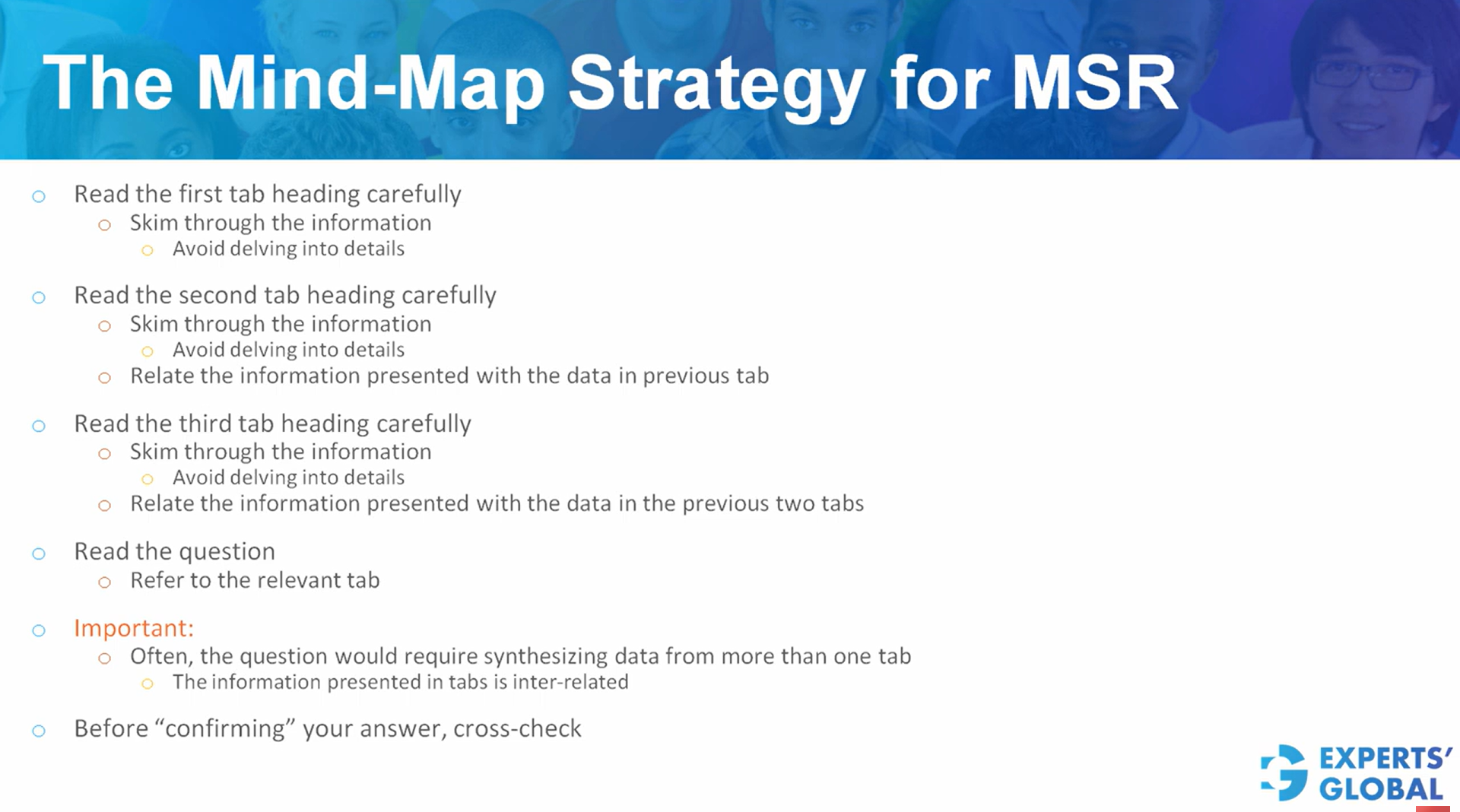
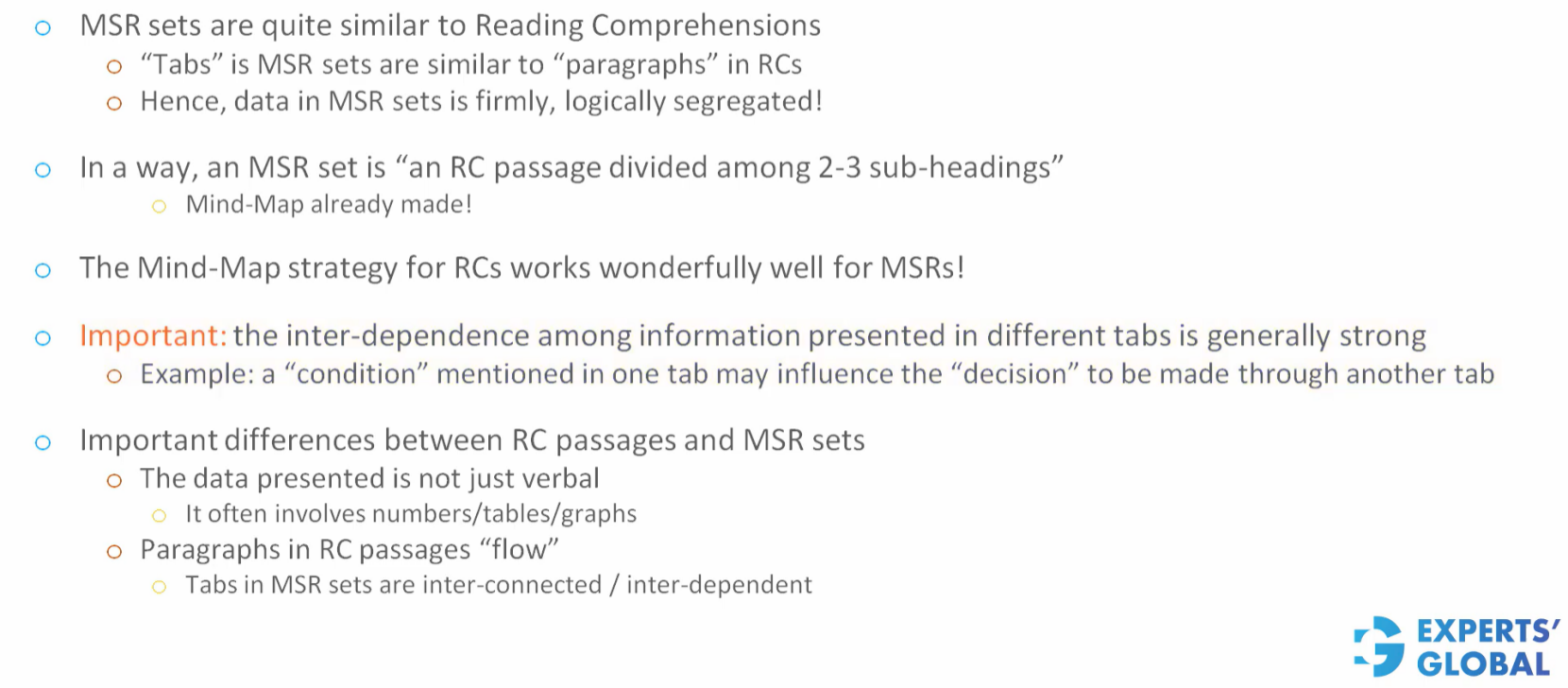
Begin by reading the names of the three tabs to get a broad sense of the information structure. Next, quickly review each tab without delving into details, focusing on the general flow and how the tabs are interconnected. Once you understand the layout, proceed to the first question, identify the required information, and return to the relevant excerpt. You may need to refer to multiple tabs for a single question – this is normal and required, as MSR questions are designed this way. Always cross-check your answer before confirming it. The following conceptual video demonstrates this step-by-step approach with GMAT-like worked examples.
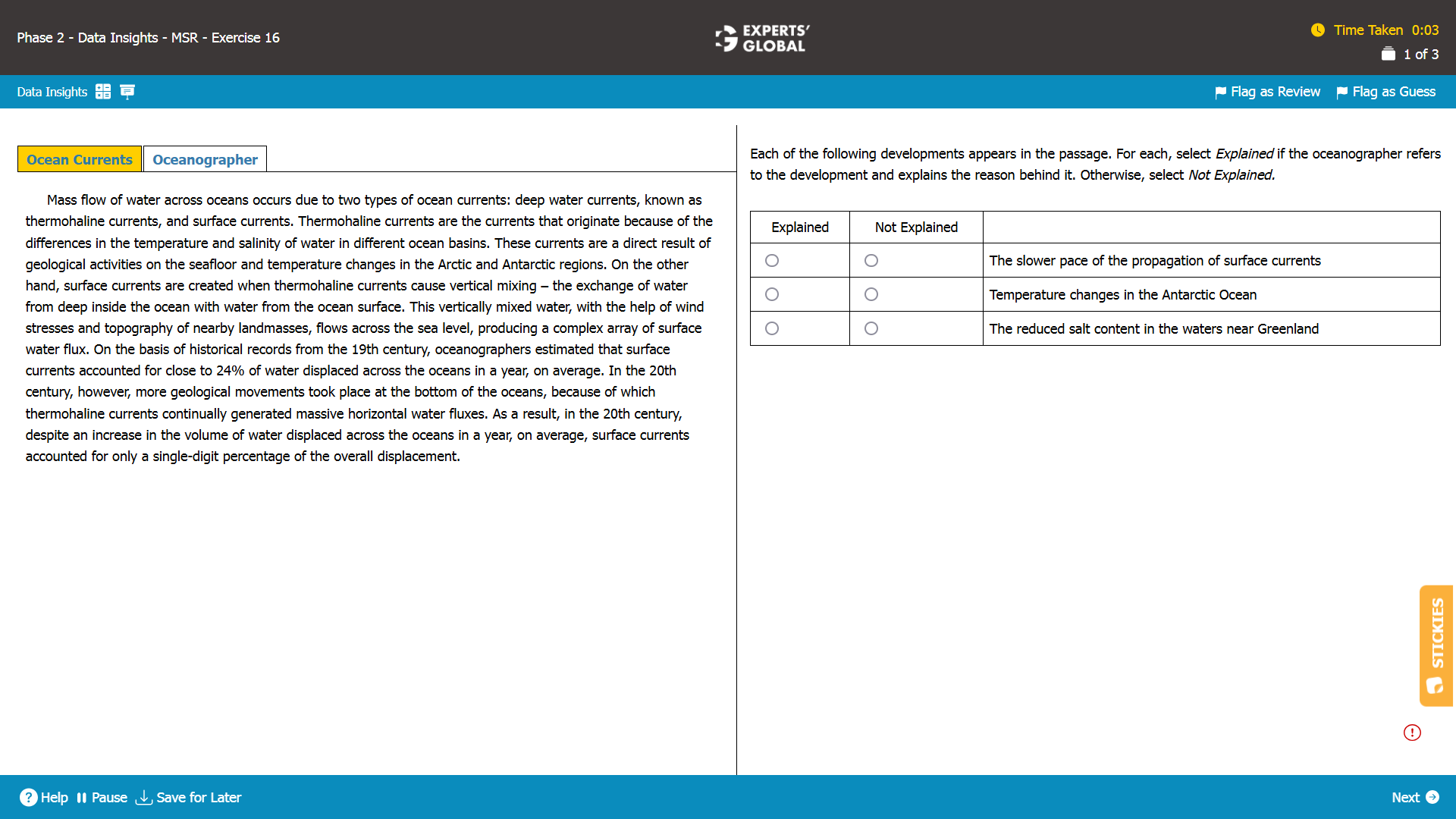
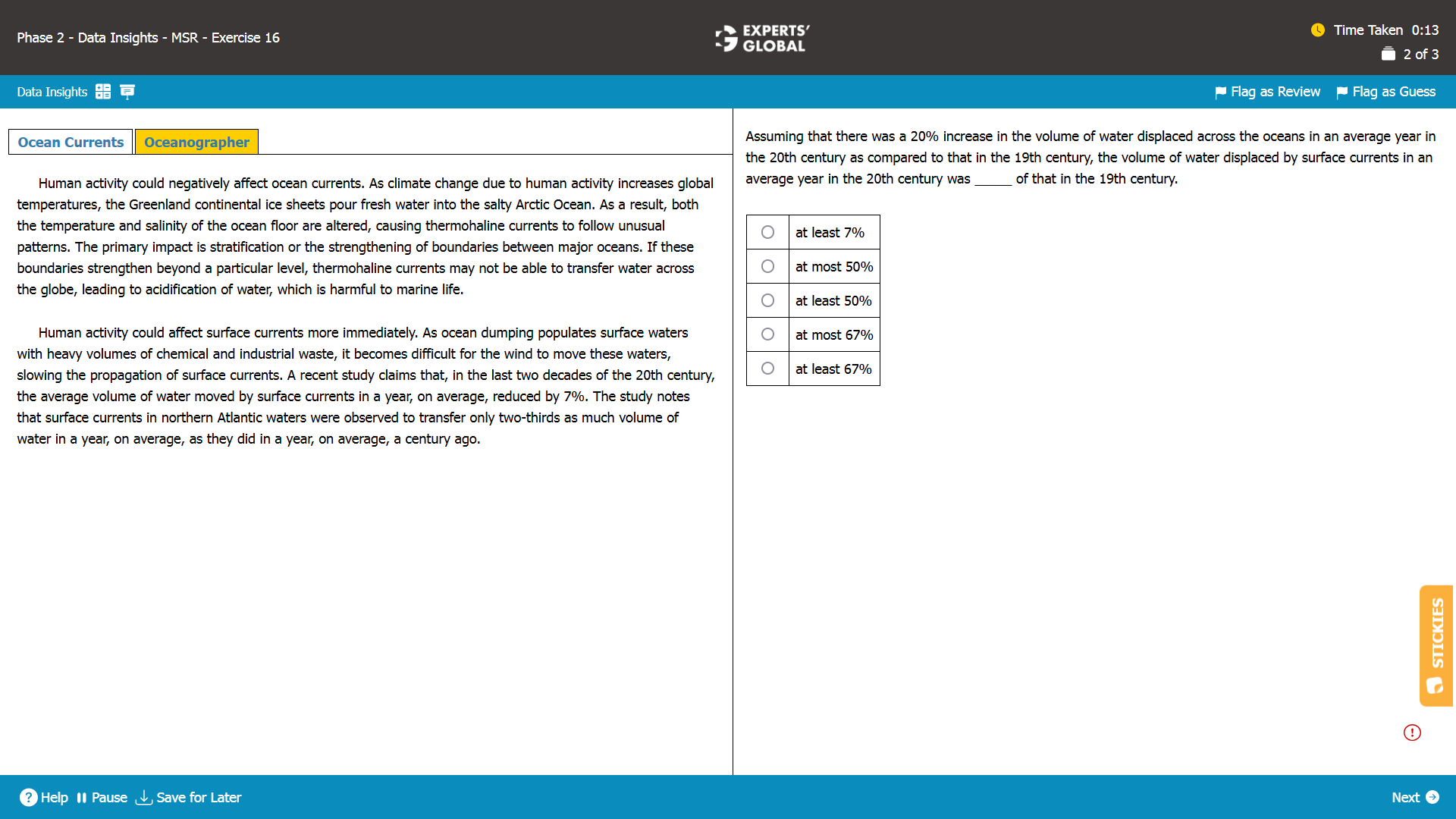
Below, you will find a series of GMAT-style Multi-Source Reasoning questions, each accompanied by a detailed explanation. Take your time with each question, using the strategies and reasoning techniques you have learned for tackling MSR questions on the GMAT. Focus on mastering the critical skills of cross-referencing information, identifying key relationships, and evaluating options thoroughly, rather than rushing to choose what seems right. After each question, use the explanation control to view the correct answer and dive deep into the complete reasoning. Keep pushing forward and enjoy the challenge!
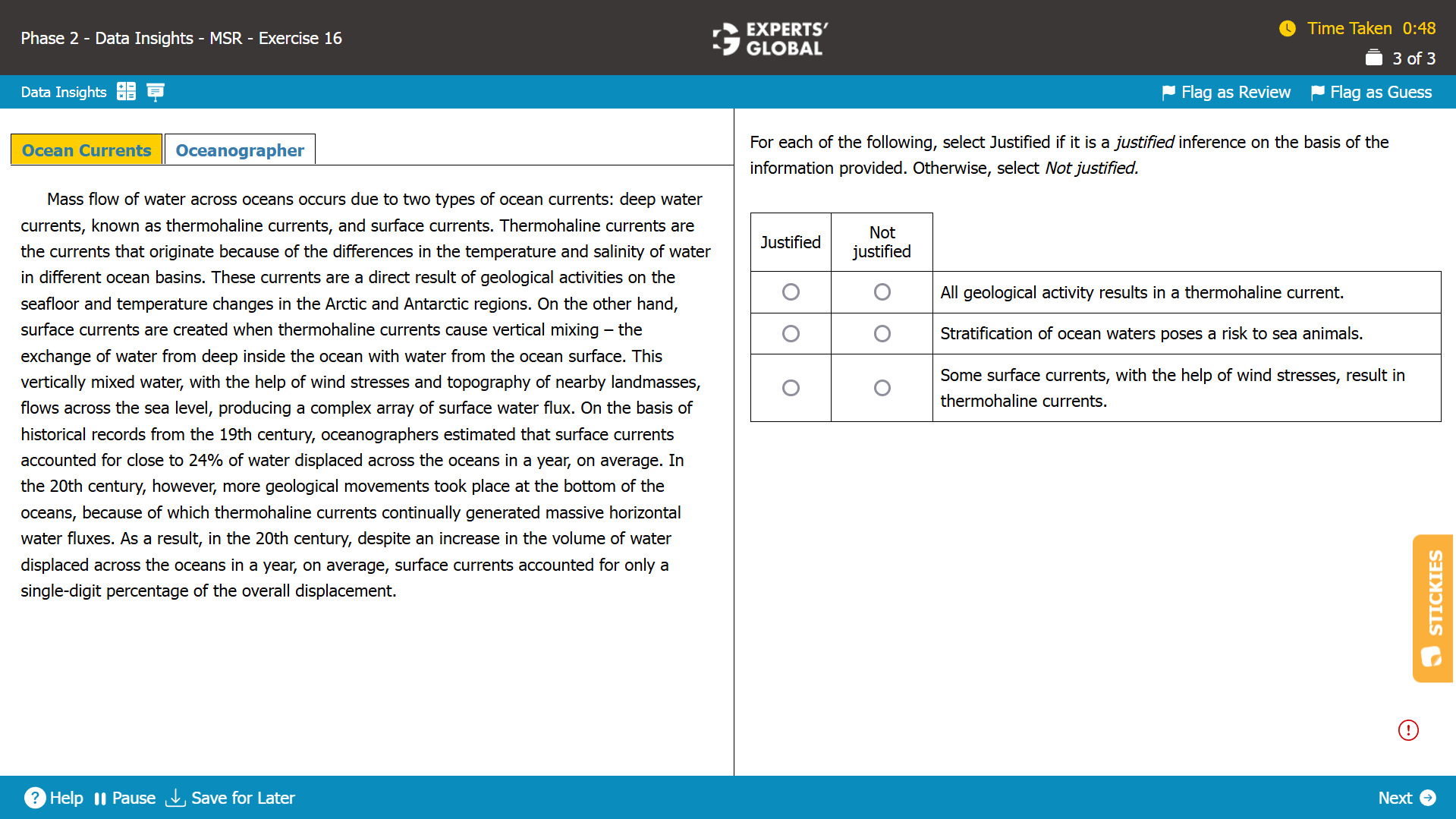
Please find another set of GMAT-style MSR questions with explanations on: How to Solve GMAT Multi-Source Reasoning Questions
Please find 2 sets of GMAT-style MSR questions with explanations on: Free GMAT Multi-Source Reasoning Prep
Please find 2 sets of GMAT-style MSR questions with explanations on: Free GMAT Multi-Source Reasoning Sample Questions
Please find another set of GMAT-style MSR questions with explanations on: Free GMAT Data Insights Sample Questions
Please find another set of GMAT-style MSR questions with explanations on: Free GMAT Sample Questions
15 full-length GMAT practice tests (includes a free test)
End-to-end GMAT prep course online (includes 7-day free trial)
