
Invest 30 seconds...
...for what may lead to a life altering association!
Help Line
- +91.8800.2828.00 (IND)
- 1030-1830 Hrs IST, Mon-Sat
- support@expertsglobal.com
33% off ends soon:GMAT/GRE prep + applications bundle. Profile building, longer mentoring, better results. Inquire

GMAT Table Analysis (TA) questions ask you to interpret information presented in a sortable table, compare values, understand relationships, and decide whether specific statements are supported by the data. They strengthen your ability to read structured information with care and make clear, evidence based decisions. Out of the 20 Data Insights questions on the GMAT, usually 2 to 3 are Table Analysis questions. These questions generally require multiple responses, and you receive credit only if all your selected responses are correct, with no partial credit. Steady familiarity with this question type is an essential part of any comprehensive GMAT preparation course. This page provides you an organized subtopic wise playlist, along with a few worked examples, for efficient preparation of this concept.
Table Analysis questions on the GMAT sit within the Data Insights section and revolve around reading sortable tables that resemble simple spreadsheets. In each question, you work through three statements with two possible choices each, using them to check how well you can analyze, compare, and infer conclusions from detailed data in a structured, time-bound environment. This short video explains the method, shows how each step fits together, and prepares you to apply it in GMAT drills, sectional tests, and full-length GMAT mock tests.

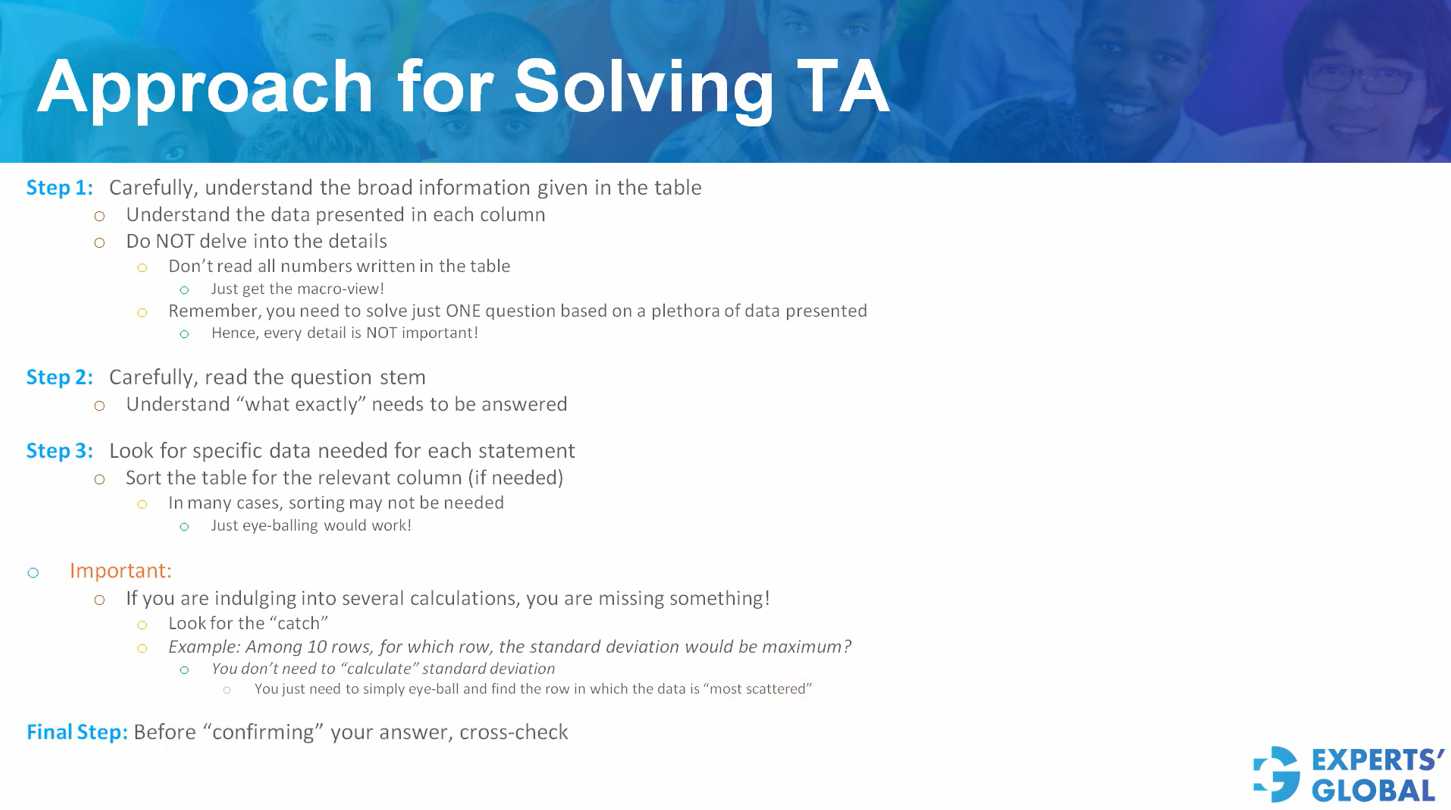
Here is a set of truly GMAT-style Table Analysis questions, each provided with a detailed explanation. Take your time on every question and apply the approach and concepts you recently learnt, on this page, for solving Table Analysis questions on the GMAT. At this stage, focus more on using this strategy correctly than on simply getting the question right. Once you are done with a question, toggle the explanation button to see the correct answer and to read the descriptive explanation.
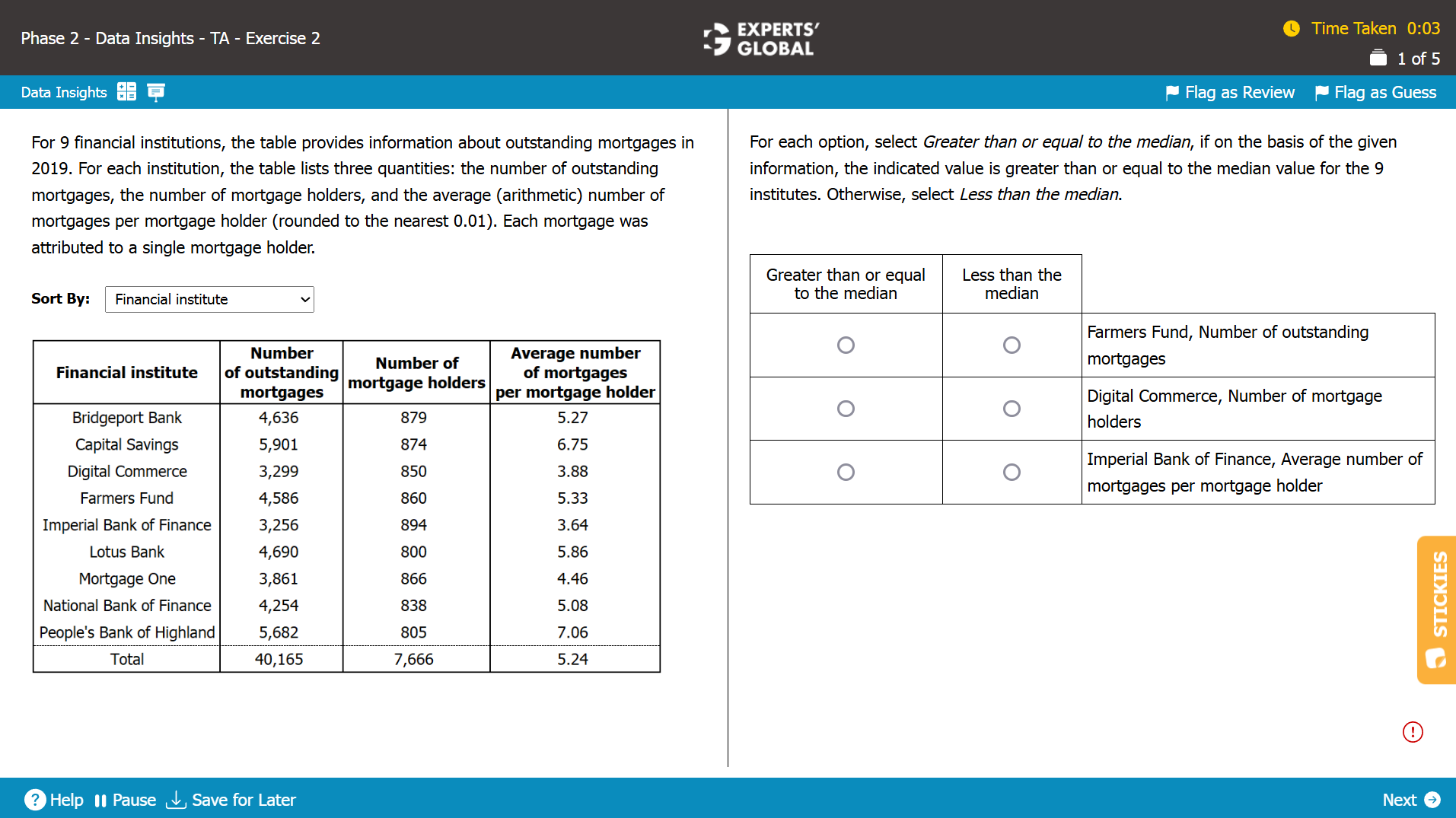
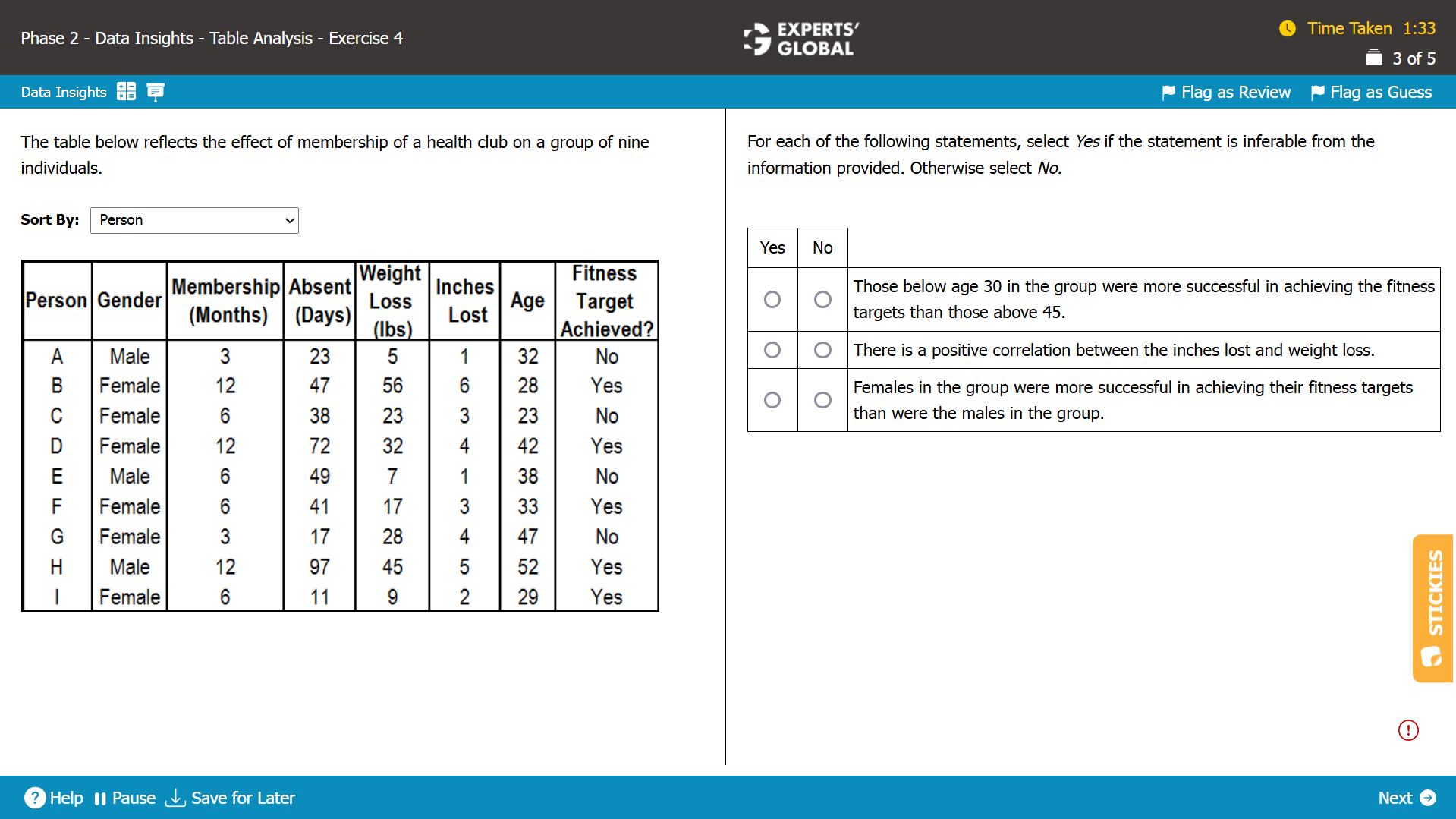
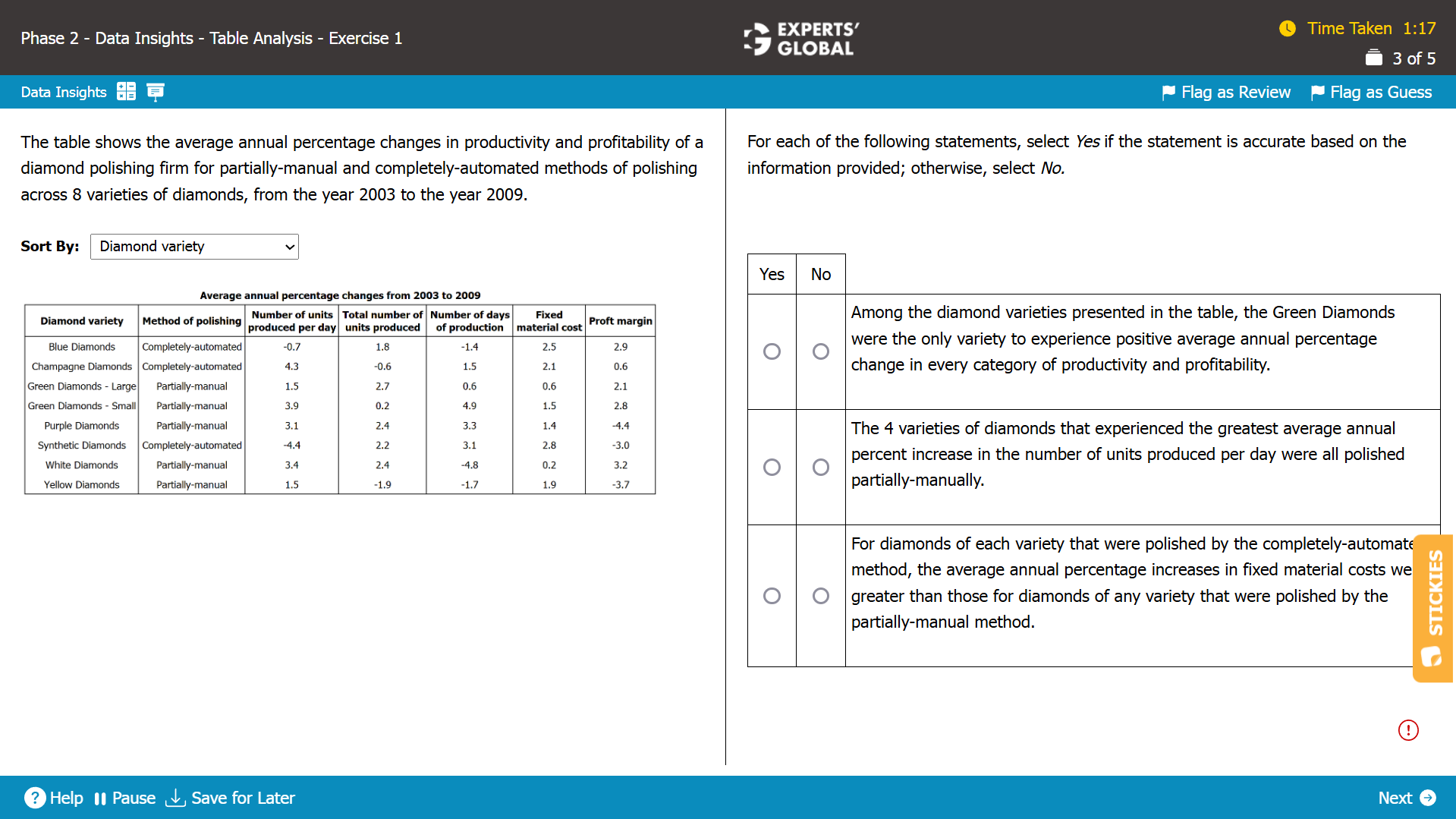
Real practice for Table Analysis problems begins when you solve them on a software simulation that closely matches the official GMAT interface. You need a platform that presents the table, the question stem, and the answer choices in a GMAT like layout, lets you work with the information and options naturally, and provides all the on screen tools and functionalities that you will see on the actual exam. Without this kind of experience, it is difficult to feel fully prepared for test day. High quality Table Analysis questions are not available in large numbers. Among the limited, genuinely strong sources are the official practice materials released by GMAC and the Experts’ Global GMAT course.
Within the Experts’ Global GMAT online preparation course, every Table Analysis problem appears on an exact GMAT like user interface that includes all the real exam tools and features. You work through more than 40 Table Analysis questions in quizzes and also take 15 full-length GMAT mock tests that include several Table Analysis questions in roughly the same spread and proportion in which they appear on the actual GMAT.
All the best!
