Invest 30 seconds...
...for what may lead to a life altering association!
Help Line
- +91.8800.2828.00 (IND)
- 1030-1830 Hrs IST, Mon-Sat
- support@expertsglobal.com
33% off ends soon:GMAT/GRE prep + applications bundle. Profile building, longer mentoring, better results. Inquire

Explanation questions in GMAT Critical Reasoning present a paradox where premise and conclusion seem to clash. The correct answer resolves this contradiction by either resolving the clash or introducing a new factor that justifies the conclusion, restoring logical clarity.
Resolve-a-paradox or explanation questions on GMAT CR present an apparent paradox and reward clarity: premise seems to point one way while the conclusion points another. This overview introduces how such items are resolved by supplying a linking reason that reconciles the two. The video and article outline common reconciliation patterns and show how to read stems efficiently. Treat the approach as a thinking habit valuable in GMAT prep and transferable to MBA admissions, where integrating seemingly conflicting facts into a coherent, justified position matters consistently.

In GMAT Critical Reasoning, paradox questions present an unusual challenge. The argument given seems to contradict itself. The premise may describe a positive situation, yet the conclusion paints a negative picture (or the other way around). This creates a paradox, and the role of the test-taker is to resolve it by filling the missing-link.
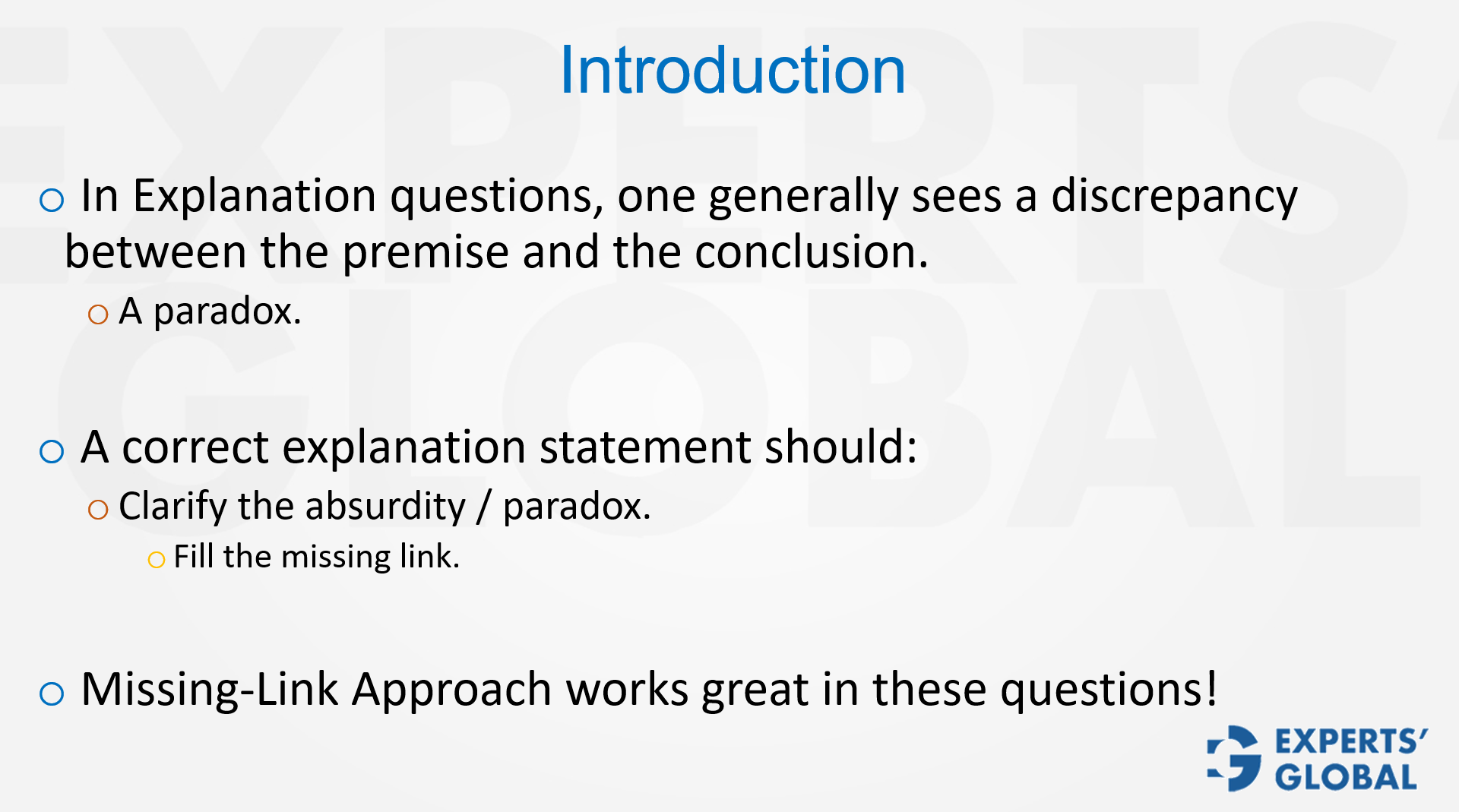
Expect a brief passage in which the premise and the conclusion appear contradictory. Your task is to select the option that best resolves the discrepancy by showing how both statements can be true at the same time.
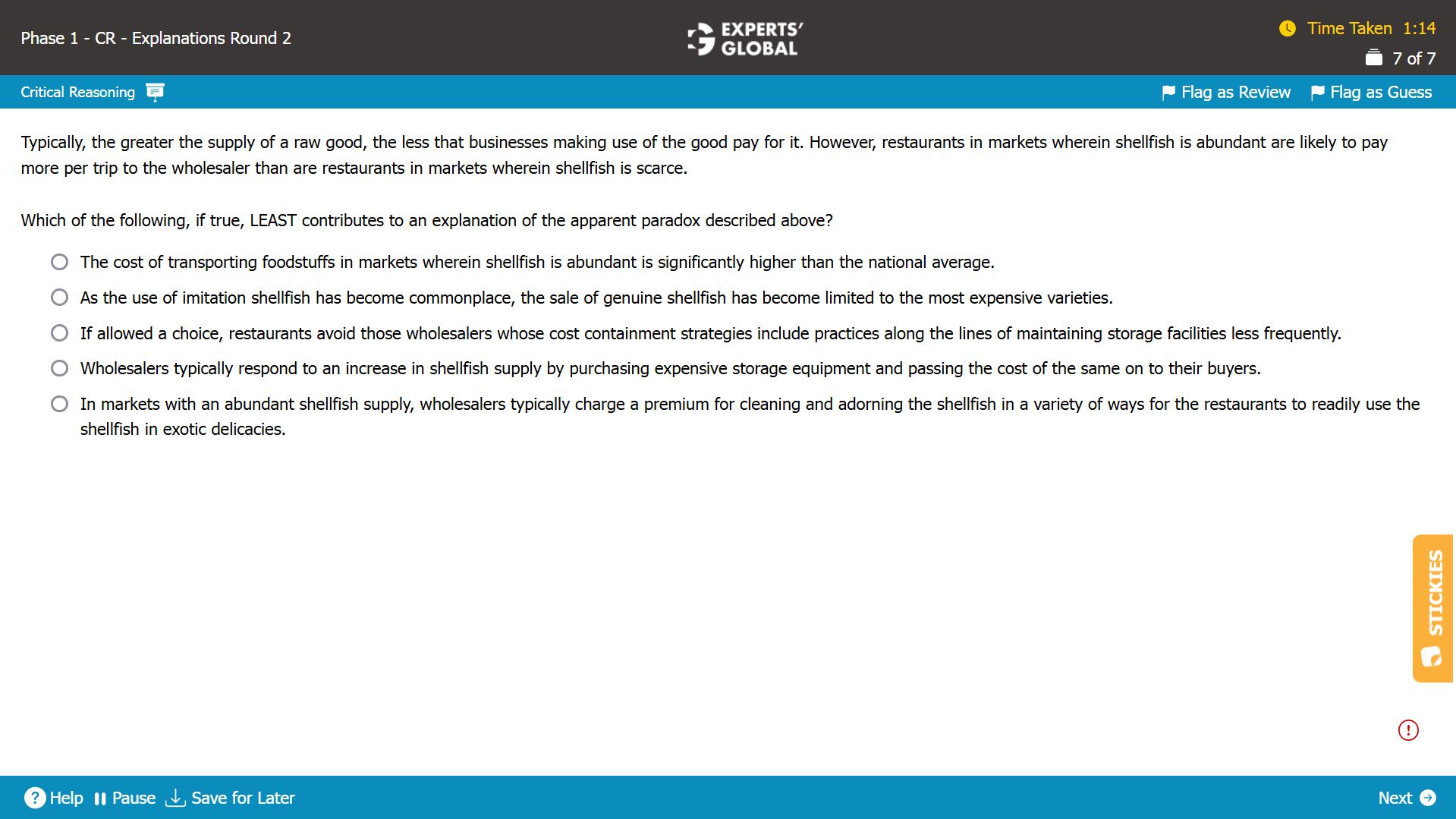
Correct Answer: B
Consider this reasoning…
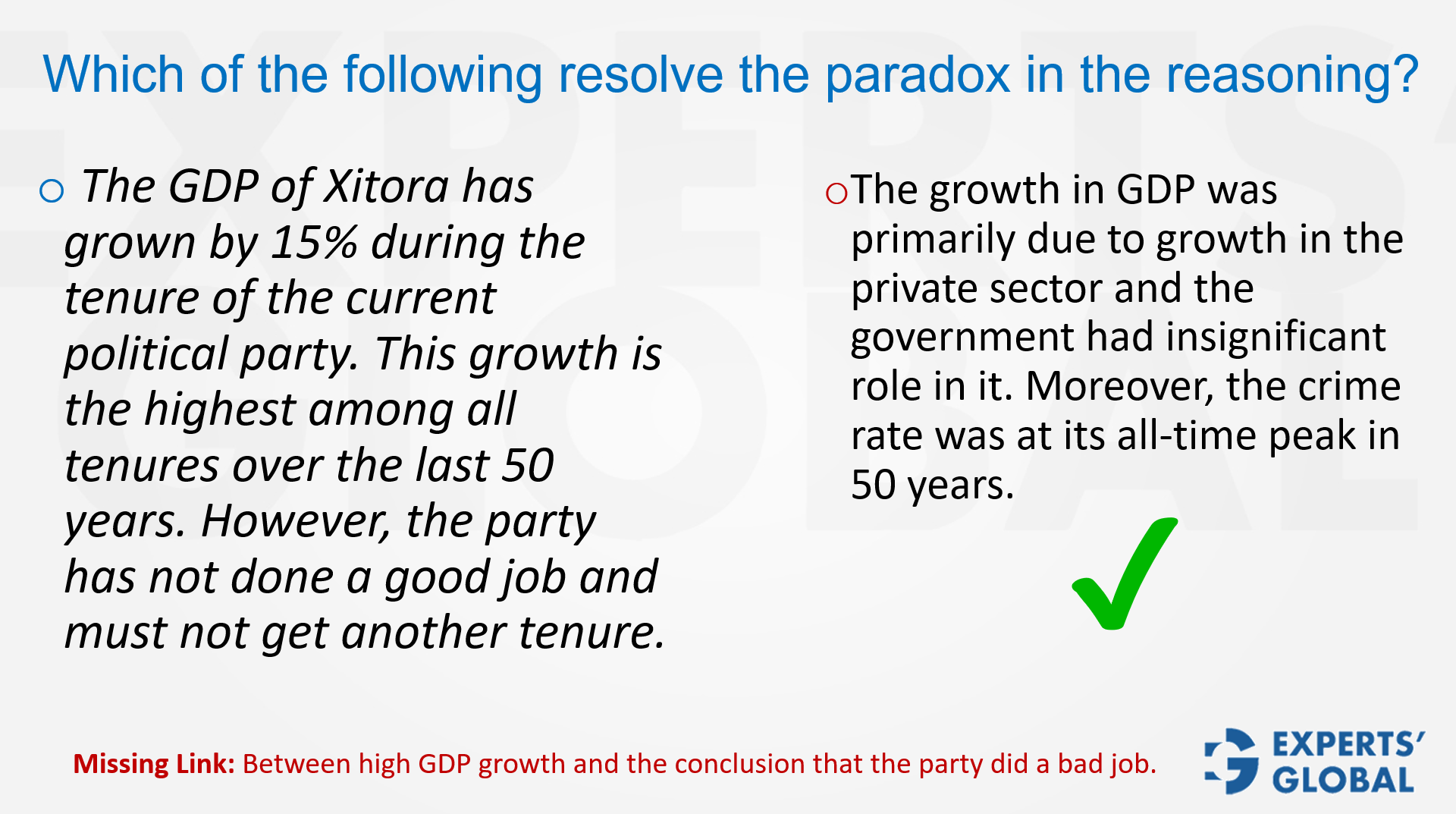
The GDP of Xitora has grown by 15% during the tenure of the current political party. This growth is the highest among all tenures over the last 50 years. However, the party has not done a good job and must not get another tenure.
The premise talks about extraordinary growth. The conclusion, however, denies credit to the ruling party. The paradox lies in this clash between numbers that suggest success and the judgment that insists on failure.
To solve such questions, the explanation must do one or both of two things:
For instance, one option states: “The growth in GDP was primarily due to growth in the private sector and the government had an insignificant role in it. Moreover, the crime rate was at its all-time peak in 50 years.”
This answer choice (1) removes credit for the growth and (2) introduces a serious flaw in governance.
The paradox is resolved.
An apparent paradox presented in an argument can be resolved in many ways…
Another option says: “During the same tenure, GDP of other similar economies grew by more than 20%.”
The phrase “similar economies” is crucial. It creates a valid basis for comparison, showing that Xitora’s 15% growth was relatively poor.
What seemed impressive now appears unimpressive, which justifies the negative conclusion.
The paradox is resolved.
Yet another choice mentions: “During the same tenure, inflation rose by 20%, the highest growth in more than 100 years.”
At first glance, one might think inflation is irrelevant, but it is not. Both GDP and inflation are economic indicators, deeply connected. High inflation diminishes the impact of GDP growth, thereby explaining why the government cannot be praised.
The paradox is resolved.
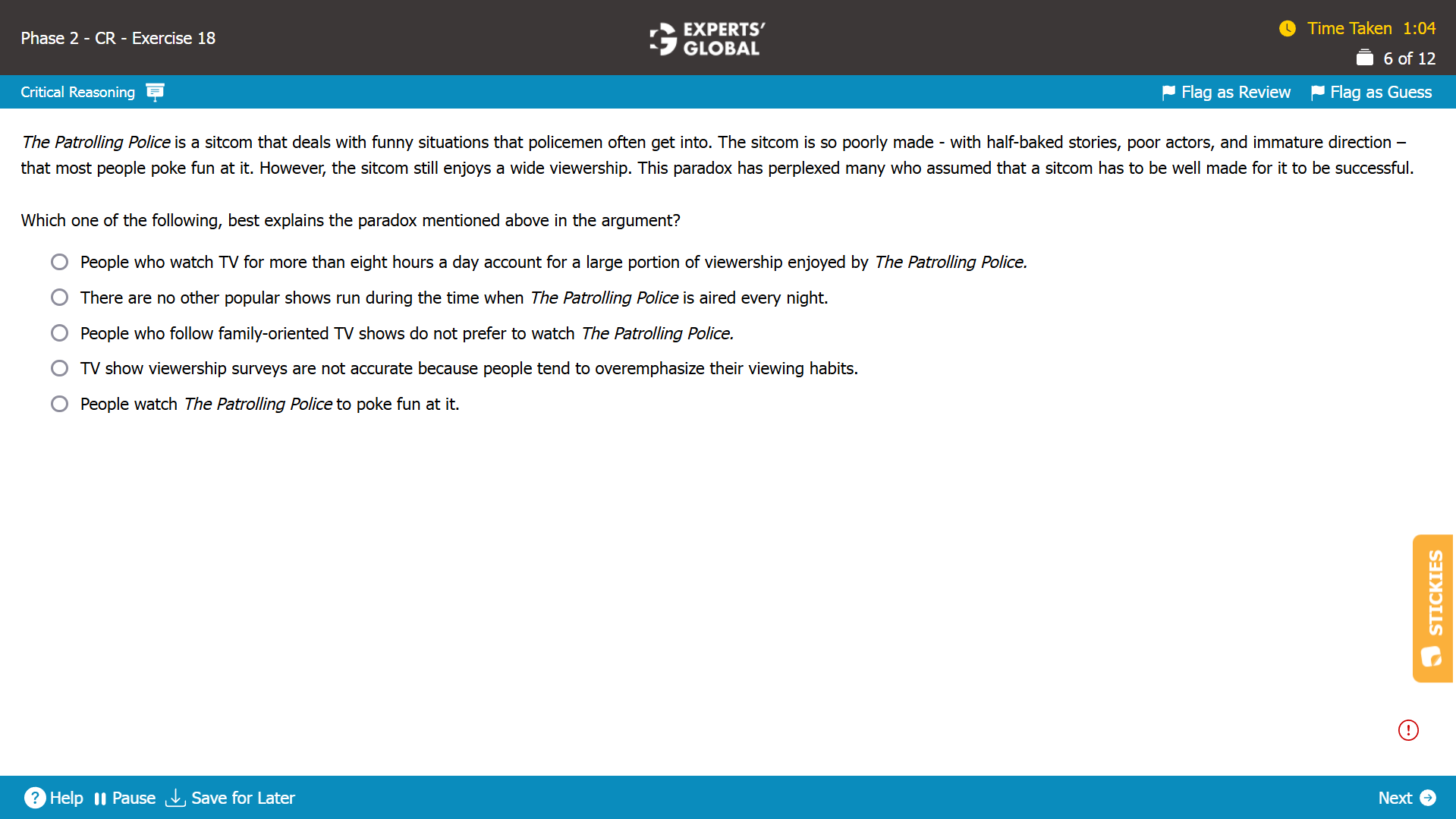
Explanation questions hinge on resolving paradoxes where evidence and conclusion appear to clash. The correct answer removes credit from the evidence or introduces a new factor that justifies the conclusion, restoring balance. Common approaches include comparisons, alternative causes, or related indicators that reshape interpretation. The goal is not to strengthen or weaken but to reconcile the contradiction logically. Practicing this structured method in GMAT simulations builds agility, clarity, and confidence in addressing such Critical Reasoning challenges under timed conditions.
Explanation questions remind us that contradictions are not obstacles but invitations to look deeper. In GMAT preparation, learning to reconcile paradoxes trains the mind to embrace complexity without losing clarity. In MBA applications, this same habit helps candidates integrate diverse experiences and present a coherent narrative that acknowledges challenges while highlighting strengths. In life, too, progress often comes from resolving tensions rather than ignoring them. Each GMAT mock becomes an exercise in finding harmony within conflict, cultivating balanced judgment that endures beyond the test.