Invest 30 seconds...
...for what may lead to a life altering association!
Help Line
- +91.8800.2828.00 (IND)
- 1030-1830 Hrs IST, Mon-Sat
- support@expertsglobal.com
33% off ends soon:GMAT/GRE prep + applications bundle. Profile building, longer mentoring, better results. Inquire

Use the Missing-Link-Approach: read the question type first, map premise and conclusion, locate the reasoning gap, and predict what would bridge it. Then test options to strengthen, weaken, or assume that bridge, eliminating distractors. Cut the noise; think structure, not prose.
Critical Reasoning is a test of structured thought. This overview explains the Missing-Link approach: identify the premise, define the conclusion, and recognize the gap between them. Through this lens, you will learn how to approach assumption, strengthen, and weaken questions, and how to anticipate credible answers even before reviewing the options. Begin with the short video, then continue with the stepwise article to develop clarity, accuracy, and speed in your GMAT practice.

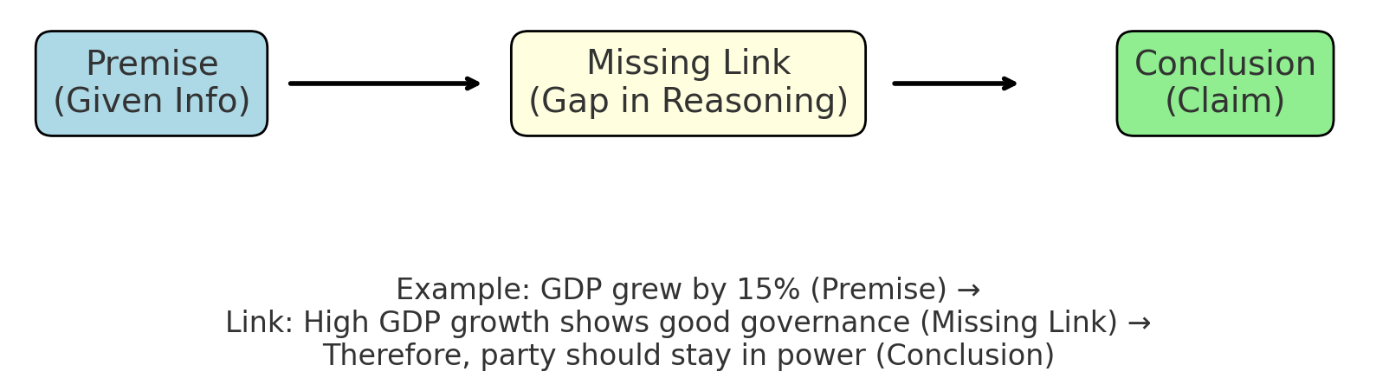
With the right structured approach, Critical Reasoning questions on the GMAT can be engaging, enjoyable, and solved with complete accuracy. Each argument has two parts: a premise that provides information and a conclusion that makes a claim. Very often, the conclusion does not fully follow from the premise, leaving a gap in reasoning. This gap, known as the missing-link, is central to mastering Critical Reasoning and forms an important element of effective GMAT prep course.
The missing-link is the unstated assumption or bridge between the given information and the conclusion. To solve these questions, the first step is always to identify where this gap lies. Once you recognize it, your task becomes finding the answer choice that fills this gap.
Take the example discussed in the video:
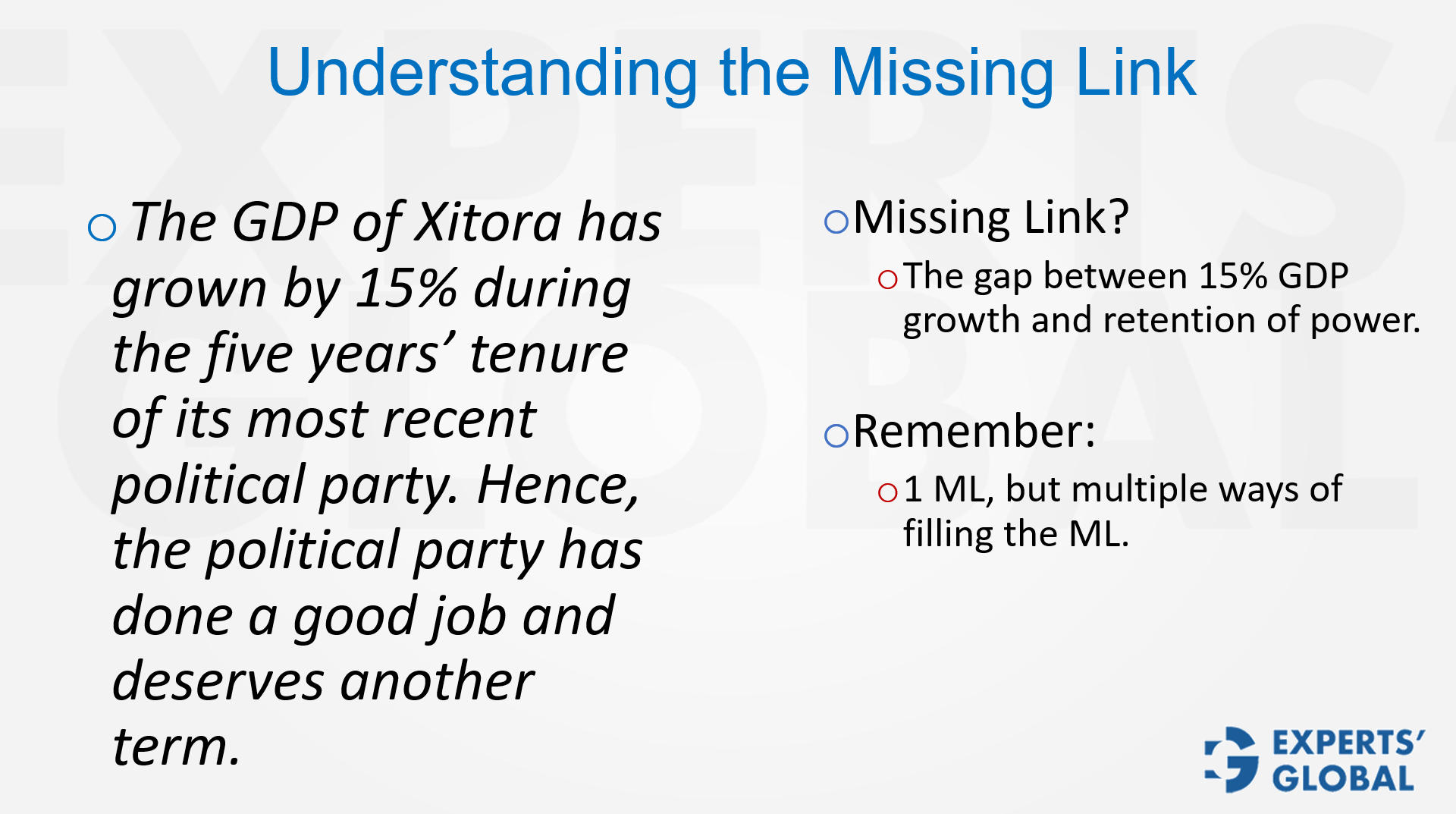
That GDP growth has been 15 percent.
That the ruling party has done a good job and should stay in power.
Clearly, the jump from GDP growth to retaining power is not direct.
This gap between the GDP growth and the retention of power is the missing-link.
There can be multiple ways to fill this missing-link. For instance:
The key idea is that you are not looking for absolute validation of the conclusion. What you seek is any reasoning that strengthens the connection between the premise and the conclusion.
The strategy works best when applied in a structured manner:
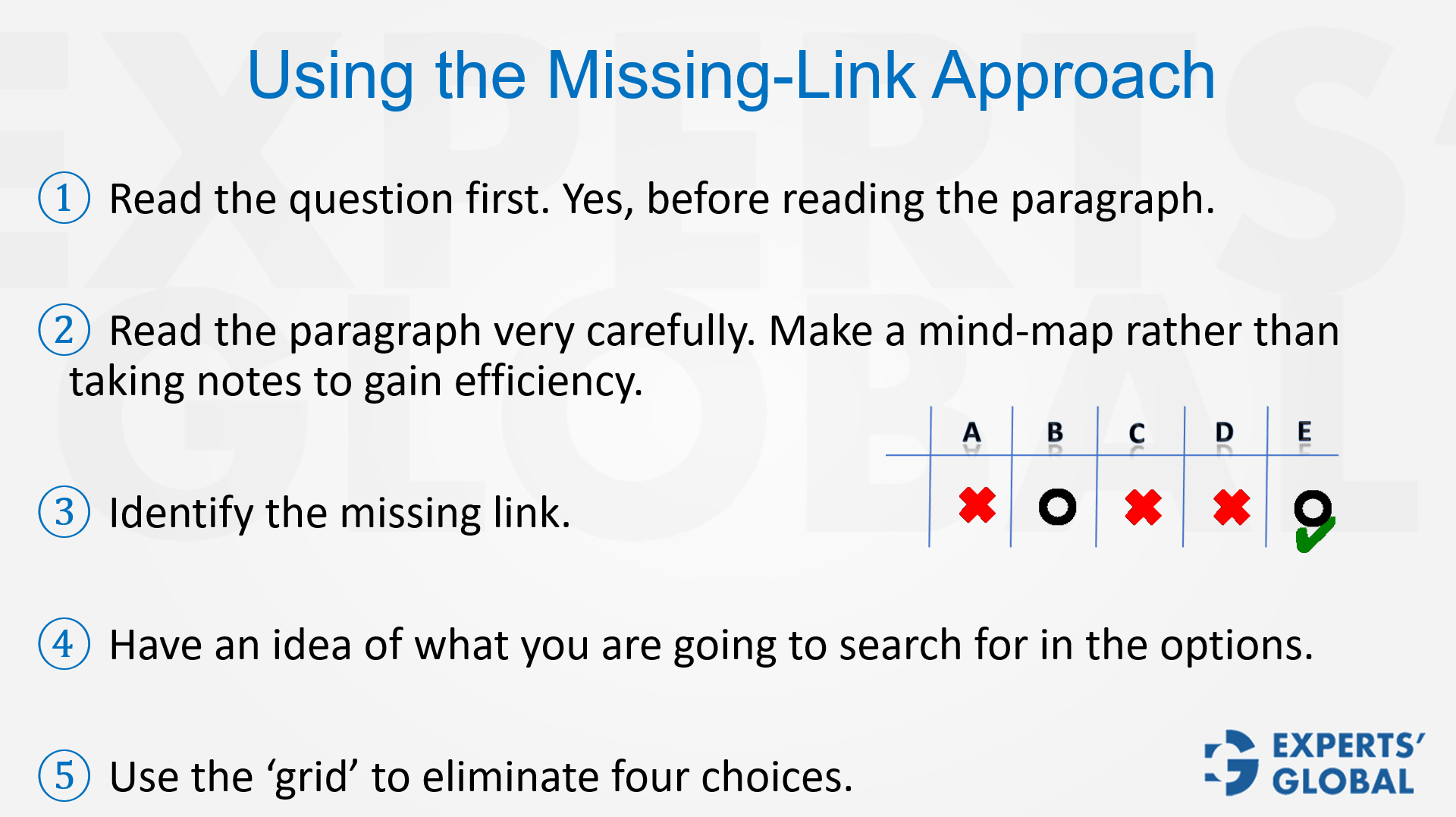
Remember: Critical Reasoning is not merely a question type; it is a durable skill that strengthens GMAT preparation, sharpens MBA applications, and sustains learning across the MBA classroom. It builds disciplined reading, precise logic, and structured decision making. These same habits support an investment career, evaluate risk and reward, and elevate effective management, making you a strong, rigorous business professional.
This approach gives clarity and structure to what otherwise feels like a vague and confusing task. By focusing on the gap and having a clear expectation before checking the answer choices, you avoid getting lost in complex wording. Mastering this method takes practice, but it consistently improves both accuracy and confidence in Critical Reasoning.
Read the question type first, then map the premise and conclusion. Identify the missing-link, predict a bridge that would make the conclusion follow, and use that prediction to prefilter options. Test each choice for strengthen, weaken, or assumption roles, eliminating distractors by logic rather than prose. Build a mind map, keep scope precise, and anticipate traps. Practice systematic elimination under time. Apply the method in GMAT simulation to calibrate pacing, accuracy, and confidence across Critical Reasoning prompts.
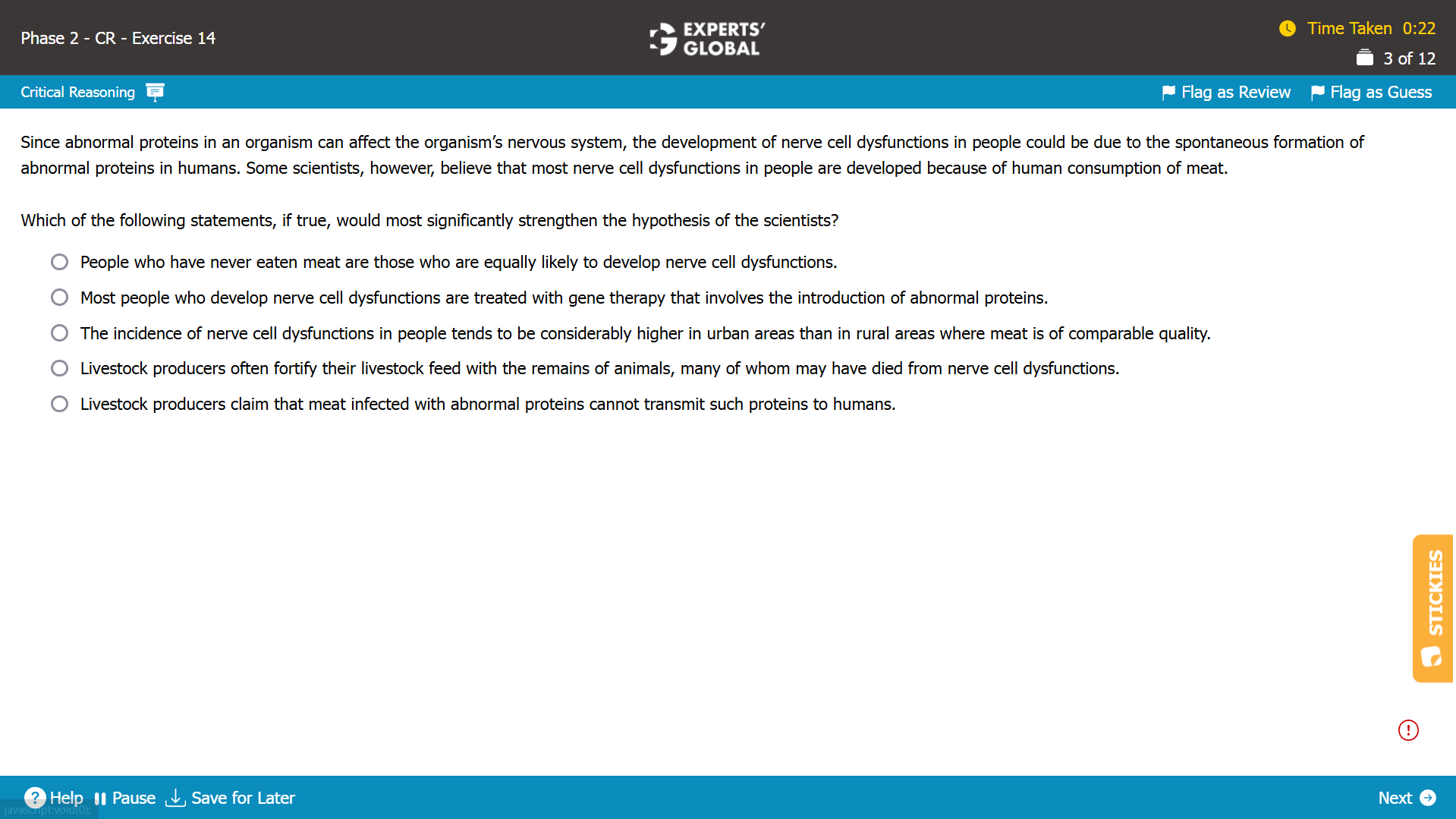
This section provides an authentic GMAT-style Critical Reasoning question, accompanied by a comprehensive solution. Take your time to tackle the question, using the Missing-Link Approach you’ve recently learned for solving Critical Reasoning questions on the GMAT. At this stage, prioritize following the method carefully over just reaching the correct answer. After completing a question, click the explanation toggle to view the official-style answer and a detailed, step-by-step solution. Keep progressing and enjoy the process!
The missing-link lens is more than a tactic; it is a habit of mind. On the GMAT, it trains you to separate evidence from claim, seek the bridge, and test it with discipline. In MBA applications, it guides you to connect achievements, goals, and school fit with explicit rationale. In life, it nurtures clear judgment: pausing to ask what assumption binds facts to belief before acting. Practice this pause. Name the gap. Build the bridge. When you do, your answers become defensible, your decisions coherent, and your path deliberate, resilient, and aligned with purpose in study, applications, leadership, and life.
For a GMAT student, this matters because habits built here strengthen rigorous reading. Arguments in passages must be mapped to premises, conclusions, and the link that makes the claim follow. The GRE, within Reading Comprehension, evaluates these skills without naming them separately. Mastering the missing link refines structured thinking, not just scoring. Scholarly discussions of GRE prep and analyses from GRE mocks often highlight these reasoning anchors, confirming their enduring value for analytical writing, decision making, and leadership. That breadth reflects real-world analytical demands and standards.