Invest 30 seconds...
...for what may lead to a life altering association!
Help Line
- +91.8800.2828.00 (IND)
- 1030-1830 Hrs IST, Mon-Sat
- support@expertsglobal.com
33% off ends soon:GMAT/GRE prep + applications bundle. Profile building, longer mentoring, better results. Inquire

Inference questions on GMAT CR: conclude only what must be true from the given statements. Don’t add assumptions, predictions, or comparisons. Map the facts, then test options – keep those directly supported and reject anything needing extra conditions. Aim for precise conclusions, not judgments on causes or merit.
Inference questions demand precise reading and disciplined reasoning. This overview highlights how they differ from assumptions or conclusions: the correct inference must follow directly from the facts given, without extrapolation or added conditions. The video and article here explain how to map information, filter tempting yet invalid options, and stay within logical boundaries. Practicing this skill sharpens accuracy in GMAT prep and fosters clarity of expression in MBA admissions, where staying grounded in evidence strengthens both analytical performance and persuasive communication.

Inference questions require students to work with the information provided and nothing else. Unlike assumptions or strengthening statements, inferences cannot rely on extra conditions, speculations, or imaginative interpretations. The test-makers design these questions to measure your ability to extract conclusions strictly from the given text.
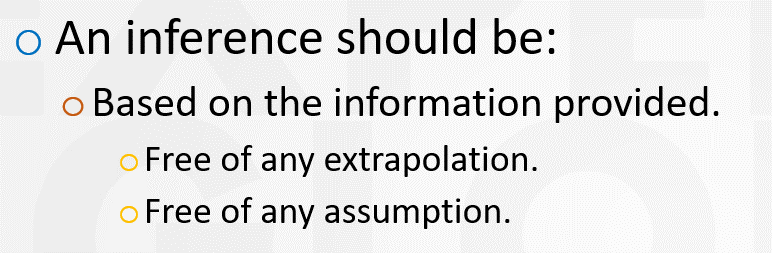
Expect a brief passage with layers, twists, and turns. Your task is to select the option that select an answer choice that can be inferred from the information provided, without the need for any assumption or extrapolation.
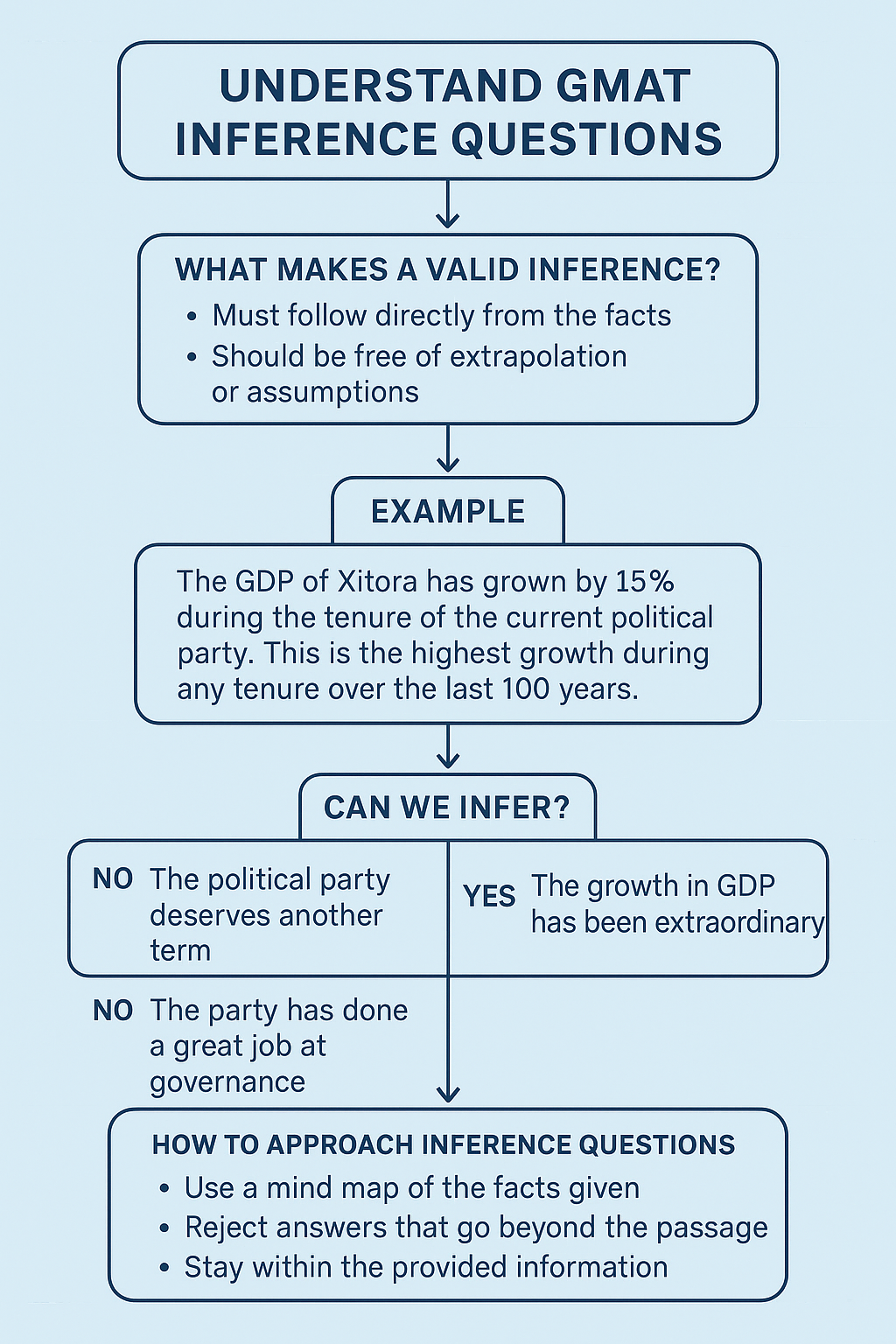
A correct inference must meet two criteria. First, it should follow directly from the facts presented. Second, it must be free of extrapolation and hidden assumptions. While the missing link approach is central to many critical reasoning questions, in inference questions, the mind map approach works more effectively. You map what is given and carefully check what can be logically concluded from it.
Consider this passage:
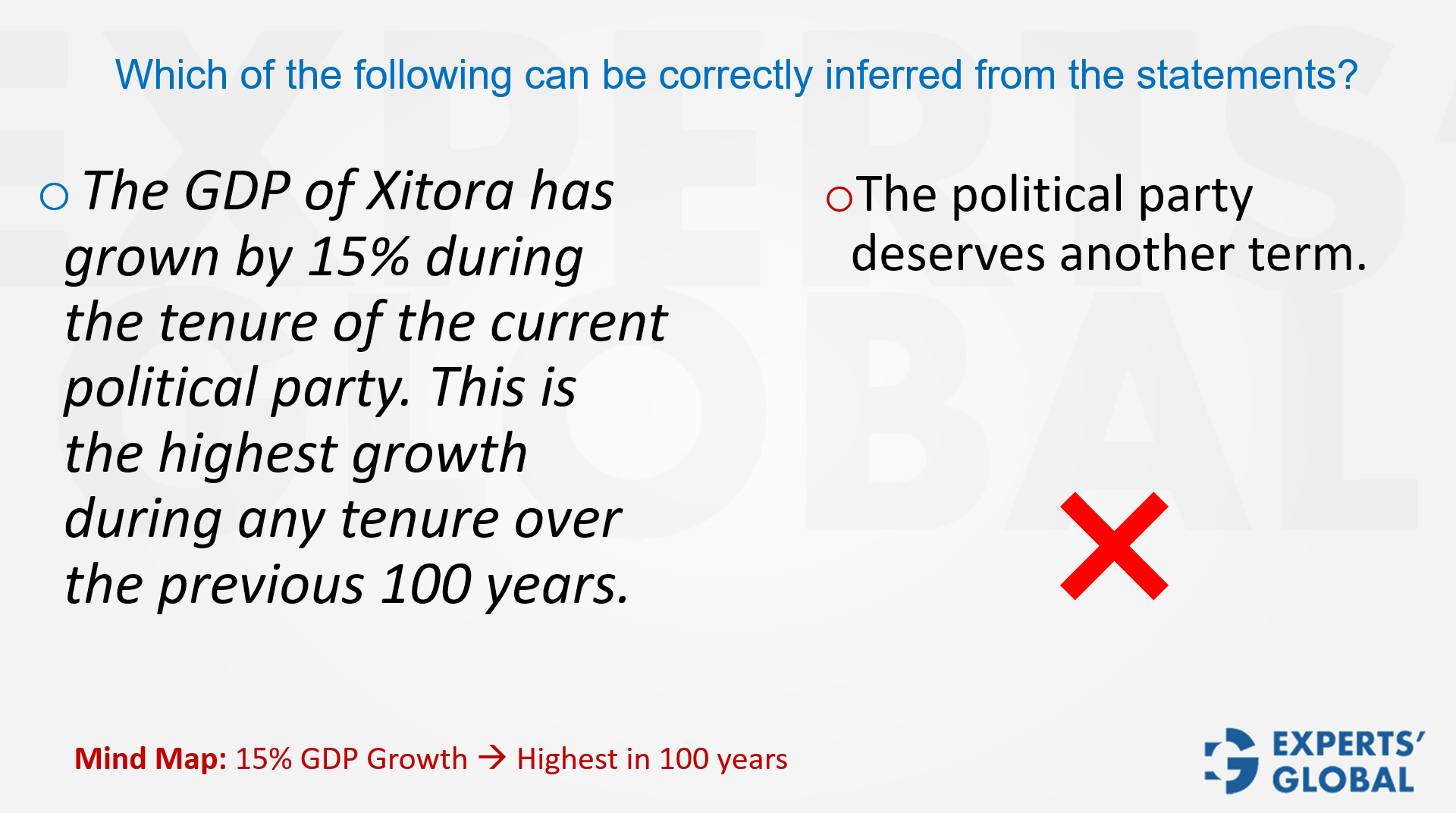
The GDP of Xitora has grown by 15% during the tenure of the current political party. This is the highest growth during any tenure over the last 100 years.
The information given is clear: GDP growth of 15%, highest in a century.
What can we infer?
“The political party deserves another term.”
“The party has done a great job at governance.”
“If it were not for the current political party, the GDP growth would have been less than 15%.”
“No other similar economy witnessed greater than 15% GDP growth during the same tenure.”
“The growth in GDP during the tenure of the current party has been extraordinary.”
Students often confuse inference with assumption. An assumption fills a missing link and must be true for the argument to hold. An inference, however, is not about filling links—it is about staying within the boundaries of what is already stated. Be cautious of answer choices that look attractive but require an extra step of reasoning.
Inference questions are a reflection of discipline. They ask you to resist assuming and reward you for simplicity and accuracy. With practice, and by building clarity of thought, you will find these questions easier to manage and a reliable source of marks.
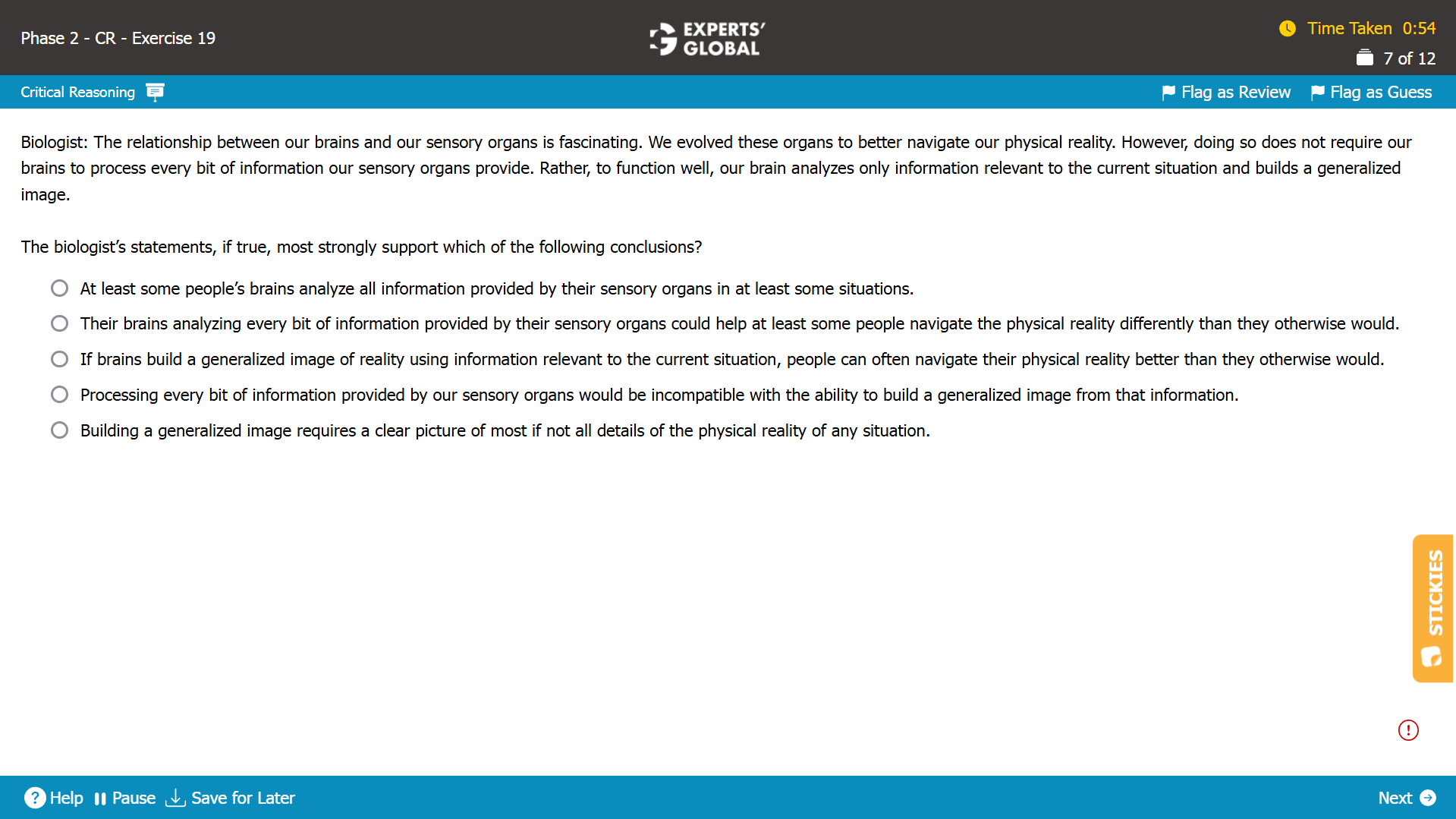
Inference questions require strict discipline – derive only what must be true from the given facts without adding assumptions, predictions, or external comparisons. A valid inference directly follows from the text, while attractive but speculative options must be rejected. The method involves mapping information, testing each option against the passage, and retaining only what is unavoidably true. Consistent practice with GMAT simulations strengthens this discipline, building accuracy, speed, and confidence in handling inference questions under real exam conditions.
Inference questions remind us that wisdom often lies not in speculation but in drawing strength from what is already known. In GMAT preparation, this discipline nurtures precision, as you learn to trust the given facts and avoid unnecessary leaps. In MBA applications, the same principle applies—strong essays emerge from clarity of evidence rather than exaggeration. In life, too, meaningful choices rest on recognizing what is certain before building on it. Each GMAT mock serves as a training ground for this balance of restraint and insight.