
Invest 30 seconds...
...for what may lead to a life altering association!
Help Line
- +91.8800.2828.00 (IND)
- 1030-1830 Hrs IST, Mon-Sat
- support@expertsglobal.com
33% off ends soon:GMAT/GRE prep + applications bundle. Profile building, longer mentoring, better results. Inquire

Sync your routine with your exam slot. Study in focused 2.5-hour sittings and try to stick to official material. Revise all concepts and reattempt your error log. Take only fresh, unrepeated mocks. Consolidate your preparation, stay mentally happy and positive, and avoid fatigue or stress.
The final few days before the GMAT are about consolidating your preparation and entering the correct exam mindset so that your effort translates into a strong performance. This stage is not where the real due preparation happens because the hard work is already complete. What matters now is how effectively you conclude your GMAT prep and position yourself for the test. The way you approach this period can define your success on the GMAT, influence your score by several points, and shape the steadiness with which you handle exam pressure. This article outlines the important tips for the days leading up to the GMAT and highlights the common mistakes that candidates make, so you can avoid them and follow the best practices during this crucial final phase.

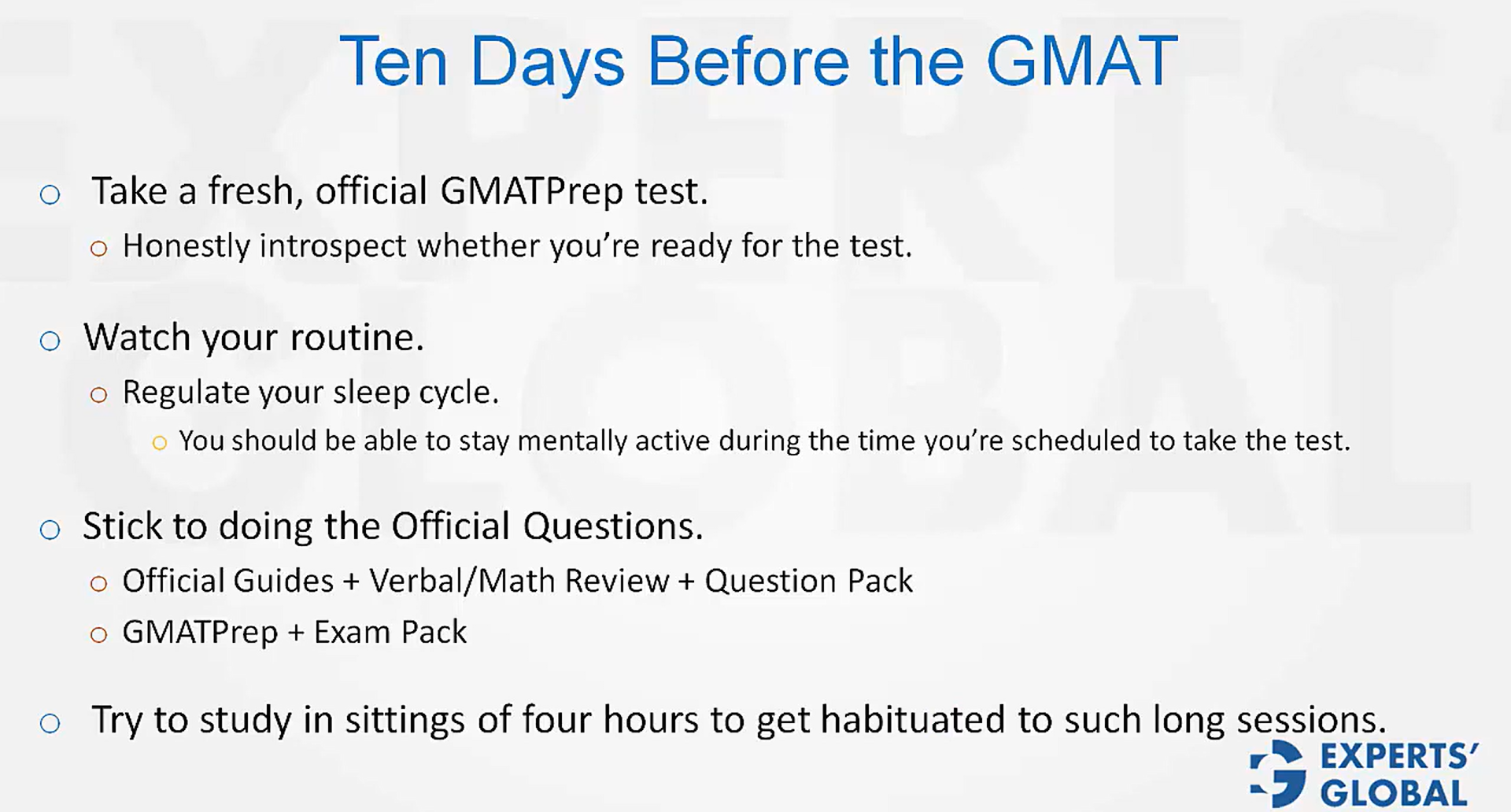
Roughly a week and a half before your GMAT, take a fresh, official GMAT practice test to understand your level of preparedness. Honestly introspect on whether you are ready for the test. If not, you may want to reschedule your GMAT. Hopefully, you will be able to proceed with the test as planned.
Ensure that you are mentally active during the time of day that you have scheduled your GMAT for. For example, if you have scheduled your exam for the 9 am slot, start getting up early and being mentally agile during that time of the day.
During these final days, as far as possible, stick to the official study material – practice questions as well as mock tests. Avoid solving resources that you have solved earlier; else, the actual GMAT, with all unseen questions, shall feel more difficult.
Get habituated to such long sessions. GMAT is a 2.5 hours long exam and tests your stamina to perform for long, at the peak of your concentration.
GMAT mock tests are especially important in the final days because they function as dress rehearsals for the real exam. Take each mock under true exam conditions and carefully analyze your performance and mistakes. Identify the frequency that suits you best. Some students take leave from work and attempt a mock each day, while many prefer taking a full length mock every ~3 days during this phase before the GMAT.
At this point, you should begin taking it a bit easy. The hard work is already done, and the preparation of the last two days will not determine your score. However, excess stress can negatively affect your performance. Avoid overstressing and focus calmly on your final preparation. Revise your short notes, take a final official mock test, and work toward being mentally ready for the GMAT.

Take it really easy. If not studying makes you uncomfortable, study a little but avoid tiring yourself out. Ideally, spend the last day unwinding. Watch a movie or get some fresh air, do whatever helps you relax. Make sure you get a good night’s sleep before the exam and, if possible, aim for around ten hours :). If you have not visited your GMAT center yet, it is wise to go once and see exactly how long the commute will take.
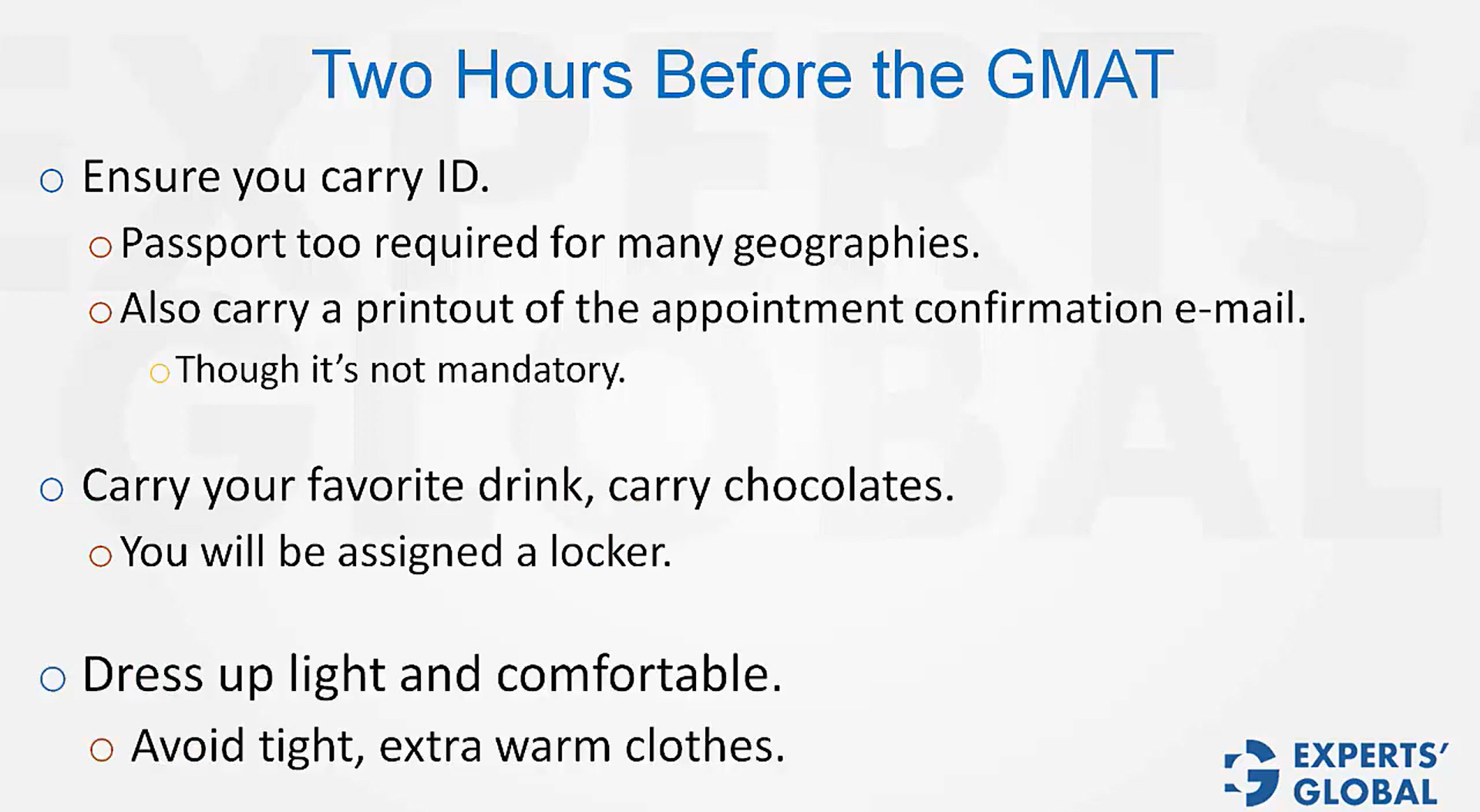
On the day of the exam, carry two forms of valid ID; in many locations, a passport is required, and in India it is the only accepted identification. You may also carry a printout of your appointment confirmation, though it is not mandatory. Bring a drink and a light snack for the eight-minute break, and remember that you will be given a locker to store your personal belongings. Wear light and comfortable clothing and avoid anything tight, restrictive, or overly warm, since physical discomfort can distract you during the GMAT.
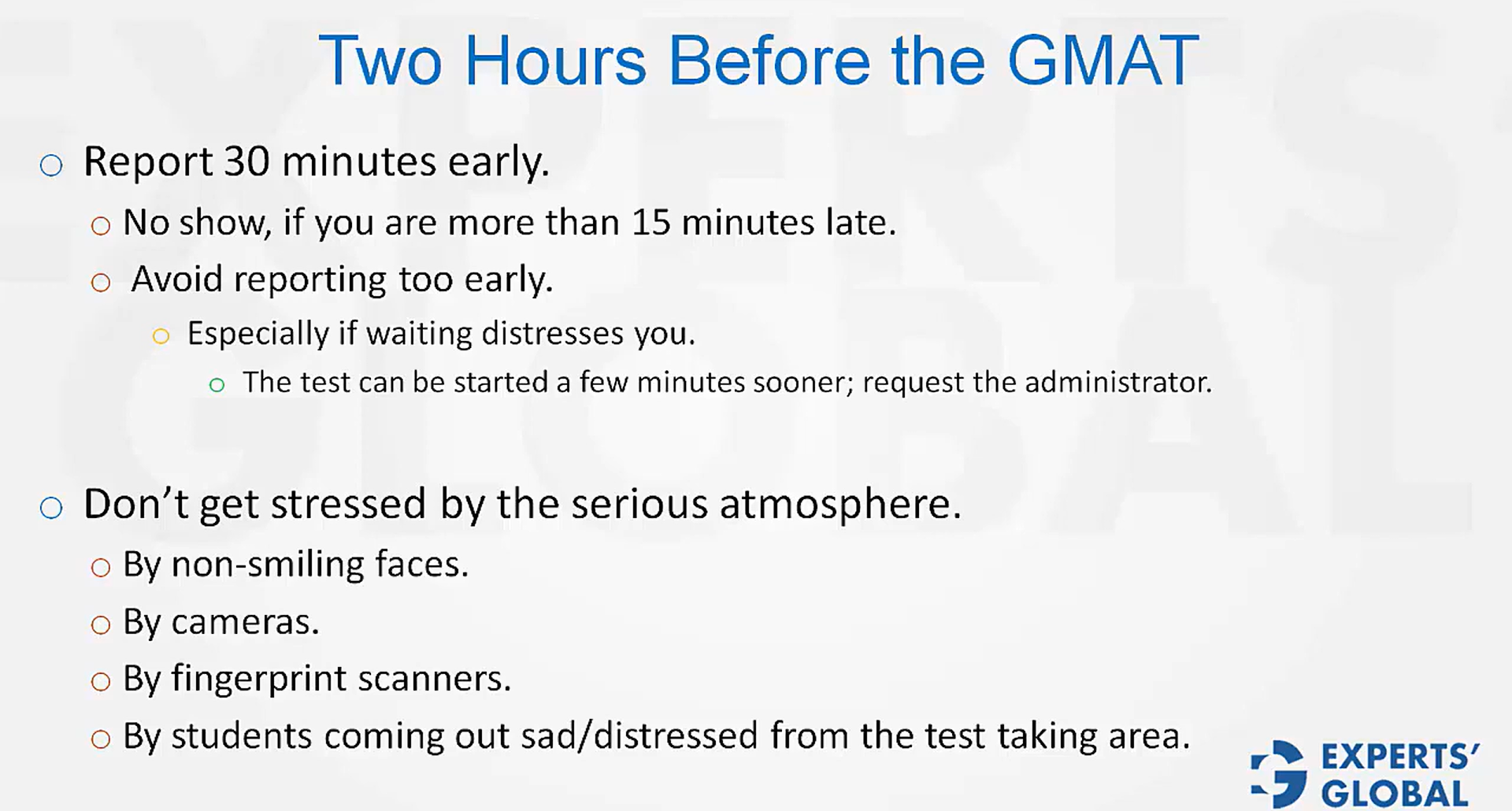
Report thirty minutes early to stay safe, but avoid arriving far too early because waiting around can create unnecessary anxiety. If you do arrive ahead of time, you may check with the administrator about beginning a few minutes early. Stay calm in the serious atmosphere of the center and avoid getting affected by the behavior or mood of other candidates. Keep your focus on your own performance. You will be under camera surveillance and will need to undergo a fingerprint scan every time you enter or exit the testing area. Some students may appear stressed or unhappy, but none of that should influence you. Stay centered and attentive to your own test.
Immediately before the test, be sure to use the facilities and freshen up. Avoid consuming excess liquid during the test. Stay hydrated but only take a few sips. As you enter the test-taking area, think about your parents and your inspirations.
It helps to step into the GMAT with a calm sense that you truly have nothing to lose and everything to express. Remind yourself that this is just a standardized test, not a battle, and that even in the worst case, if you do not perform as you hoped, nothing major in your life will suddenly change. The GMAT offers you several attempts over the year, and you also have the freedom to choose which score you finally report to your institutions. In practical terms, there is almost nothing at stake that cannot be corrected. With this clarity, allow yourself to approach the test with a positive, inspired, and carefree mindset so that you can give your best and beat the GMAT.
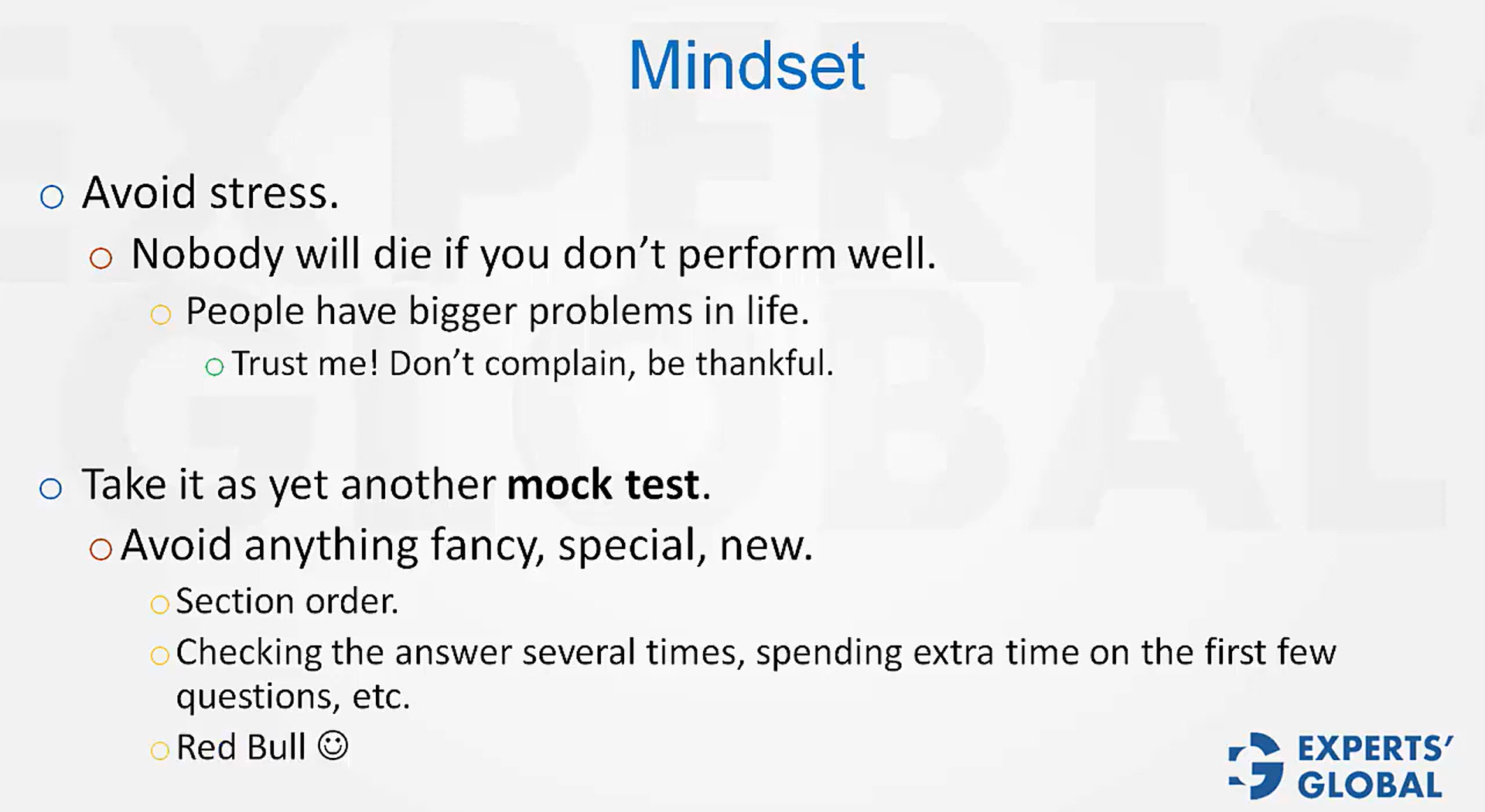
Treat the real GMAT exactly like the mock tests that have recently worked for you. Simply stick to the same section order, follow the same exam routine, and maintain the same timing strategy that you used during your last few mocks. Keep your overall mindset and approach identical to what has given you stable and reliable performances. Avoid giving the GMAT any extra importance just because it is the real test. For example, do not start checking your responses an extra time or begin devoting extra time to the first few questions. These are common mistakes that students commit when they try to give extra respect to the real GMAT. Please do not fall into that trap. Just trust your process, rely on what has already worked for you, and take your GMAT as your final mock test.
For complete coverage, you may want to read our article: Take the Real GMAT as Your Final GMAT Practice Test.
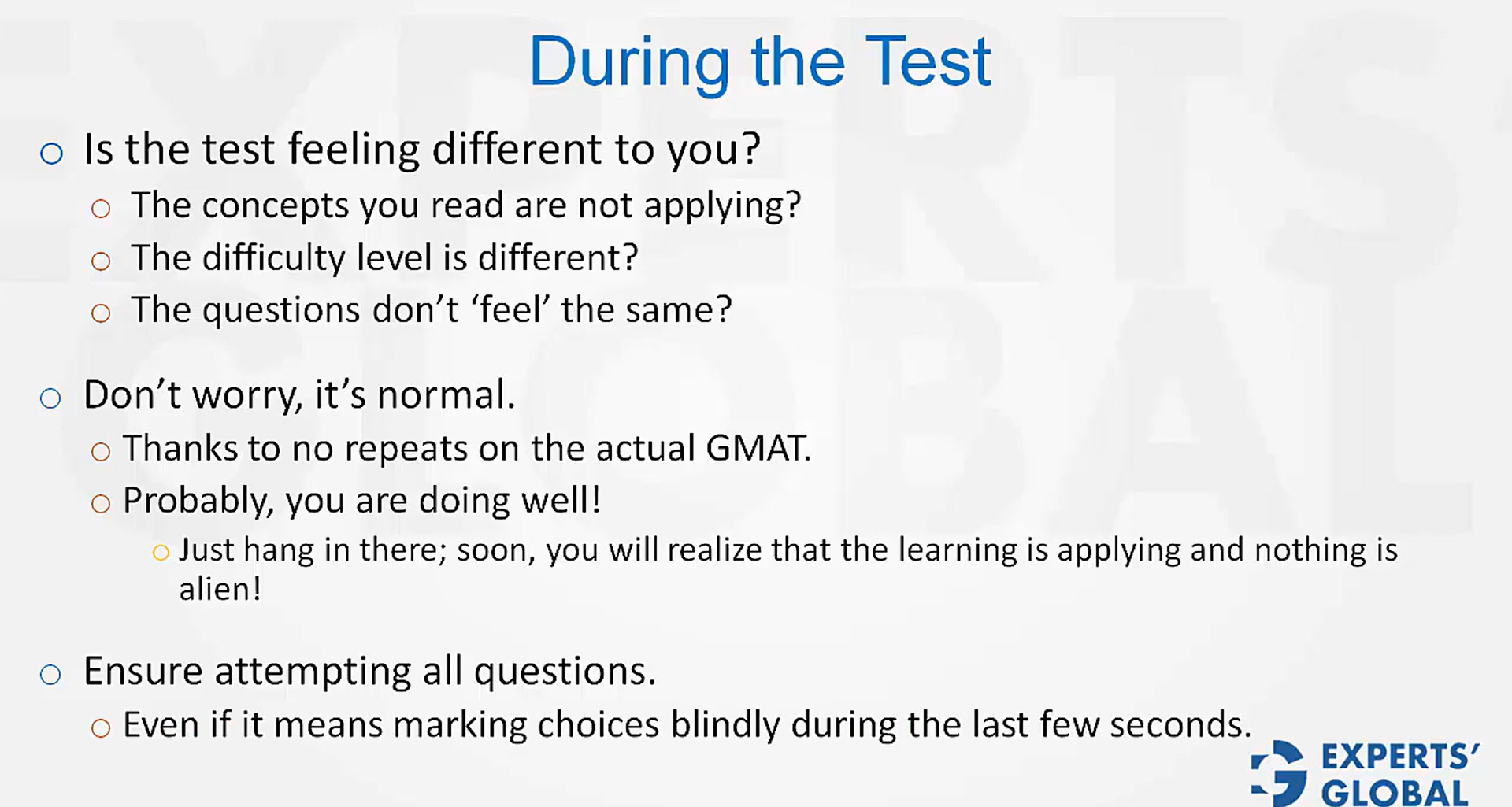
While giving the GMAT, pay special attention to the first few questions in each section. Remember that if the test feels too easy, it is actually a bigger problem. If you are having to sweat, it means that you are doing well and the software is throwing difficult questions at you. Do not be intimidated by the difficulty of the test and take it one question at a time. Avoid judging your performance while you are taking the test and focus only on the question in front of you. Have faith that if you do well on the questions from this point onward, wherever you are in the test, you will do well overall.
Avoid getting stuck. Stories of a difficult RC set or a complex MSR set ruining a candidate’s entire GMAT score are common, so do not let that happen to you. If you have spent more than two minutes on a question, make an educated guess, mark it for review, and move on, because easier questions are waiting for you. At the end of the section, if time allows, return to the flagged questions and attempt them calmly. Remember that you can still score high on the GMAT despite getting a few questions incorrect, so do not let a small set of difficult questions ruin your overall GMAT.

If the GMAT somehow feels different to you, the concepts do not seem to apply, or the difficulty feels transient, do not worry. This is perfectly natural. Many students feel this way because, while taking GMAT mock tests, they encounter some repeat questions, and this causes the real GMAT, which never has repeat questions, to seem unfamiliar. The GMAT might also feel different because of the exam pressure or because you are doing well, causing the software to throw difficult questions at you. Just hang in there and soon you will realize that everything you have learned is applying and the test is not alien.
For complete coverage, you may want to read our article on When the Real GMAT Feels Different from the Prep Done.
For complete coverage, you may want to read our article on 20 GMAT Exam Day Tips.
We would advise you to make full use of the single eight minute break. However, do not use this time to analyze your performance; instead, focus on relaxing and preparing yourself for the rest of the test. Have the food and drink that you brought but avoid overeating. Do not let the fingerprint scanners and the serious atmosphere stress you out, and, most importantly, be back on time. The test will restart after the stipulated break, and if you do not return by then, you will lose time, which may only stress you out further.
For complete coverage, you may want to read our article on How to Utilize the Break During the GMAT.
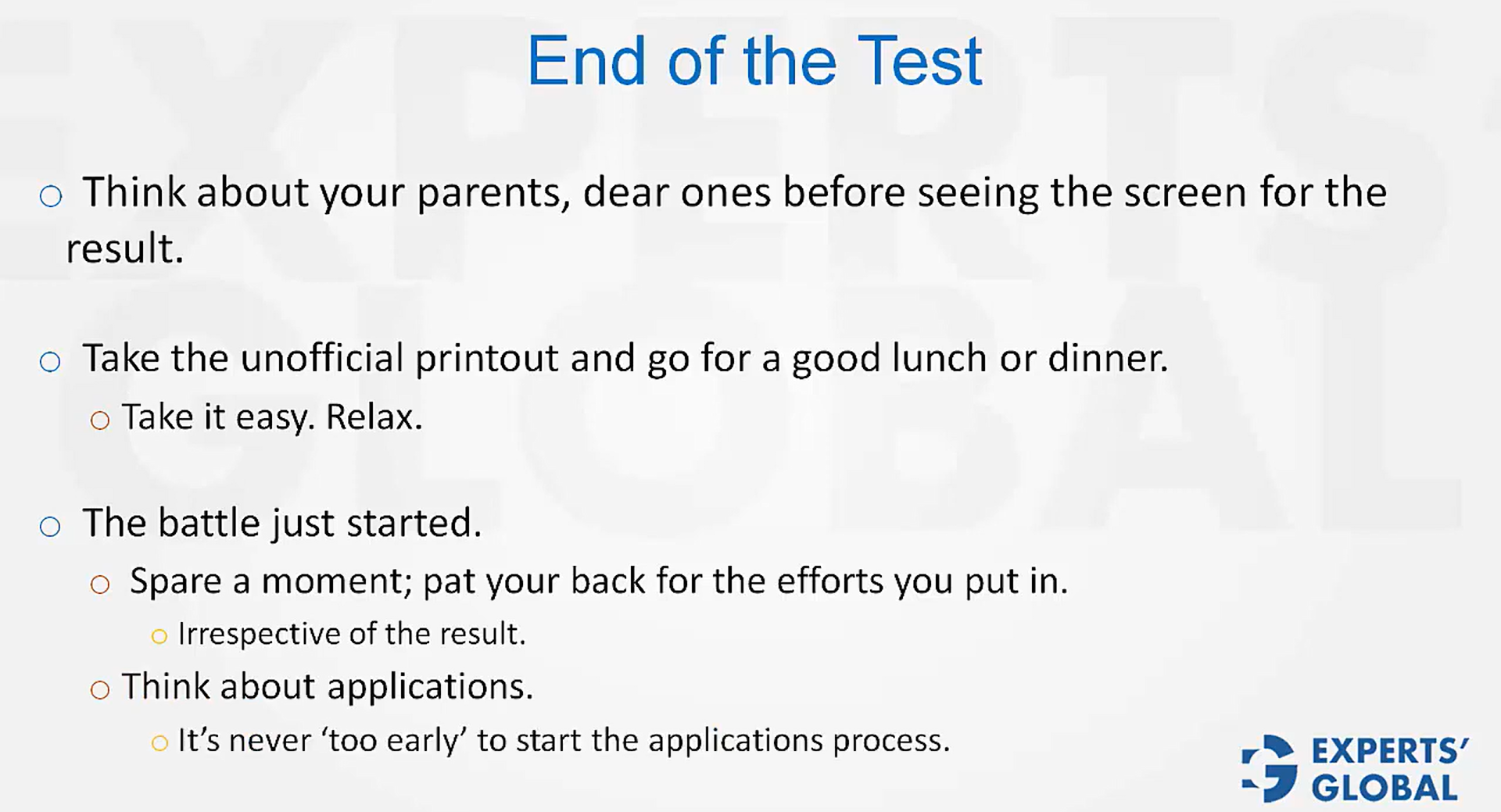
Before taking a look at your results, close your eyes and think about all the hard work you put in your prep and think of your parents and your loved ones. With any luck, you will have gotten a good score. Celebrate with a nice meal. Remember the battle has just started, so take a minute to pat yourself on the back for the effort that you have put in and start thinking about your applications process. In case you are considering professional help for your MBA applications, you may want to inquire for MBA admission consulting by Experts’ Global Remember, it is never too early to start application work.
Congratulate yourself for all the hard work you put in your prep. We are sure that beautiful things are in store for you.
All the best!
Team Experts’ Global
