
Invest 30 seconds...
...for what may lead to a life altering association!
Help Line
- +91.8800.2828.00 (IND)
- 1030-1830 Hrs IST, Mon-Sat
- support@expertsglobal.com
33% off ends soon:GMAT/GRE prep + applications bundle. Profile building, longer mentoring, better results. Inquire

The following video and the theory that follows give you a focused recap of the Mind Map Approach, explain how to apply it to GRE highlighted content questions, and then demonstrate its use on GRE-style questions with representative answer choices so you gain first-hand experience. Take your time, pause the video to apply the approach yourself, study each explanation carefully, and by the end, build a steady habit of using the Mind Map Approach for highlighted content questions across your GRE practice exercises and GRE practice tests.
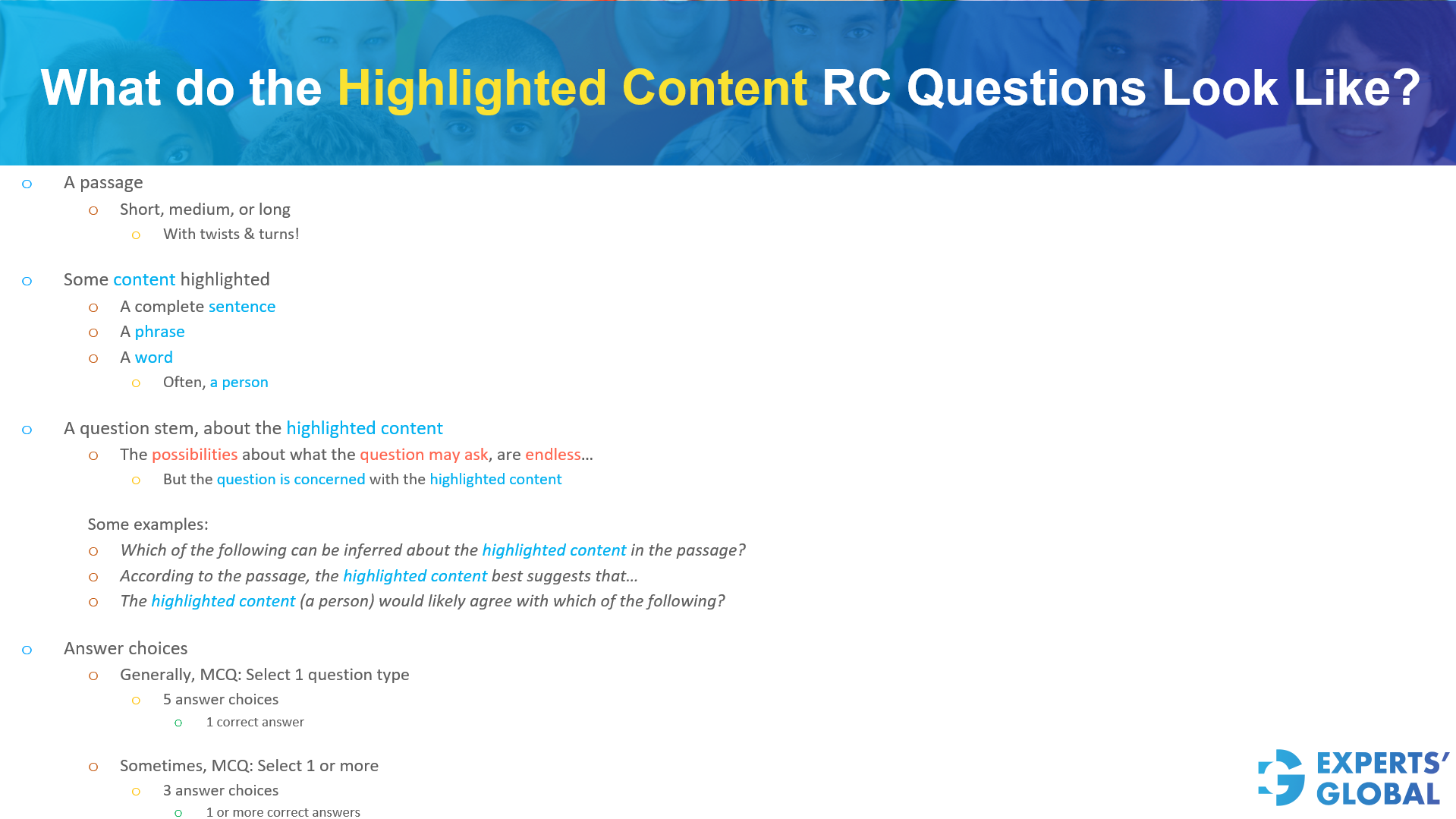
A passage may be short, medium, or long and include twists and turns. Some content within the passage is highlighted to guide your attention. The highlighted content can be a complete sentence, a phrase, or a word. In many cases, the highlighted word refers to a person. A question stem focuses directly on this highlighted content. While the question may cover a range of topics, it always centers on the highlighted content. Common question stems ask what can be inferred about the highlighted content, what it best suggests, or what a highlighted person would likely agree with. The answer choices typically follow a multiple-choice format with one correct answer out of five options. In some cases, the format allows selecting one or more correct answers from three options.
In an earlier lesson, you learned the Mind Map Approach for solving any GRE Reading Comprehension question, and this lesson builds smoothly on that base. A part of the Experts’ Global GRE online course, the Mind Map Approach helps you work through GRE Reading Comprehension in a structured and purposeful way that supports both accuracy and pace with steady practice.
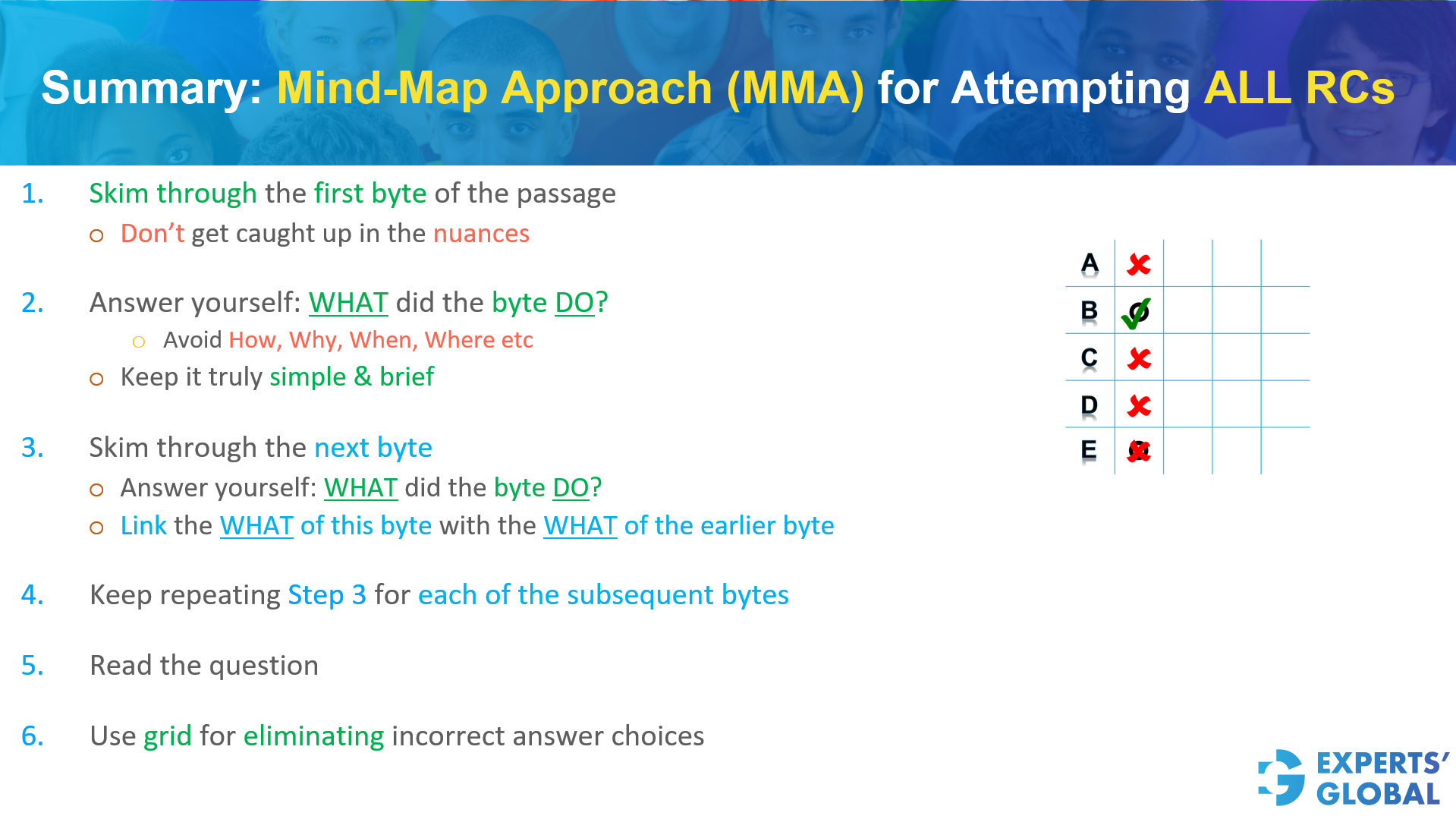
Before moving ahead, here is a short refresh of the Mind Map Approach –
Start by skimming the first byte of the passage, meaning one logical piece you can process in a single look, without focusing on details. Ask yourself what this byte does and keep the takeaway short. Move to the next byte, ask the same question, and keep that takeaway short as well. Link these takeaways as you move forward and repeat this process for each new byte to build a clear mind map of the passage. After that, read the question and remove incorrect answer choices using a grid.
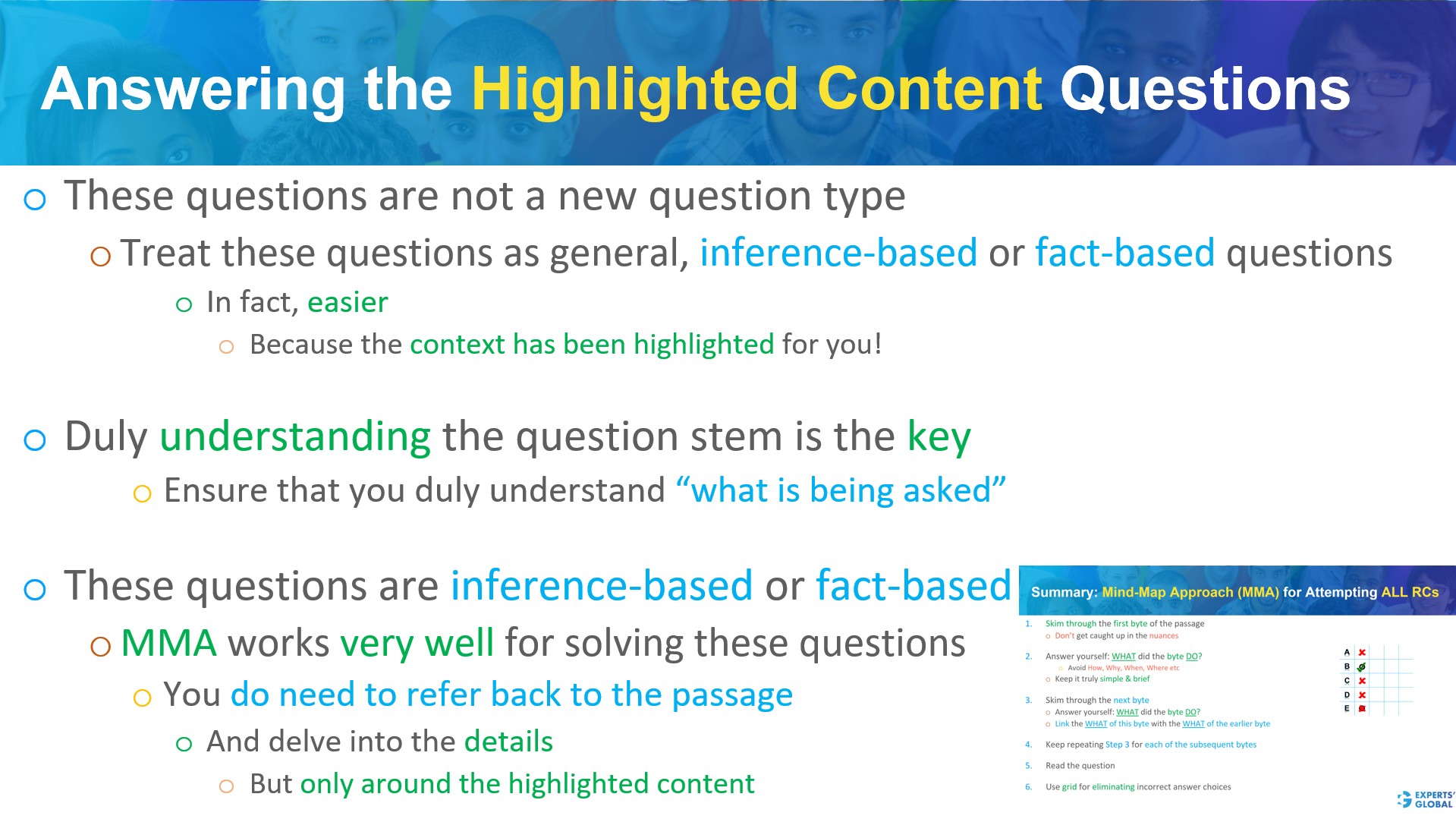
The Mind Map Approach supports all RC question types. In this lesson, the focus is on applying the Mind Map Approach to “highlighted content” questions. In such questions, a specific part of the passage, usually a few words or a short clause or phrase, is highlighted, and your task is to identify the answer choice that best identifies the role that highlighted content plays in the passage. The mind map you build shows how information flows and develops across the passage, which helps you clearly see the immediate and broader context around the highlighted content. As a result, you understand why that content appears at that point and how it contributes to the author’s overall line of thought. To solve these questions, you return to the relevant part of the passage, examine the surrounding context with care, set a broad expectation for the correct answer choice, and then eliminate incorrect answer choices to reach the correct one.
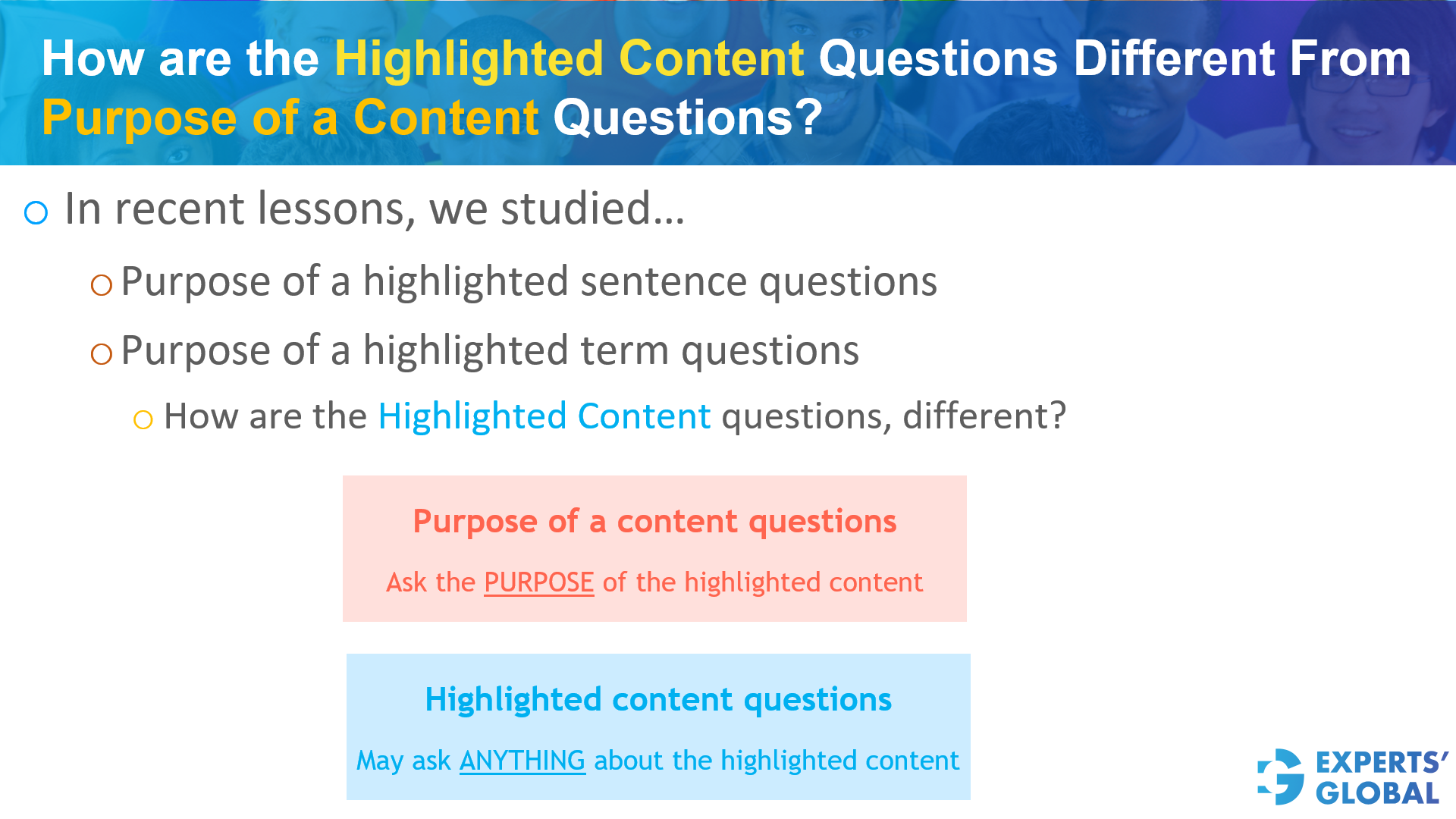
Two question types are commonly tested: purpose of a highlighted sentence questions and purpose of a highlighted term questions. Highlighted content questions build on these types. Purpose of a highlighted content questions specifically ask about the role the highlighted content serves. Highlighted content questions have a broader scope and can ask anything about the highlighted content, not just its purpose. Understanding the difference between these question types helps you think clearly, accurately, and structure your approach while reading.
Below is a snapshot of the GRE style Highlighted Content Reading Comprehension question discussed in the video, along with the Mind Map approach used to solve it and the Mind Map created for the passage.
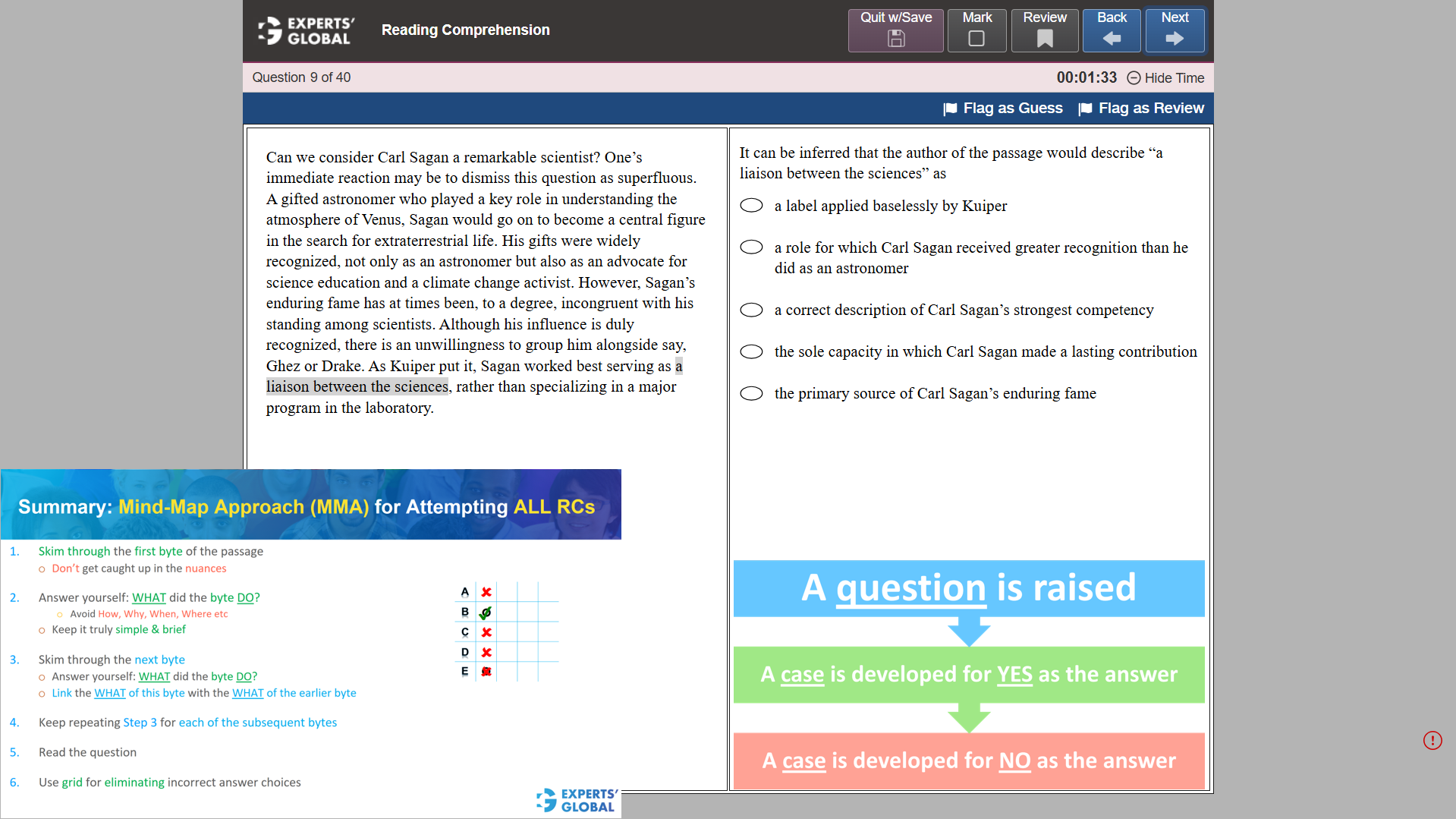
Correct Answer: C
For a detailed explanation of this question, please refer to the video presented earlier on this page.
Following is a step-wise written explanation, using our Mind Map Approach…
Correct Answer: C
Free full length GRE diagnostic test
