
Invest 30 seconds...
...for what may lead to a life altering association!
Help Line
- +91.8800.2828.00 (IND)
- 1030-1830 Hrs IST, Mon-Sat
- support@expertsglobal.com
33% off ends soon:GMAT/GRE prep + applications bundle. Profile building, longer mentoring, better results. Inquire

With a methodical and efficient approach, preparation for and performance on the GRE Analytical Writing section can be straightforward. You must ensure that your Analytical Writing preparation receives due attention because for many institutions and programs, the Analytical Writing score can play a pass or fail role. At the same time, it is equally important that this preparation does not extend for too long, since Quantitative and Verbal scores remain central to overall GRE performance. This makes an efficient and well planned approach essential so that Analytical Writing preparation is completed promptly and correctly, leads to a strong score, supports your admission outcomes, and allows your broader preparation focus to remain aligned.
The following video and the theory that follow, part of Experts’ Global’s GRE Prep Online course, help you quickly revise and review the Analytical Writing section. They cover the standard instructions on the exam, clarify your task in the Analytical Writing section, explain the correct approach for writing the essay response, highlight why structure matters in a strong essay, suggest a broad essay structure, emphasize the value of developing your own template for test day, and explain how to manage the 30 minutes available during the exam.
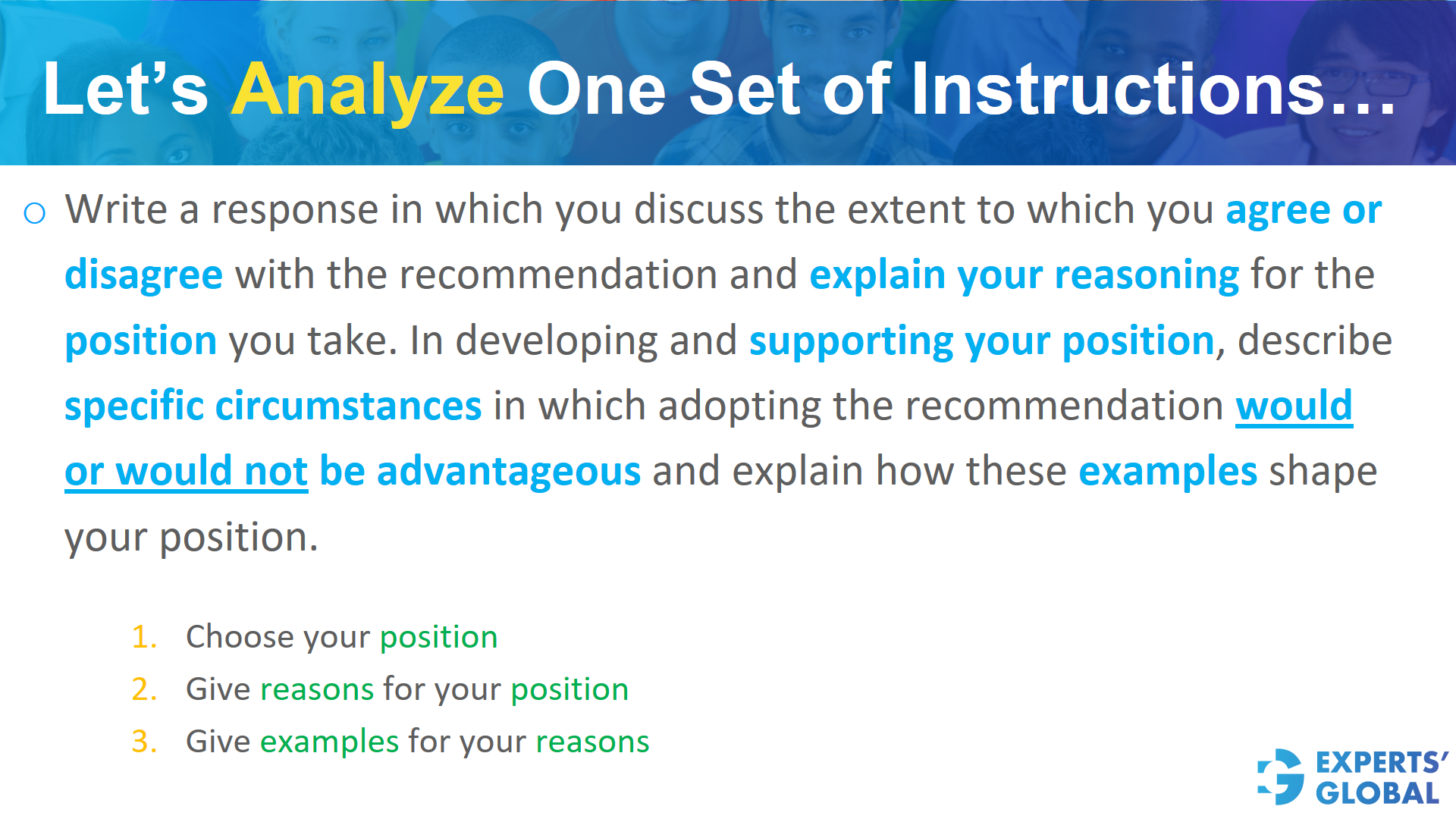
This instruction set guides you to write a focused and thoughtful response to a given recommendation. Your role is to decide how strongly you agree or disagree with it and then explain that choice with purpose and clarity. You do not just state an opinion. You show the thinking behind it.
You strengthen your position by discussing specific situations tied to the recommendation. You explain where following it makes sense and where it may not, and you show how these situations shape your overall judgment. The task moves in three simple steps. First, choose a clear position. Second, explain the reasons behind that position. Third, support those reasons with well-chosen examples. When you follow this structure, your response feels controlled, balanced, and convincing. For a deeper breakdown of this instruction, refer to the video above.
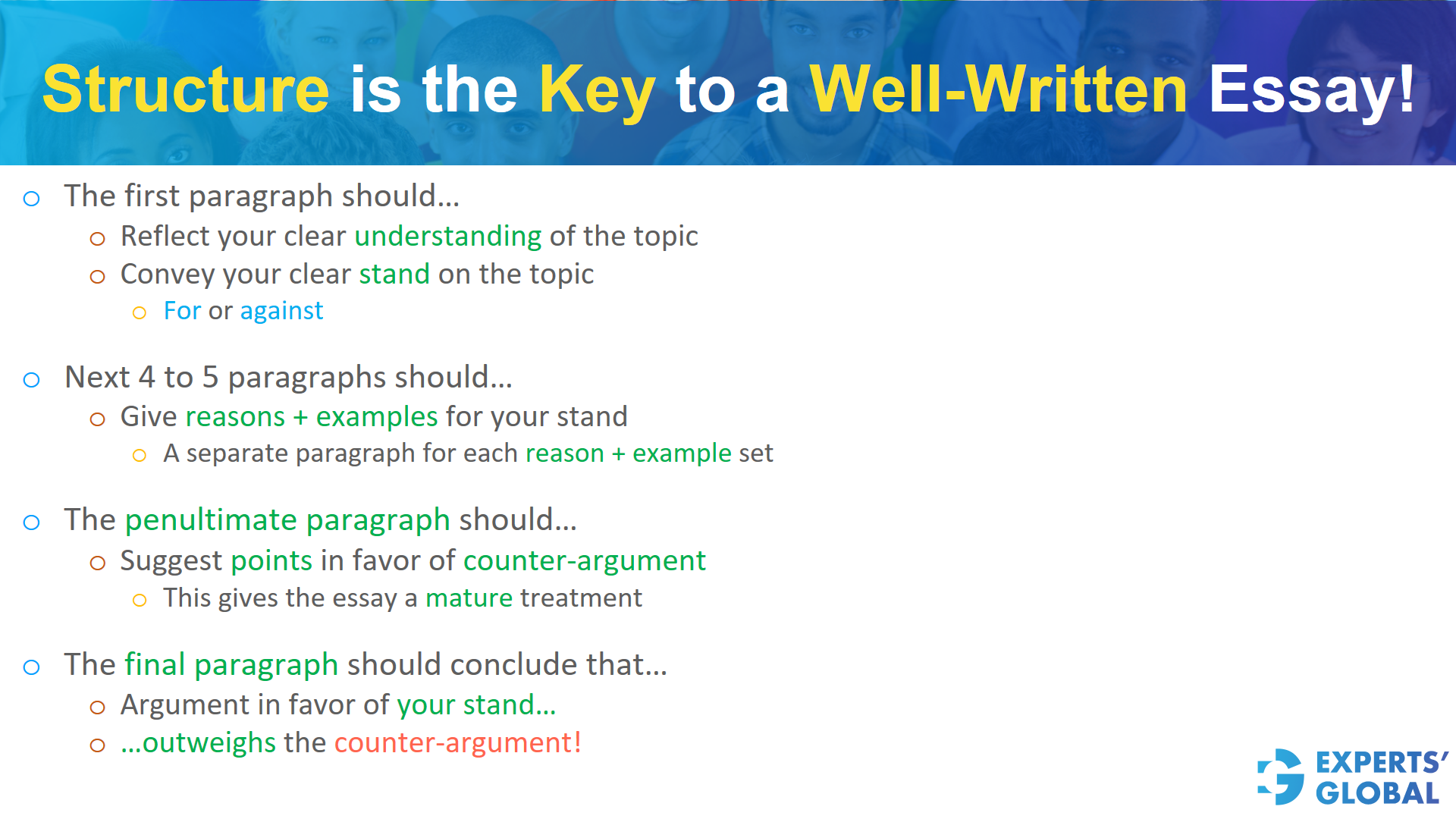
A clear essay structure gives your response strength and direction. It begins with the opening paragraph, where you show a solid understanding of the topic and clearly state your stand. This opening makes it clear whether you are for or against the idea and sets the tone for everything that follows.
The next four to five paragraphs develop your argument step by step. Each paragraph focuses on one reason and supports it with a relevant example, which keeps your thinking organized and easy to follow. The second-last paragraph introduces points that support the counter argument, and including this perspective adds maturity and balance to your essay. The final paragraph brings everything together by reinforcing your stand and clearly showing why your argument is stronger than the counter argument.
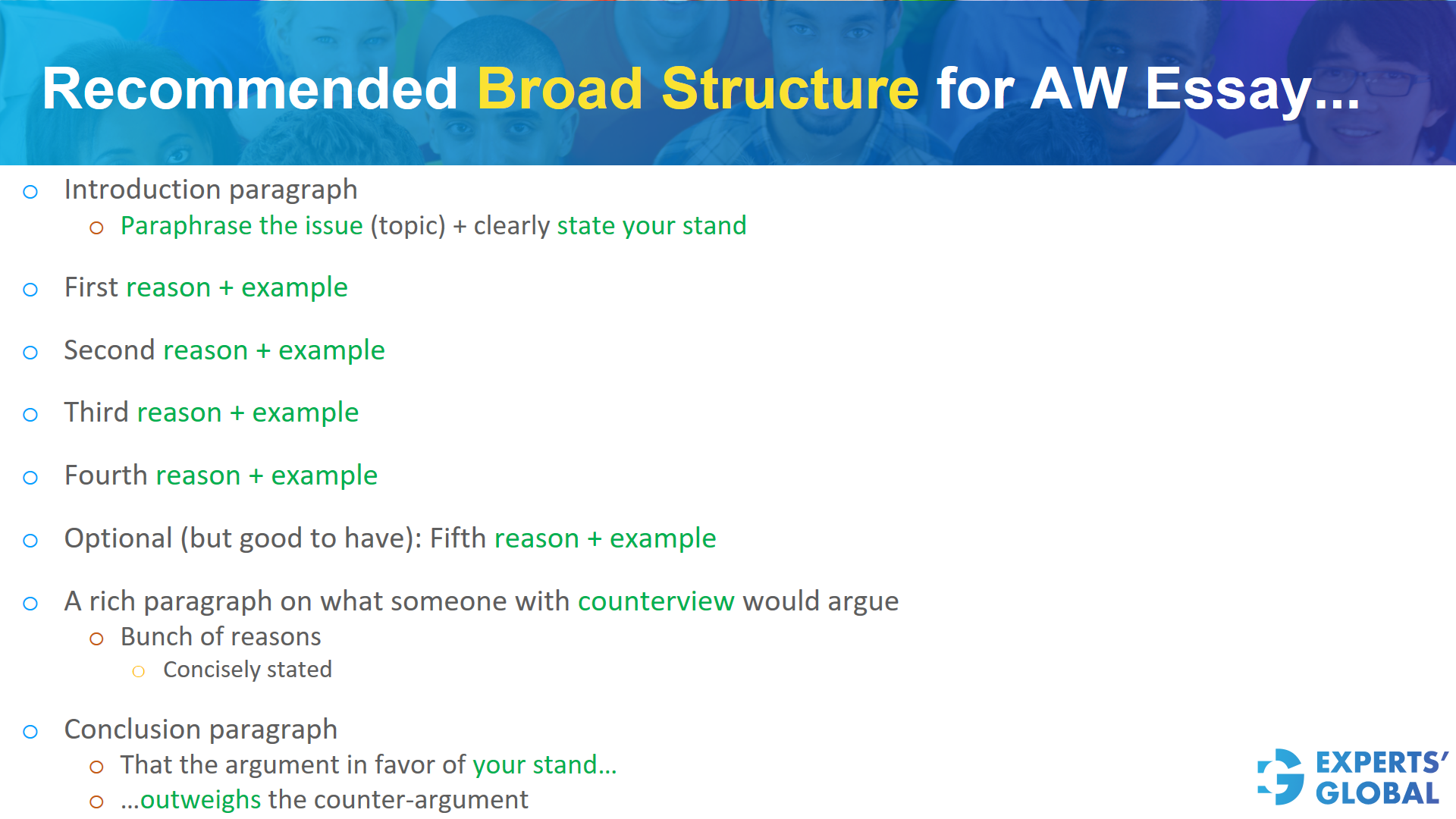
This is a recommended broad structure for writing an Analytical Writing essay. You begin with an introduction paragraph where you paraphrase the issue or topic and clearly state your stand. This opening sets direction and shows the reader exactly where you stand.
Next, you build your argument through multiple body paragraphs. Start with your first reason and support it with an example. Then present a second reason with an example, followed by a third reason with an example, and then a fourth reason with an example. If you have more to add, a fifth reason with an example is optional but valuable.
After presenting your reasons, include a rich paragraph that explains what someone with a counterview would argue. This paragraph should include a bunch of reasons, stated concisely, showing that you understand the opposing perspective.
You conclude with a final paragraph where you reinforce that the argument in favor of your stand outweighs the counter argument. This ending brings the essay together and leaves a clear, strong impression of your position.
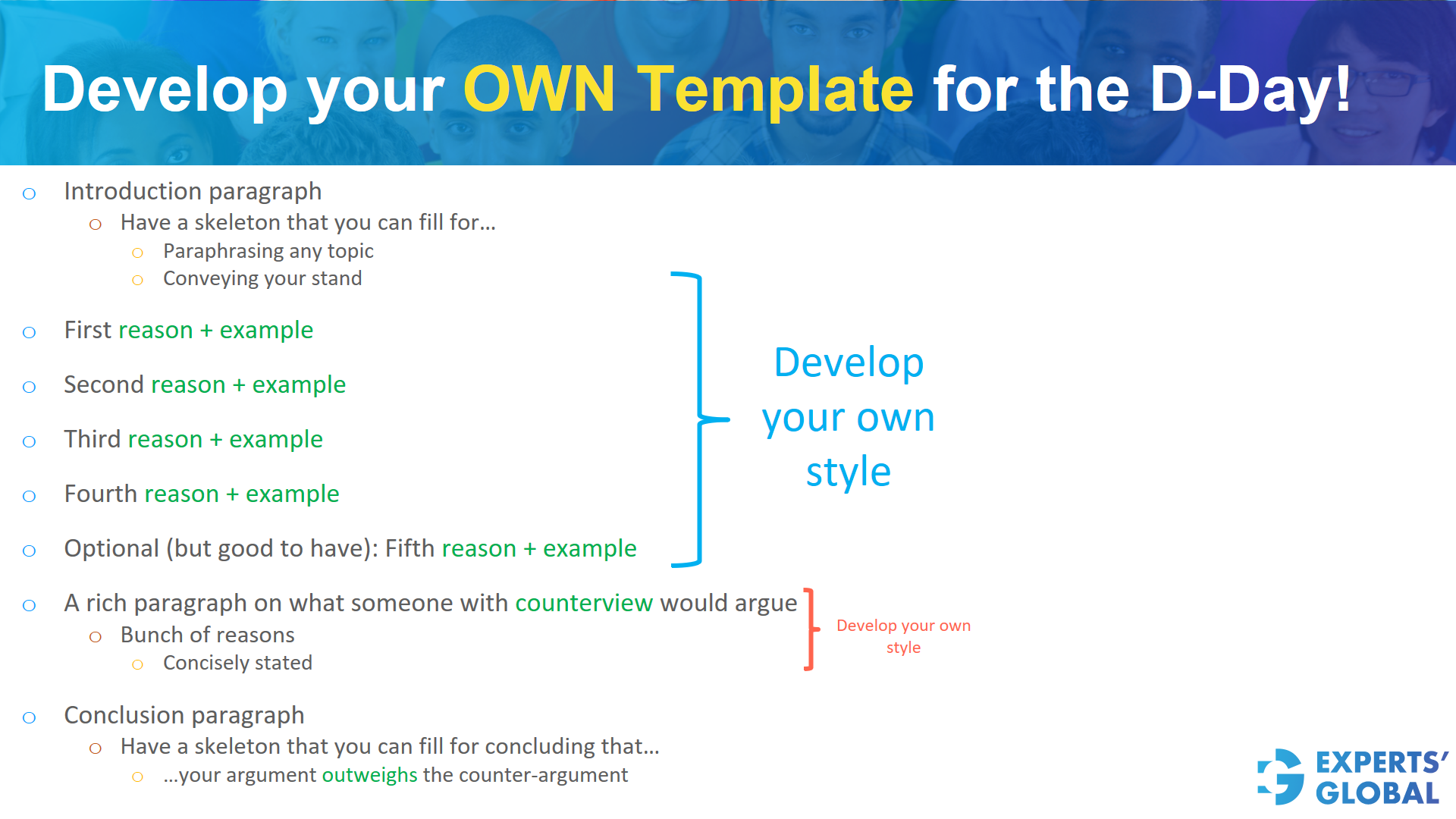
You must develop a personal template for exam day writing. This starts by designing a clear introduction paragraph structure that can be reused across topics. The introduction skeleton supports two key actions: paraphrasing any topic and conveying a clear stand.
Next comes the core body of the essay, which is built by designing a repeatable pattern of reasons supported by examples. This includes a first reason with an example, followed by a second reason with an example, a third reason with an example, and a fourth reason with an example. An optional fifth reason with an example can also be added and works as a strong enhancement. Through these reason plus example paragraphs, individual style develops while the structure stays consistent.
The template also includes planning a rich paragraph that captures what someone with a counterview would argue. This paragraph brings together a bunch of reasons, all stated concisely, and allows further development of personal style within a controlled structure.
Finally, the template includes a conclusion paragraph built on a clear skeleton. This closing structure supports concluding the discussion by stating that the argument outweighs the counter-argument, completing the essay with clarity and purpose.
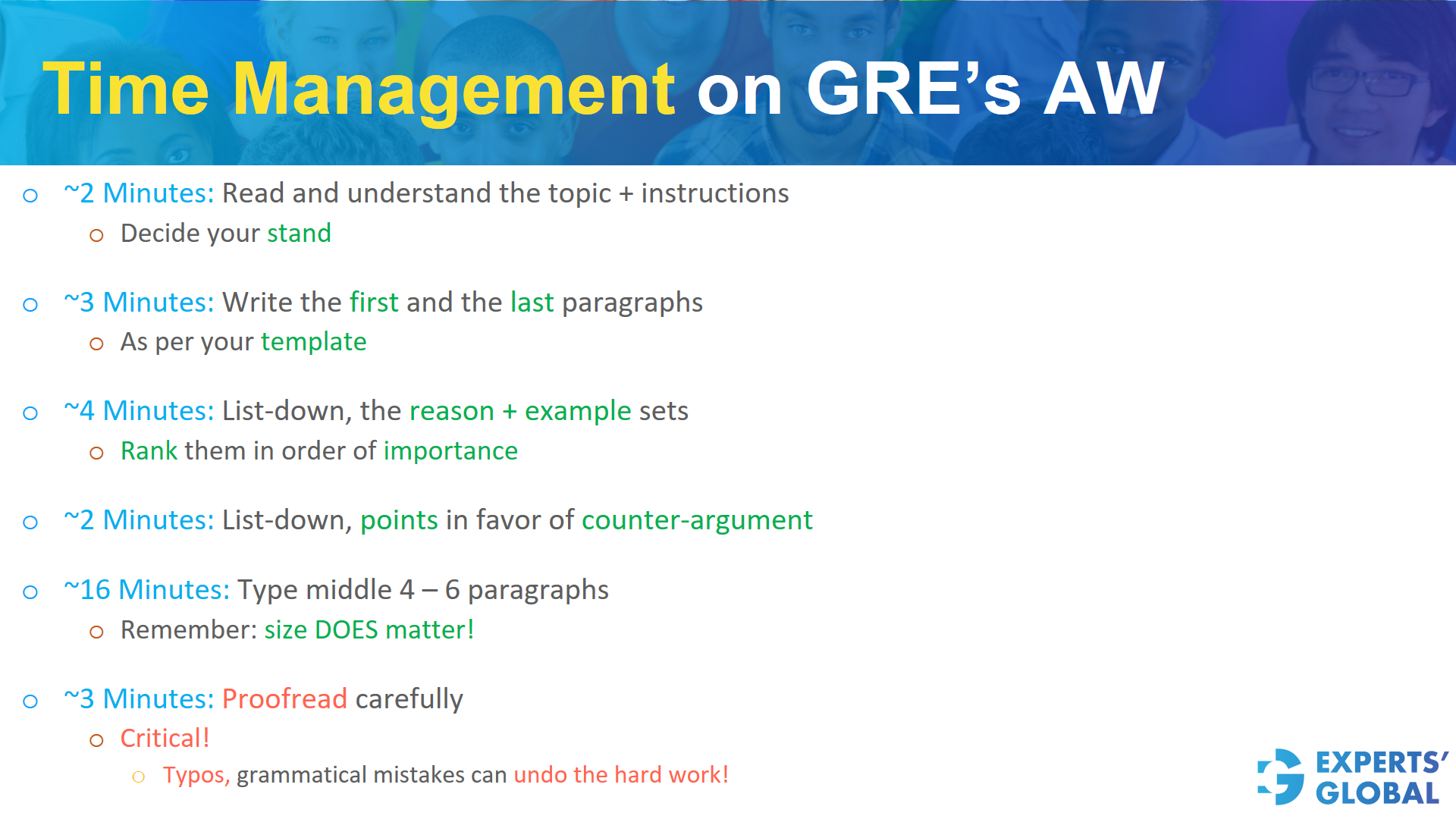
On GRE Analytical Writing, effective planning begins with a clear use of time. Start by spending about two minutes reading and understanding the topic and the instructions, and use this stage to decide your stand with precision. This early decision gives direction to everything that follows. Next, use around three minutes to write the first paragraph and the last paragraph as per your template, so the essay begins with clarity and ends with purpose before you move into development.
After this, spend approximately four minutes listing your reason and example sets, and rank them in order of importance so your strongest ideas lead the essay. Then use about two minutes to list points that support the counter argument, which adds balance and maturity to the response. These planning steps ensure that your ideas are organized and ready before writing begins.
Now dedicate around sixteen minutes to typing the middle four to six paragraphs, remembering that paragraph size does matter and each idea should receive full space. Finally, reserve about three minutes to proofread carefully. This step is critical, because typos and grammatical mistakes can undo the hard work put into the essay. Following this structure keeps your writing focused, complete, and polished from start to finish.
Comprehensive online GRE prep course
15 GRE practice tests, full length
60 GRE practice tests, sectional
Free GRE diagnostic test full length
