
Invest 30 seconds...
...for what may lead to a life altering association!
Help Line
- +91.8800.2828.00 (IND)
- 1030-1830 Hrs IST, Mon-Sat
- support@expertsglobal.com
33% off ends soon:GMAT/GRE prep + applications bundle. Profile building, longer mentoring, better results. Inquire

Here is a simple, clear four-step approach for GRE Data Interpretation sets. Step one, take a quick look at the charts and graphs and get the macro view of what the data represents, without going into details. Step two, read the question stem and lock onto the exact requirement. Step three, identify the useful data needed for the question in hand. Step four, do the math and arrive at the exact numeric answer, then repeat steps two through four for the other two questions in the set, and cross check every answer before you confirm it. The following video, a part of our end-to-end GRE prep course, explains this four-step approach in a lucid way and helps you apply it across your GRE prep and practice across GRE drills and GRE mocks.
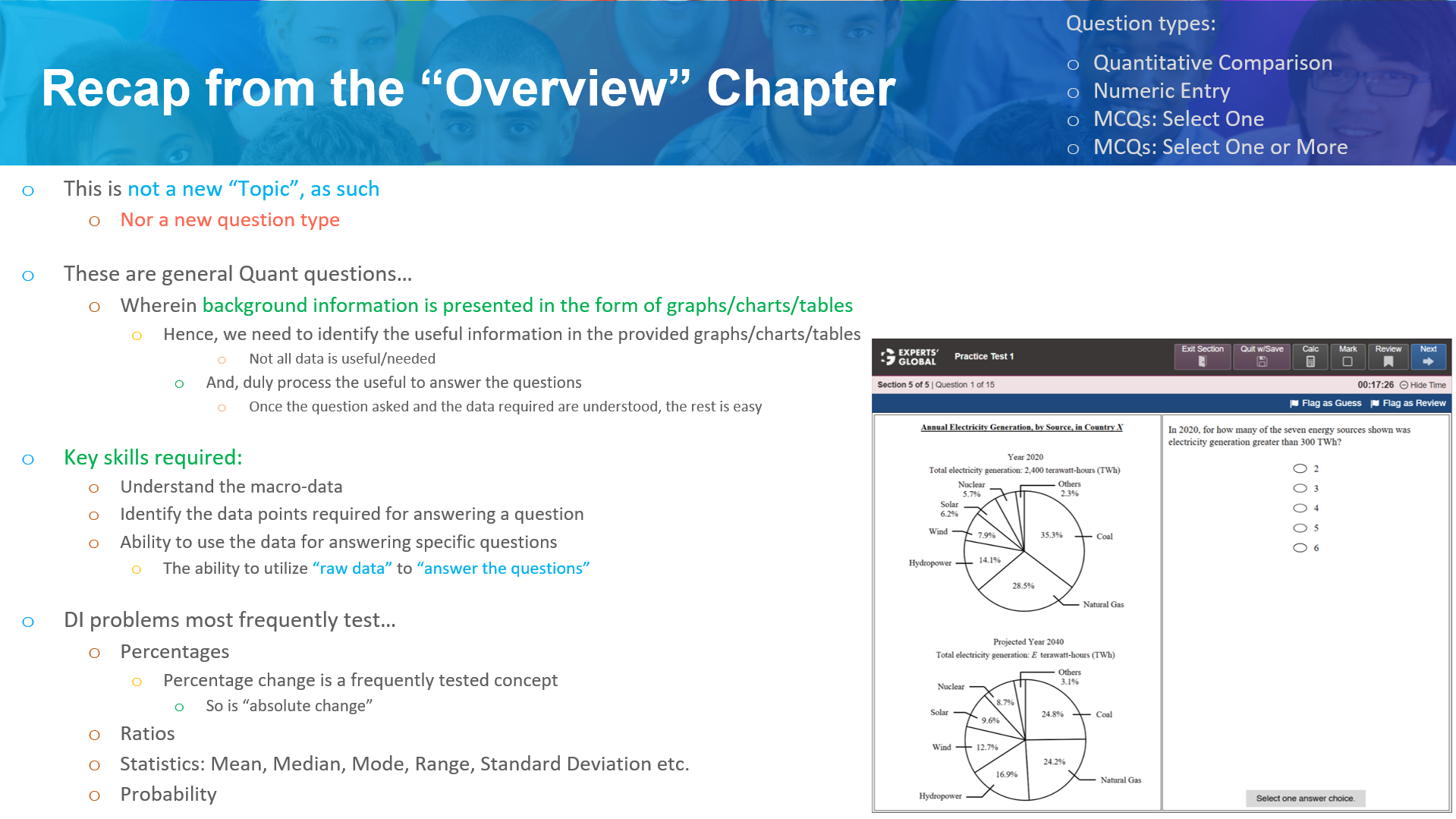
Data Interpretation (DI) involves general quantitative questions where background information is provided through graphs, charts, and tables. The core objective is to identify relevant information from these visual aids, filter out unnecessary data, and process the useful points to answer specific questions.
The primary skills required for mastering this area include:
DI problems frequently test proficiency in the following academic areas:
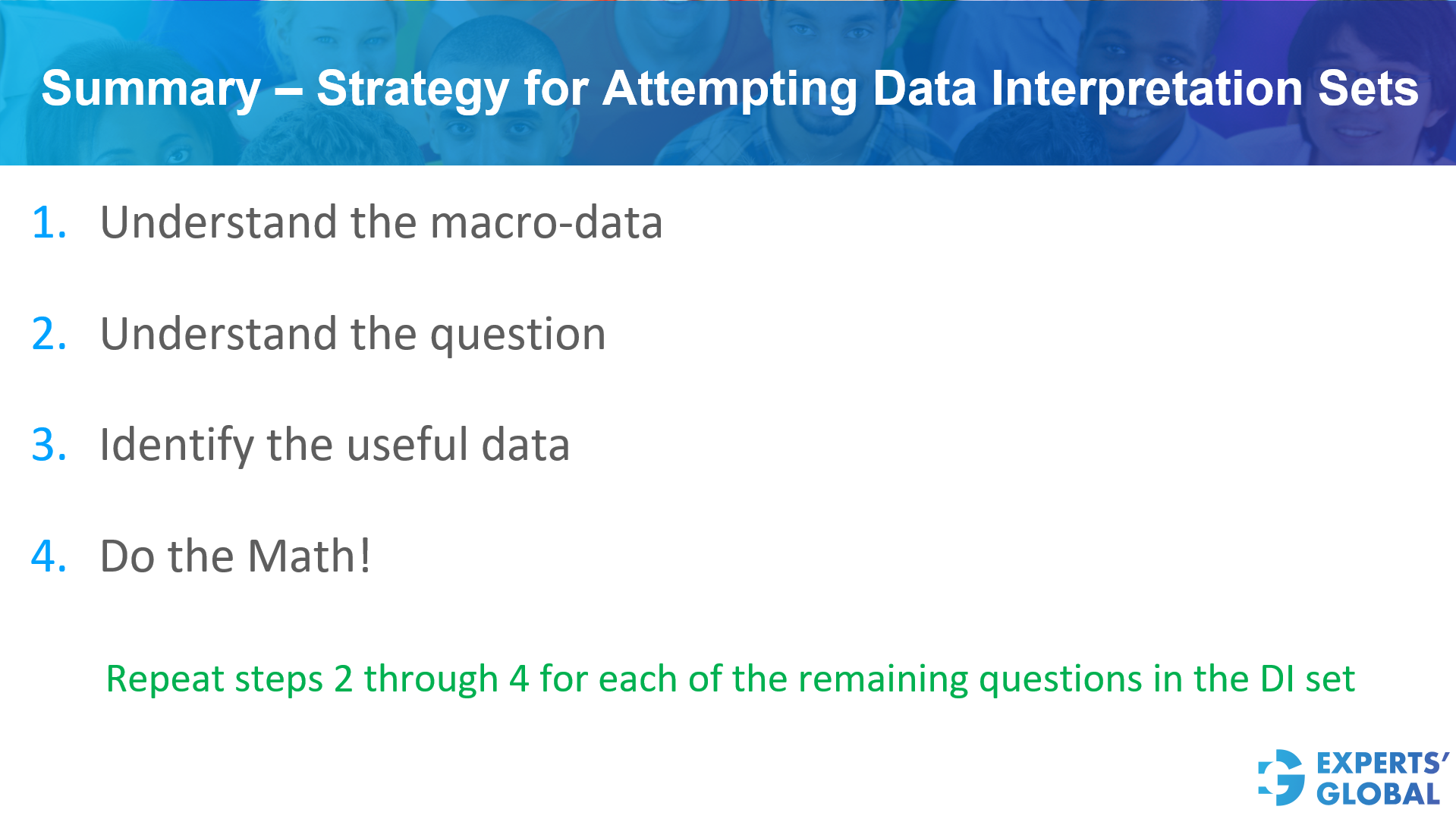
To master Data Interpretation (DI) sets, follow this systematic four-step strategy:
Begin by grasping the overall context and structure of the information provided in the charts or tables.
Clearly identify what the specific problem is asking for before looking at the numbers.
Locate the specific values and variables within the dataset that are relevant to the question at hand.
Perform the necessary calculations to arrive at the solution.
For every subsequent question within the same Data Interpretation set, repeat steps 2 through
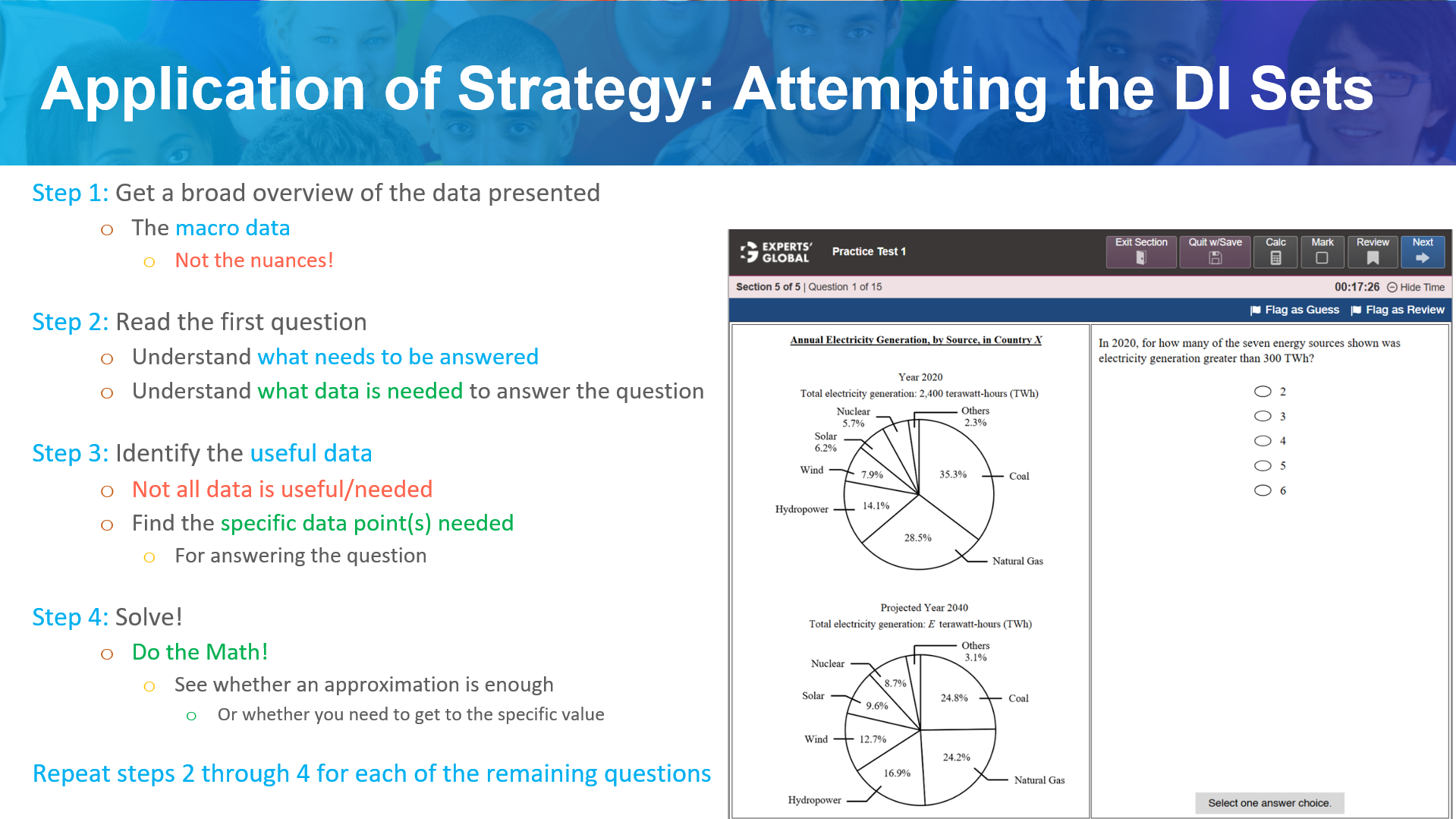
To efficiently solve Data Interpretation (DI) sets, follow a structured four-step process designed to maximize speed and accuracy:
Begin by obtaining a broad overview of the information presented. Focus on the big picture and the general structure of the data sets rather than getting bogged down in minor nuances or details at the start.
Read the first question before diving deep into the data. Identify two key elements:
Filter through the information to isolate only the necessary data points. Recognize that not all data provided in the set is useful for every question. Pinpoint the specific figures or trends required for the current problem.
Perform the necessary calculations. Determine if a quick approximation is sufficient based on the answer choices, or if a precise value is required.
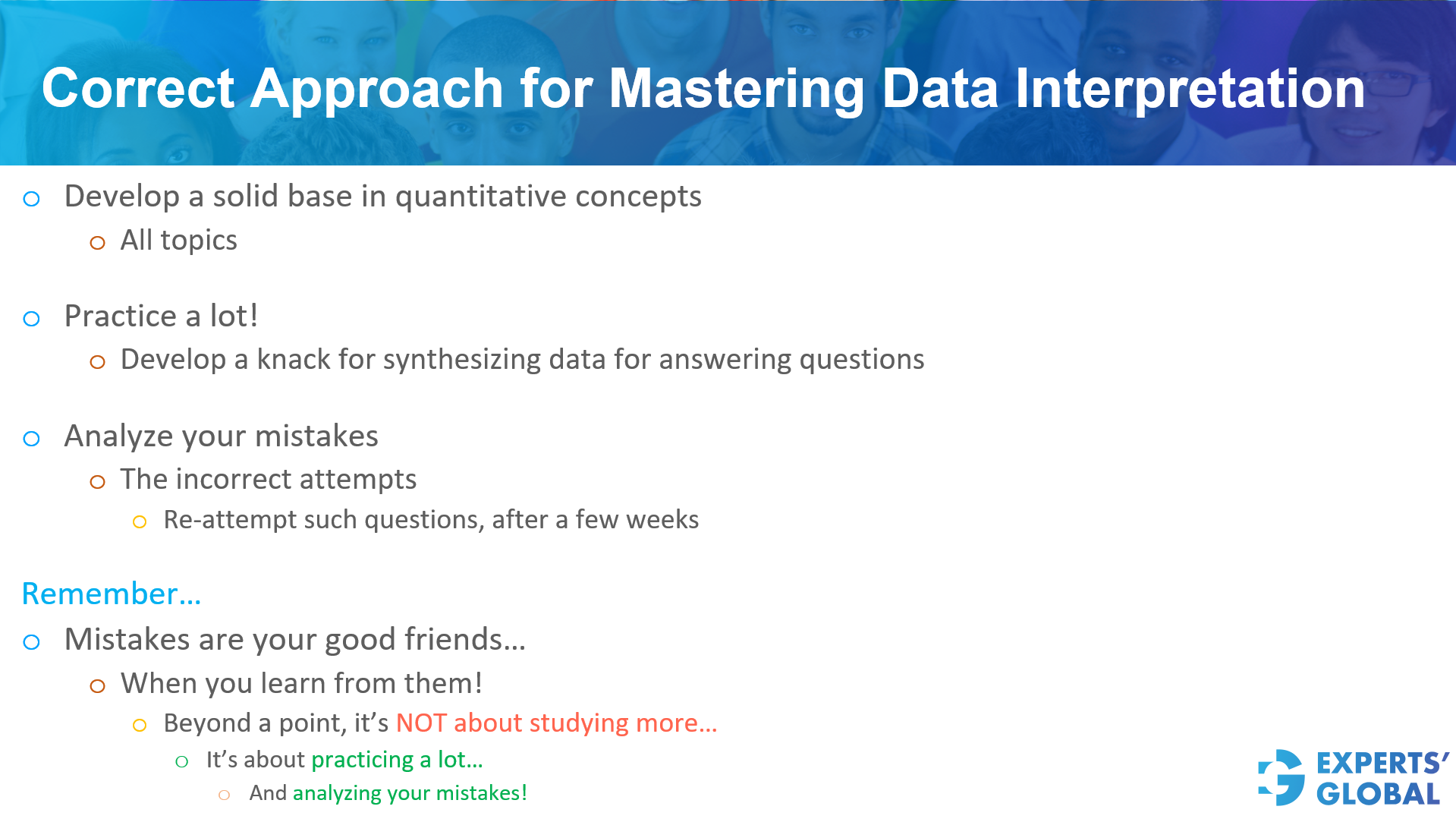
To master data interpretation, one must follow a structured approach centered on building a strong quantitative foundation and engaging in a rigorous feedback loop of practice and review.
GRE preparation course with 7-day trial
Structured 5-week GRE crash course
Set of 15 Full length GRE practice tests
