
Invest 30 seconds...
...for what may lead to a life altering association!
Help Line
- +91.8800.2828.00 (IND)
- 1030-1830 Hrs IST, Mon-Sat
- support@expertsglobal.com
33% off ends soon:GMAT/GRE prep + applications bundle. Profile building, longer mentoring, better results. Inquire

GRE Two-blank Text Completion questions build directly on the logic of one-blank Text Completion questions by asking you to complete a sentence using two words that function together to express one connected idea. You read the sentence as a single flow of meaning, where each blank directly influences how the other must read. The correct answer pair aligns in logic, tone, and direction, so success comes from tracking the sentence carefully from beginning to end and selecting words that jointly bring the idea into clear focus. Across the two Verbal sections of the GRE, out of the 27 Verbal questions, you encounter about three two-blank Text Completion questions, making them a meaningful part of the test.
This page provides a clear and structured overview of two-blank Text Completion questions on the GRE. It explains how these questions appear on the test, how the two blanks work together to shape meaning, and how this question type fits into the broader Verbal landscape. The goal is to give you a strong and comfortable foundation before you move into detailed concepts, recurring patterns, and guided practice. Use this overview to build clarity early with the TC2 question type, feel oriented in your GRE preparation course, and move forward with clarity and purpose!
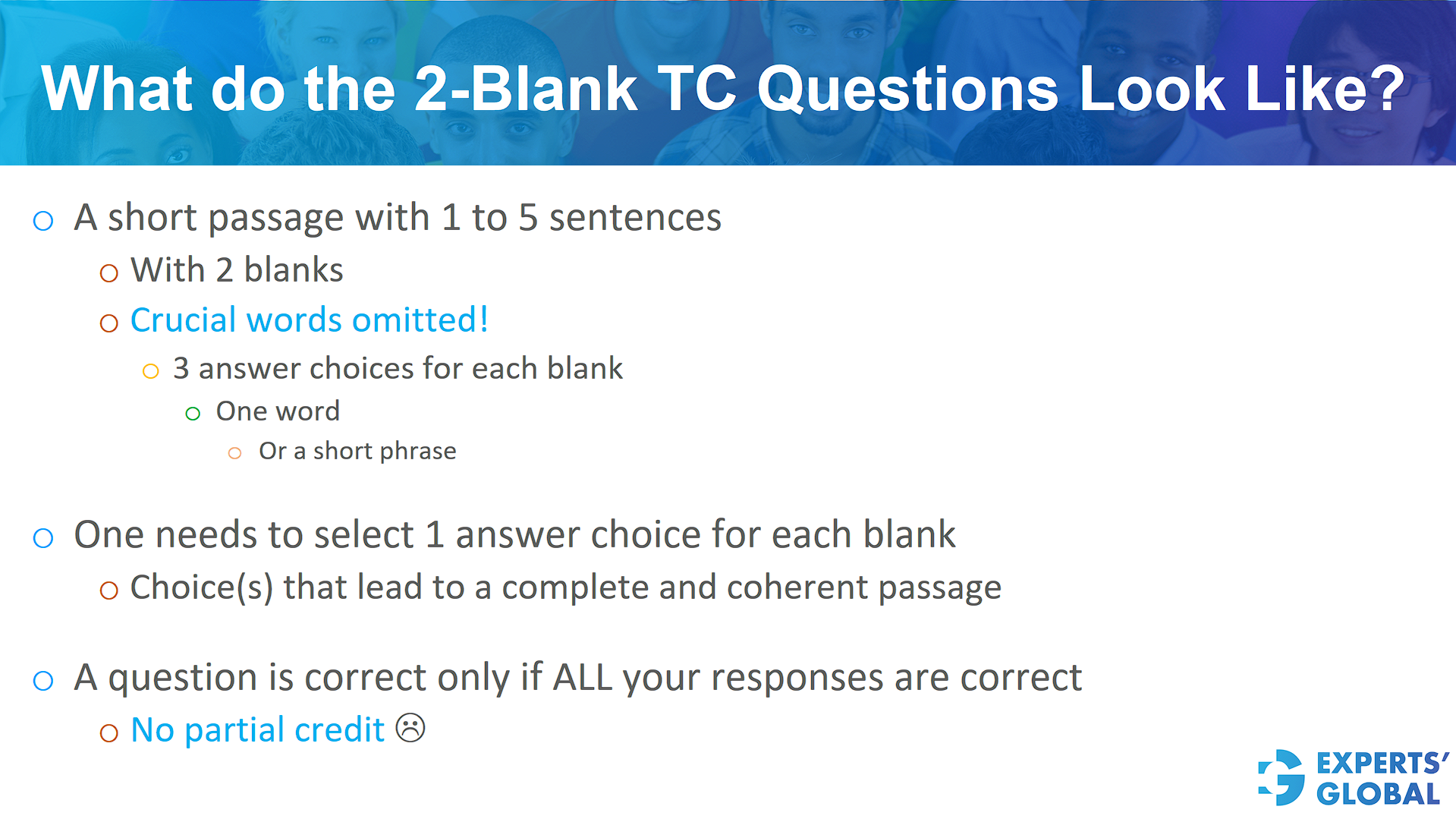
Two blank Text Completion questions on the GRE ask you to read a short passage of one to five sentences and fill in two missing words which are important for the complete meaning of the passage. For each blank, you need to choose one option from three choices, which may appear as a single word or a short phrase. Your task is to understand the context and ensure that both blanks work together to create a clear and coherent passage.
You receive credit only when both choices are correct, which makes accuracy important. These questions test how well you reason through ideas, use vocabulary precisely, and maintain the overall meaning of the passage from start to finish.
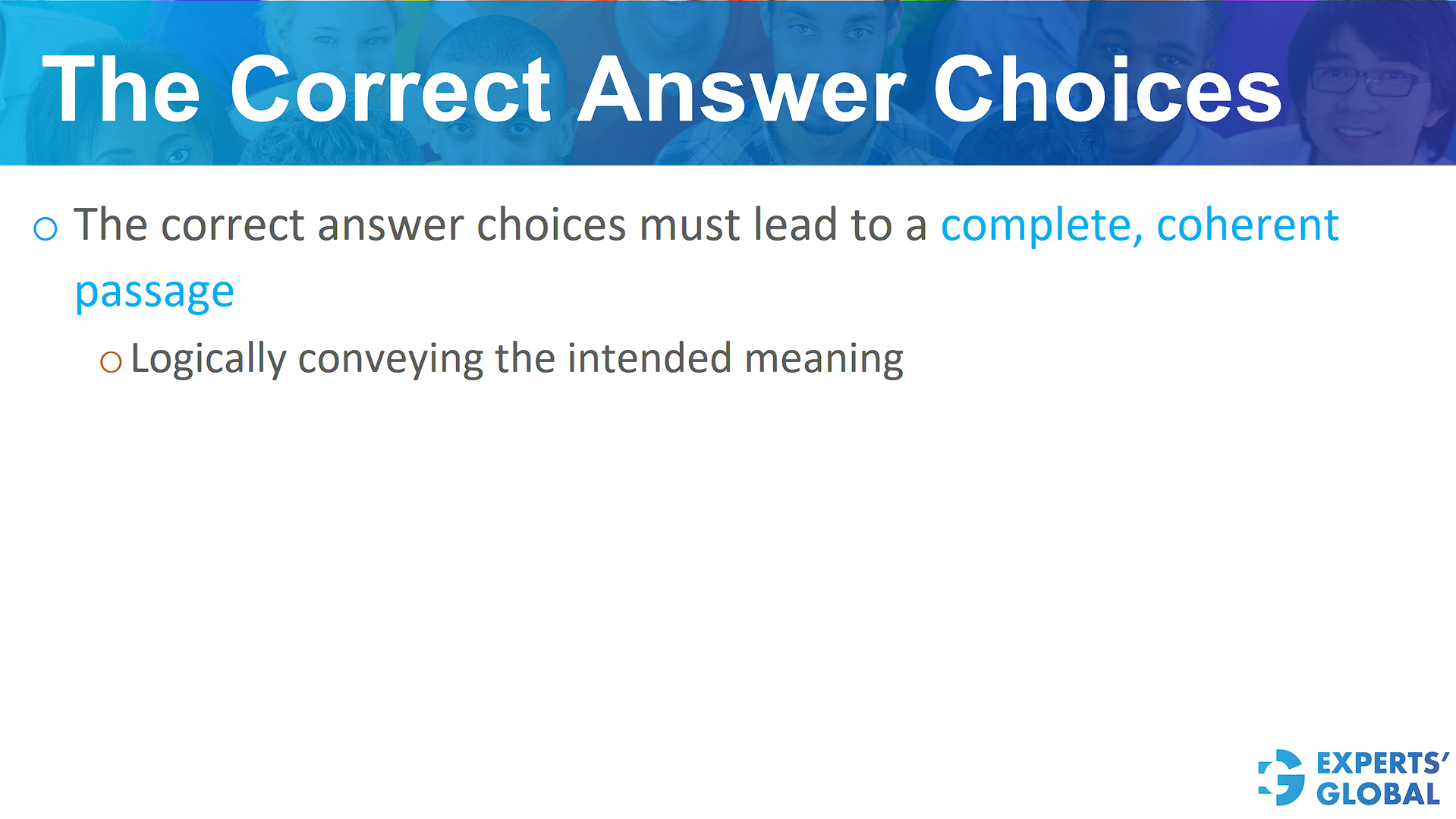
In two blank Text Completion questions, you select answer choices that work together to form a complete and coherent passage. Each word must fit logically with the other and reflect the intended meaning of the passage as a whole. You must focus on how ideas connect and flow so that the completed passage reads clearly and communicates its full intent without gaps or confusion.
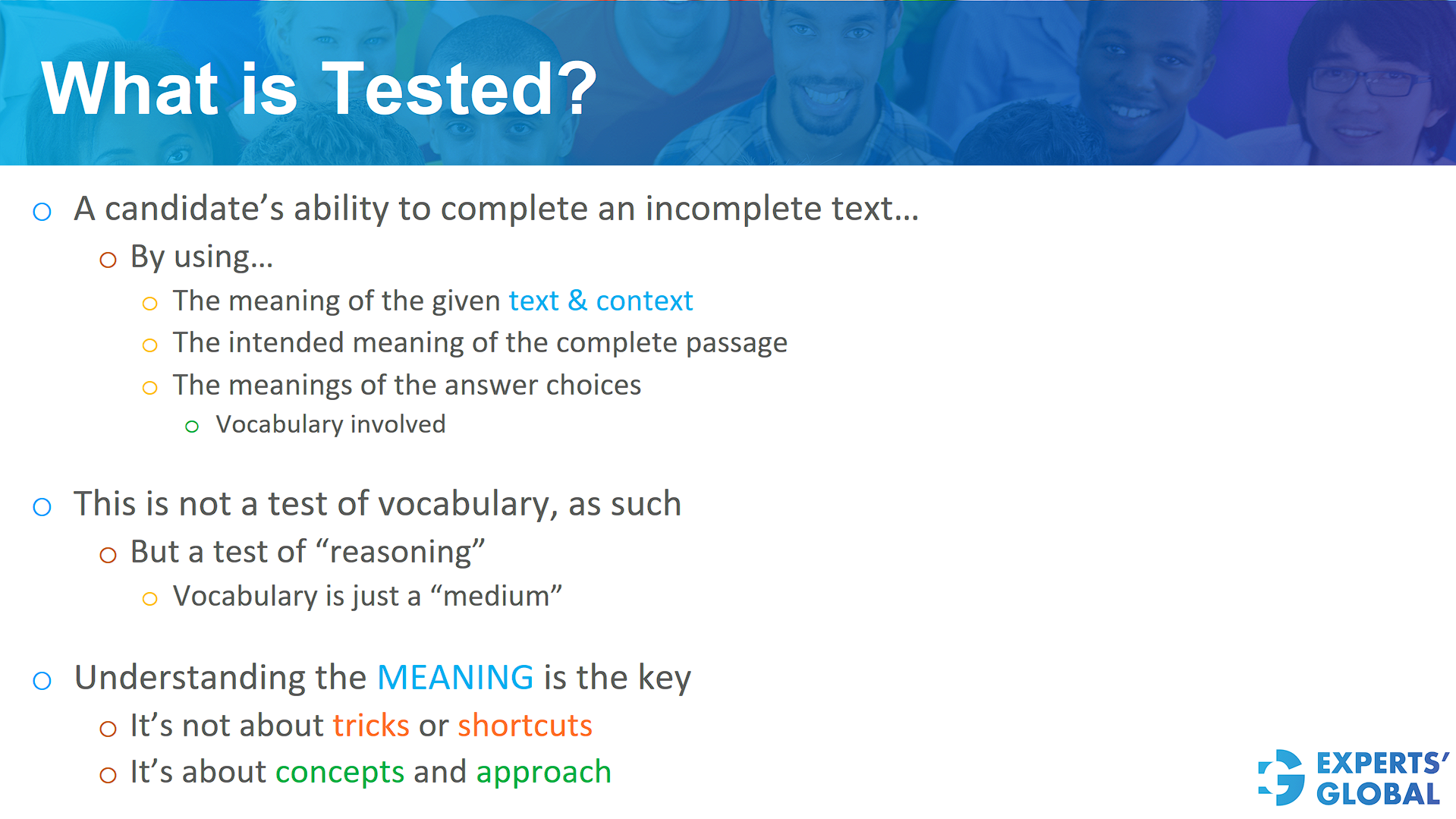
Two blank Text Completion questions are a test of reasoning; vocabulary serves only as a medium of testing your reasoning skills. These questions ask you to complete an unfinished passage by understanding what the text is saying and what it aims to express as a whole. You read the passage carefully, step back, and see how both blanks must work together to finish one clear idea. When the pairing is right, the thought feels complete and accurate.
Vocabulary plays a role, but it serves your reasoning rather than driving it. You move forward by trusting logic, following concepts, and using a clear method. This approach rewards careful thinking and steady focus, not tricks or shortcuts. When you rely on this mindset, these questions start to feel structured, purposeful, and well within your reach.
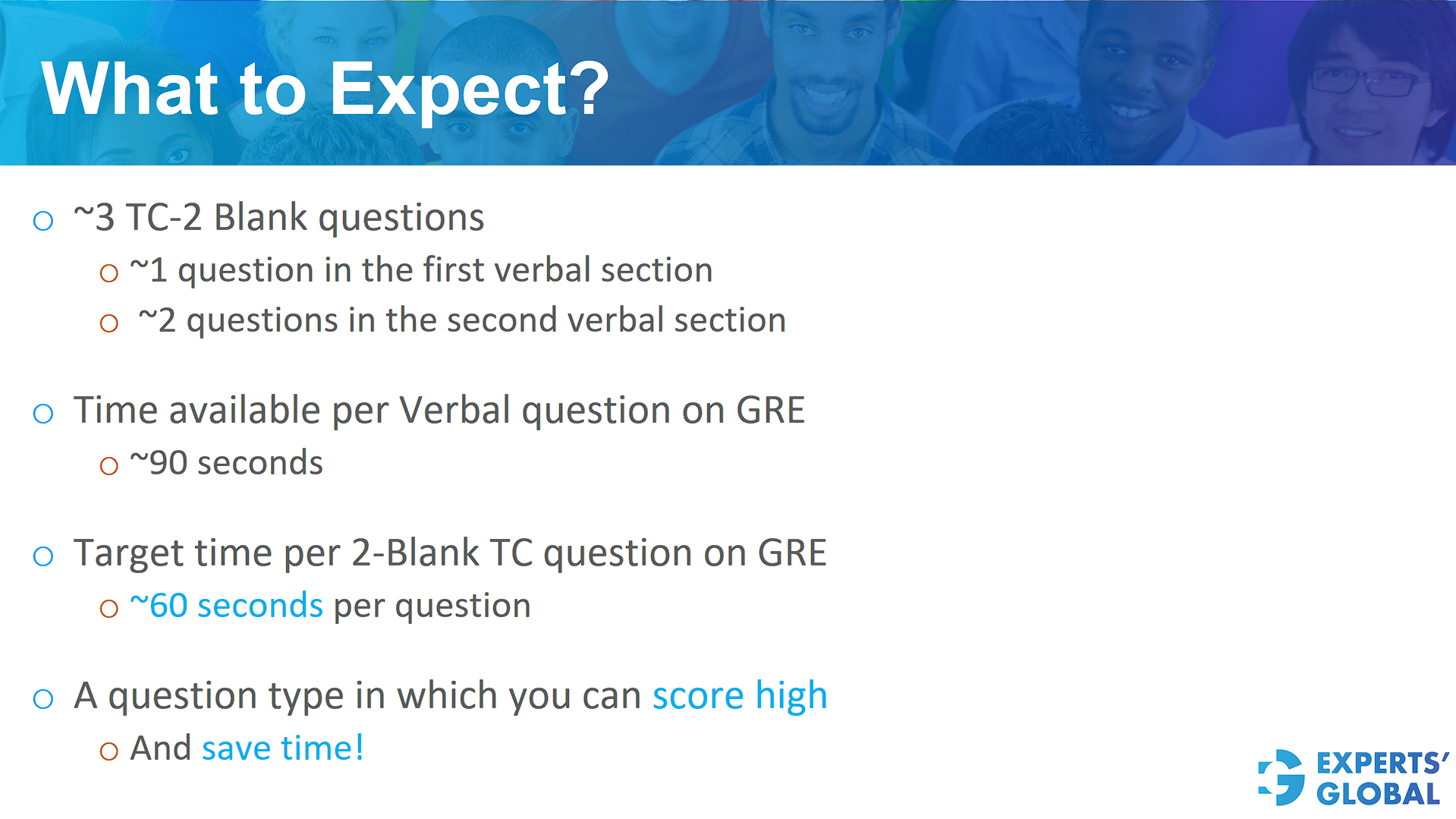
On the GRE, you typically see around three two blank Text Completion questions, with one in the first verbal section and two in the second verbal section. Each verbal question allows about ninety seconds, and you aim to complete a two-blank question in roughly sixty seconds; this shall help you in saving time for reading comprehension, critical reasoning, and 3-blank TC questions which naturally take longer to solve. GRE 2-blank TC question type rewards efficient thinking and lets you earn strong points while also saving time.
GRE prep course with 7-day free trial
15 full length GRE practice tests
60 sectional GRE practice tests
